Unisciti a noi in un viaggio nel mondo dei libri!
Aggiungi questo libro allo scaffale
Grey
Scrivi un nuovo commento Default profile 50px
Grey
Iscriviti per leggere l'intero libro o leggi le prime pagine gratuitamente!
All characters reduced
AI-Assisted Programming for Web and Machine Learning - Improve your development workflow with ChatGPT and GitHub Copilot - cover

AI-Assisted Programming for Web and Machine Learning - Improve your development workflow with ChatGPT and GitHub Copilot

Marina Fernández, Anjali Jain, Christoffer Noring, Ajit Jaokar, Ayşe Mutlu

Casa editrice: Packt Publishing

  • 0
  • 0
  • 0

Sinossi

AI-Assisted Programming for Web and Machine Learning shows you how to build applications and machine learning models and automate repetitive tasks.Part 1 focuses on coding, from building a user interface to the backend. You’ll use prompts to create the appearance of an app using HTML, styling with CSS, adding behavior with JavaScript, and working with multiple viewports. Next, you’ll build a web API with Python and Flask and refactor the code to improve code readability. Part 1 ends with using GitHub Copilot to improve the maintainability and performance of existing code.Part 2 provides a prompting toolkit for data science from data checking (inspecting data and creating distribution graphs and correlation matrices) to building and optimizing a neural network. You’ll use different prompt strategies for data preprocessing, feature engineering, model selection, training, hyperparameter optimization, and model evaluation for various machine learning models and use cases.The book closes with chapters on advanced techniques on GitHub Copilot and software agents. There are tips on code generation, debugging, and troubleshooting code. You’ll see how simpler and AI-powered agents work and discover tool calling.
Disponibile da: 30/08/2024.
Lunghezza di stampa: 602 pagine.


Altri libri che potrebbero interessarti

  • The Resilient Garden - Simple Cheap & Organic Tips on Home and Community Gardening in Poor Soil and Extreme Conditions from South Africa - cover

    The Resilient Garden - Simple...

    Charles Featherstone

    • 0
    • 0
    • 0
    Think you can't garden because your soil is poor, your water is scarce, and your space is limited? Think again. Drawn from the popular columns of Grocott's Mail, this handbook is packed with proven, hard-won wisdom from South Africa's Eastern Cape and KwaZulu-Natal.  
    This collection of bite-sized columns and stories is a practical guide to creating life and community from barren ground. Learn how to compost, drought-proof your beds, build parks from dumps, and harness ferments for richer soil, the secrets of xerophytes, the art of fermentation for plant health, and how to build a thriving garden from tyres, pallets, and recycled "graywater." 
    More than just a gardening manual, it's a testament to the power of a seed and a shovel to change not only a landscape but a community. This collection chronicles the ingenious, low-cost, and utterly organic methods locals use to coax life from the earth. 
    Filled with heartfelt stories like Cecil's transformation of a Currie Street dumping ground and practical advice for every season, this book is an essential companion for any gardener fighting their own odds. From the "Garden of the Week" at the Hayton Complex to the determined schoolchildren of the Feeding The Self project, these stories prove that a garden is more than food—it's a classroom, a community centre, and a beacon of hope. Packed with actionable advice on everything from graywater systems and winter warming to natural pest control, The Resilient Garden is a powerful call to pick up a trowel and start growing, no matter your circumstances. 
    Whether you're nurturing seedlings on a windowsill or mobilizing a community to turn a dump into a park, this book shows you how to grow against the odds. Your toughest growing conditions are about to become your greatest advantage.
    Mostra libro
  • Free Speech and Turbulent Freedom - The Dangerous Allure of Censorship in the Digital Era - cover

    Free Speech and Turbulent...

    Michael J. Glennon

    • 0
    • 0
    • 0
    A vast censorship regime has smothered America's digital marketplace of ideas, squelching free speech on vital policy issues. Its supporters regard its benefits as morally and politically beyond question. They contend it's carried out by private social media platforms, not governmental authorities. 


    In Free Speech and Turbulent Freedom, Michael J. Glennon offers a timely and incisive response. The censors are short-sighted, he argues. Quibbling over outdated distinctions misses the real threat—which is the fusion of public and private power into a modern-day cartel able to overleap longstanding constitutional safeguards. American democracy, he argues, rests on a decentralized marketplace of ideas independent of the government. In crisp, trenchant terms, Glennon shows how concrete practical concerns justify protecting admittedly harmful online speech—even speech that advocates violence or embraces hatred or apparent falsehood. 


    To safely self-correct, democracy requires open channels of political communication. Glennon calls on the courts to unblock those channels—to measure such speech against enduring First Amendment precepts rather than pliable international norms—and to protect the speech interests not merely of the government and Big Tech, but of all participants in the marketplace of ideas.
    Mostra libro
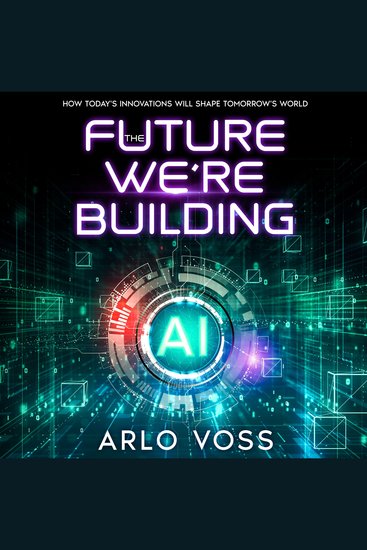
  • The Future We're Building - How Today's Innovations Will Shape Tomorrow's World - cover

    The Future We're Building - How...

    Arlo Voss

    • 0
    • 0
    • 0
    Discover How Today's Innovations Will Shape Tomorrow's World 
     
    Embark on a journey to understand the transformative forces of our era in The Future We're Building. This book explores groundbreaking innovations redefining human experience across various domains.  
     
    In Chapter 1, discover how Artificial Intelligence is set to address modern challenges and reshape society. Chapter 2 highlights renewable energy breakthroughs tackling global energy issues, while Chapter 3 unveils biotechnology's role in advancing genetics and healthcare.  
     
    Chapter 4 ventures into space exploration, promising Earth-bound benefits, and Chapter 5 emphasizes collaborative innovation to combat climate change. Learn about the future of transportation in Chapter 6, and embrace smart cities in Chapter 7.  
     
    Chapter 8 delves into tech-driven agricultural innovations, while Chapter 9 focuses on digital learning solutions. Explore personalized medicine and global health in Chapter 10, and Chapter 11 discusses technology's role in fostering an equitable society. Chapter 12 navigates the ethical complexities of these advancements, stressing responsible development.  
     
    More than a chronicle of innovation, this book is a call to action for all dreamers, thinkers, and doers to engage with the future. Be inspired and equipped with the knowledge to shape the world on the horizon.
    Mostra libro
  • The Cycling City - Bicycles and Urban America in the 1890s - cover

    The Cycling City - Bicycles and...

    Evan Friss

    • 0
    • 0
    • 0
    Cycling has experienced a renaissance in the United States, as cities around the country promote the bicycle as an alternative means of transportation. In the process, debates about the nature of bicycles—where they belong, how they should be ridden, how cities should or should not accommodate them—have played out in the media, on city streets, and in city halls. Very few people recognize, however, that these questions are more than a century old. 
     
    The Cycling City is a sharp history of the bicycle’s rise and fall in the late nineteenth century. In the 1890s, American cities were home to more cyclists, more cycling infrastructure, more bicycle friendly legislation, and a richer cycling culture than anywhere else in the world. Evan Friss unearths the hidden history of the cycling city, demonstrating that diverse groups of cyclists managed to remap cities with new roads, paths, and laws, challenge social conventions, and even dream up a new urban ideal inspired by the bicycle. When cities were chaotic and filthy, bicycle advocates imagined an improved landscape in which pollution was negligible, transportation was silent and rapid, leisure spaces were democratic, and the divisions between city and country were blurred. Friss argues that when the utopian vision of a cycling city faded by the turn of the century, its death paved the way for today’s car-centric cities—and ended the prospect of a true American cycling city ever being built.
    Mostra libro
  • Little Deaths All in a Row - Essays on Sex and Death - cover

    Little Deaths All in a Row -...

    Elizabeth Earley

    • 0
    • 0
    • 0
    “What do you think happens after we die?” has been Elizabeth Earley’s favorite conversation starter since the motorcycle accident that almost killed her. In Little Deaths All in a Row: Essays on Sex and Death, Earley delves into memories of past lovers and offers vivid portraits of the hospice patients she has worked with after recovering from her own near-fatal injuries. Tracing the many connections—philosophical, scientific, ethical, and spiritual—between sex and death, these lyric essays ponder the afterlife, pain and pleasure, quantum entanglement and love, and the “strange and painful goodness of being alive.”
    Mostra libro
  • Quantum Lives - Past Present and Future Realities - A Journey Through Time - cover

    Quantum Lives - Past Present and...

    Ecnal Ver

    • 0
    • 0
    • 0
    The Journey of Consciousness 
    In Quantum Lives, consciousness is not confined to a single lifetime. It moves through cycles of birth, life, death, afterlife, and reincarnation, carrying forward the lessons, experiences, and growth of each incarnation. This journey unfolds within a “quantum continuum,” where past, present, and future exist simultaneously in a field of infinite possibilities. 
    This book explores past lives, reincarnation, the nature of the afterlife, fate, free will, and the idea that many life phenomena can be understood through quantum principles. 
    Key concepts include: 
    Quantum Imprints: Energetic patterns from past lives that shape your present reality. 
    Continuity of Consciousness: The persistence of identity, traits, and lessons across lifetimes and beyond death. 
    Karma and Growth: A balancing force returning energy to you as opportunities for healing and evolution. 
    Fate and Free Will: The interaction between destiny and conscious choice. 
    Through these ideas, life becomes part of a larger, interconnected journey. Challenges reveal opportunities for growth, relationships mirror deeper lessons, and your talents, fears, and passions may echo experiences from past lives or even between lives. 
    Living with Quantum Awareness 
    Quantum Lives is both a philosophical exploration and a guide to living with awareness. By recognizing your consciousness as part of a greater quantum field, you step into your role as a co-creator of reality. Life shifts from random events to a meaningful path shaped by intention, purpose, and possibility. 
    You will learn to: 
    Set clear intentions to influence your reality 
    Recognize patterns as clues to your soul’s journey 
    Heal karmic cycles and create new possibilities 
    Cultivate trust in both life and the afterlife journey
    Mostra libro