Unisciti a noi in un viaggio nel mondo dei libri!
Aggiungi questo libro allo scaffale
Grey
Scrivi un nuovo commento Default profile 50px
Grey
Iscriviti per leggere l'intero libro o leggi le prime pagine gratuitamente!
All characters reduced
Castle Rackrent - cover

Castle Rackrent

Maria Edgeworth

Casa editrice: Phoemixx Classics Ebooks

  • 0
  • 0
  • 0

Sinossi

Castle Rackrent Maria Edgeworth - "Castle Rackrent" is a classic novel written by British writer Maria Edgeworth. Published in 1800, "Castle Rackrent" is thought to be both the first historical novel and the first novel to feature an unreliable narrator.Set in Ireland prior to its achieving legislative independence from Britain in 1782, "Castle Rackrent" follows the fortunes of the last four heirs to the Rackrent estate of three as told in the voiceof their longtime devoted servant, Thady Quirk. Over the course of several years (the Rackrent men die off in a timely manner), the Rackrents manage to run the estate into the ground, despite exploiting their Irish labourers. Is Thadys dewey-eyed devotion to the Rackrents sarcasm or is he truly one of the gratefully oppressed?The work satirises the Irish landlords of the late 18th and early 19th centuries. Noted for its insight into Irish regional life, the book was the model on which Sir Walter Scott based his historical novels."Castle Rackrent" is a remarkably short novel, rendering a historical situation in order to expose the exploitative system beneath.
Disponibile da: 09/12/2021.
Lunghezza di stampa: 222 pagine.

Altri libri che potrebbero interessarti

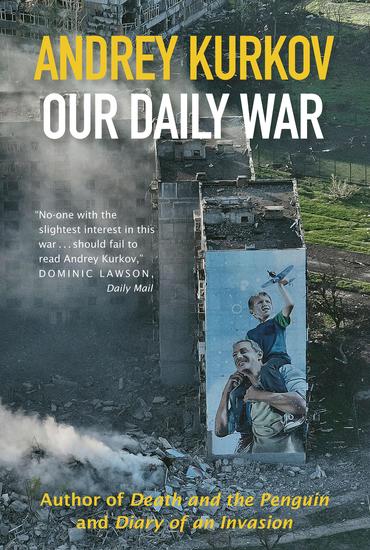
  • Our Daily War - cover

    Our Daily War

    Andrey Kurkov

    • 0
    • 0
    • 0
    Andrey Kurkov's urgent, humane and unforgettable war diaries continue in a poignant, personal account of life under siege in Ukraine – rich with humanity, dark humour, and unforgettable glimpses of resilience amidst devastation.
    `A vivid, moving and sometimes funny account of the reality of life during Russia's invasion´ Marc Bennetts, The Times
    `Uplifting and utterly defiant´ Matt Nixson, Daily Express
    `No one with the slightest interest in this war, or the nation on which it is being waged, should fail to read Andrey Kurkov´ Dominic Lawson, Daily Mail
    ____
    Andrey Kurkov's war diaries continue: A profound and deeply personal chronicle of life under siege.
    In this second volume of his acclaimed war diaries, Ukraine's greatest living writer bears witness to a nation enduring the unendurable. From his home in Kyiv, Kurkov captures the surreal and the life-shattering: children learning algebra in metro stations turned bomb shelters, holidaymakers sunbathing on mined beaches, and farmers sowing fields shadowed by missile strikes.
    On its eastern borders, Ukrainian citizens are put into "filtration camps", en route to Russia … or to execution. To the north, Belarusian forces press refugees into service as mine detectors.
    This is a lived account – rich with startling vignettes, dark humour and devastating detail – of a country adapting, resisting, surviving. A child downloads movies to a smartphone to watch during nightly power cuts. An elderly Japanese man feeds the hungry in Kharkiv. A soldier carefully rehomes a swarm of bees. A winemaker uses scrap wooden shell crates to package gift sets. A Ukrainian gunner inscribes messages on shells and rockets aimed for Russia: "For Bakhmut", he writes. The family of a journalist killed in the Donbas sells their home to open a bookshop in his memory.
    Our Daily War is Kurkov at his most intimate and insightful: a record of resilience, heartbreak and fierce national pride. Urgent, humane, unforgettable, this is history as it happens, and as only Kurkov can write it.
    _____
    PRAISE FOR ANDREY KURKOV's WAR DIARIES
    `Clever, passionate´ Roger Boyes, The Times
    `Thoughtfulness nearly always prevails over anger; the pieces are flawlessly structured; the tone is devoid of self-pity´ Robin Ashenden, Spectator
    `Andrey Kurkov [is] one of the most articulate ambassadors to the West for the situation in his homeland´ Sam Leith, Spectator
    `Immediate and important. . . An insider's account of how an ordinary life became extraordinary. It is also about survival, hope and humanity´ Helen Davies, Sunday Times
    `Packed with surprising details about the human effects of the Russian assault … genial but also impassioned´ Blake Morrison, Guardian
    `A thoughtful and humane memoir by one of Ukraine's most prominent living authors´ Simon Caterson, Sydney Morning Herald
    `Here are the kind of stories you don't see on the television news´ Rachel Cooke, Observer
    `Kurkov, an internationally-lauded novelist, is strongest when he writes on cultural matters. And this, he demonstrates convincingly, is a cultural war´ Ed O'Loughlin, Irish Times
    `This book makes for essential reading´ Claire Allfree, Metro
    Mostra libro

  • Letters to Gwen John - cover

    Letters to Gwen John

    Celia Paul

    • 0
    • 0
    • 0
    Celia Paul's Letters to Gwen John centers on a series of letters addressed to the Welsh painter Gwen John (1876–1939), who has long been a tutelary spirit for Paul. John spent much of her life in France, making art on her own terms and, like Paul, painting mostly women. John's reputation was overshadowed during her lifetime by her brother, Augustus John, and her lover Auguste Rodin. Through the epistolary form, Paul draws fruitful comparisons between John's life and her own: their shared resolve to protect the sources of their creativity, their fierce commitment to painting, and the ways in which their associations with older male artists affected the public's reception of their work. 


    Letters to Gwen John is at once an intimate correspondence, an illuminating portrait of two painters, and a writer/artist's daybook, describing Paul's first exhibitions in America, her search for new forms, her husband's diagnosis of cancer, and the onset of the global pandemic. Paul, who first revealed her talents as a writer with her memoir, Self-Portrait, enters with courage and resolve into new unguarded territory—the artist at present—and the work required to make art out of the turbulence of life. 


    Contains mature themes.
    Mostra libro
  • The Museum of Lost and Fragile Things - A Year of Salvage - cover

    The Museum of Lost and Fragile...

    Suzanne Joinson

    • 0
    • 0
    • 0
    Suzanne Joinson grew up in a 1980s council estate in Crewe, where her parents were followers of The Divine Light Mission cult. This clash of class and counterculture destroyed her family, leaving a legacy of turmoil and poverty. 
     
    Years later, she attempts to reclaim what she’s lost and piece together the impact of a childhood infused with esoteric yoga practices, psychedelic encounters, and meditation techniques. She acquires replicas of beloved objects that had to be destroyed in regular purges in the hope of restoring family ties. 
     
    The Museum of Lost and Fragile Things explores the realm of mother-daughter relationships and inherited trauma, in a moving, delicately-woven account of coming to terms with a complicated past.
    Mostra libro
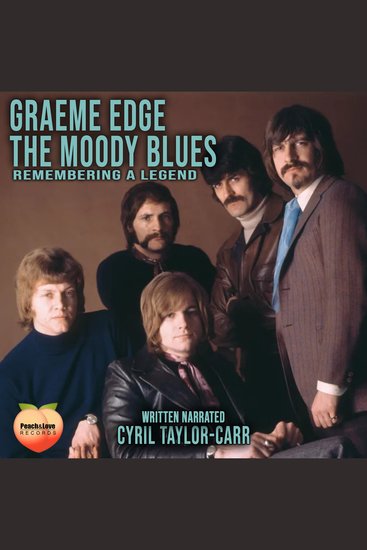
  • Graeme Edge The Moody Blues - cover

    Graeme Edge The Moody Blues

    Cyril Taylor-Carr

    • 0
    • 0
    • 0
    Graeme Edge was born on 30th March 1941 in Rochester, Staffordshire. His mother was a pianist for the silent movies and his father, grandfather and great-grandfather were all music-hall singers.Edge trained as a draughtsman but soon went into music full time. He never started out to be a drummer, he was, in fact the manager of a group called the Blue Rhythm Band. Graeme always watched the drummer in the group and fooled around on the drums, but never really drummed professionally until that drummer quit and he had to fill in. He then bought his first drum kit.The first band he formed was the Silhouettes followed by The Blue Rhythm Band. He then helped to form Gerry Levene and the Avengers, who recorded a single for Decca, and appeared on TV in "Thank Your Lucky Stars". Following the collapse of this group in April 1964 Edge formed The R & B Preachers, which included Denny Laine and Clint Warwick. When that group disbanded the three of them linked up with Ray Thomas and Mike Pinder to form The M & B 5, which later changed its name to The Moody Blues.
    Mostra libro
  • South End Syndicate - How I Took Over the Genovese Springfield Crew - cover

    South End Syndicate - How I Took...

    Anthony Arillotta, Joe Bradley

    • 0
    • 0
    • 0
    In 2003, local Genovese family captain "Big Al" Bruno got shot five times with a .45 caliber handgun as he walked out of the Our Lady of Mount Carmel social club in Springfield, Massachusetts. Since Vito Genovese took his empire north from New York City, a string of mobsters dating back a hundred years have operated in the Greater Springfield area. With this migration came murders, mayhem, treachery, criminal trials, and constant corruption. 


    Not until 2010 did authorities charge new Springfield Genovese boss Anthony "Bingy" Arillotta with Bruno's murder. At the time, Arillotta's connections spanned the Northeast—from the Patriarca family in Rhode Island to the Angiulos in Boston to the Gambinos and Bonannos in New York, and from Billy Grasso and Whitey Tropiano in New Haven to Whitey Bulger's Winter Hill Gang. During his seven-year reign, Arillotta had beautiful women, total power, and millions in cash. But it eventually came with a devastating price. 


    South End Syndicate tells the untold story of a young man infatuated with Springfield wiseguys who rose from being a street criminal to becoming his city's Mafia boss. How did a young Italian-American kid from Springfield work his way up the chain to become a Made wiseguy in charge of Western New England? Arillotta, now a free man, tells a timeless tale of power, money, and murder.
    Mostra libro
  • Sociology of Social Structures - Understanding Social Systems and Institutions (5 in 1) - cover

    Sociology of Social Structures -...

    Fred Grandsen

    • 0
    • 0
    • 0
    This book provides an in-depth exploration of the intricate social systems that shape human behavior, societal norms, and everyday life.  
    The Sociology of Crime examines the complex relationship between social structures and criminal behavior. It looks into how crime is defined, why individuals commit crimes, and how societal reactions to crime shape both law enforcement and criminal justice policies. 
    The Sociology of Deviance delves into behaviors that deviate from societal norms and the social processes that label them as deviant. This section explores how norms are constructed, the role of social institutions in defining deviance, and the impact of these labels on individuals and groups. 
    The Sociology of Education explores the role of education in society, focusing on how educational institutions serve as agents of socialization, reproduction of social structures, and vehicles for upward mobility. 
    The Sociology of Work highlights the changing nature of work, labor markets, and employment practices in contemporary society. It covers the evolution of work structures, from industrial labor to service-oriented economies, and the social implications of labor practices on individuals and communities. 
    The Sociology of Consumption looks at the cultural and social aspects of consumption, including how consumer behaviors are influenced by economic forces, marketing, and social norms. This book explores the relationship between identity and consumption, how consumer culture reflects social values, and the environmental and ethical implications of consumerism.  
    Together, these five books offer a comprehensive understanding of the key social structures and institutions that influence human behavior and societal development.
    Mostra libro