Unisciti a noi in un viaggio nel mondo dei libri!
Aggiungi questo libro allo scaffale
Grey
Scrivi un nuovo commento Default profile 50px
Grey
Iscriviti per leggere l'intero libro o leggi le prime pagine gratuitamente!
All characters reduced
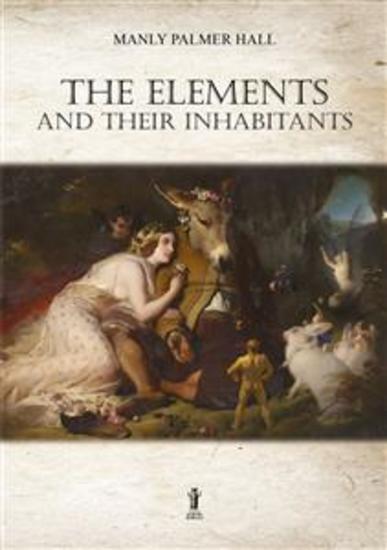
The Elements and their Inhabitants - cover

The Elements and their Inhabitants

Manly Palmer Hall

Casa editrice: Edizioni Aurora Boreale

  • 0
  • 0
  • 0

Sinossi

Just as visible Nature is populated by an infinite number of living creatures, so, according to Paracelsus, the invisible, spiritual counterpart of visible Nature (composed of the tenuous principles of the visible elements) is inhabited by a host of peculiar beings, to whom he has given the name elementals, and which have later been termed the Nature spirits. Paracelsus divided these people of the elements into four distinct groups, which he called gnomes, undines, sylphs, and salamanders. He taught that they were really living entities, many resembling human beings in shape, and inhabiting worlds of their own, unknown to man because his undeveloped senses were incapable of functioning beyond the limitations of the grosser elements.The civilizations of Greece, Rome, Egypt, China, and India believed implicitly in satyrs, sprites, and goblins. They peopled the sea with mermaids, the rivers and fountains with nymphs, the air with fairies, the fire with Lares and Penates, and the earth with fauns, dryads, and hamadryads. These Nature spirits were held in the highest esteem, and propitiatory offerings were made to them.Occasionally, as the result of atmospheric conditions or the peculiar sensitiveness of the devotee, they became visible. Many authors wrote concerning them in terms which signify that they had actually beheld these inhabitants of Nature’s finer realms. A number of authorities are of the opinion that many of the Gods worshiped by the pagans were elementals, for some of these invisibles were believed to be of commanding stature and magnificent deportment.The Greeks gave the name dæmon to some of these elementals, especially those of the higher orders, and worshiped them. Probably the most famous of these dæmons is the mysterious spirit which instructed Socrates, and of whom that great philosopher spoke in the highest terms. Those who have devoted much study to the invisible constitution of man realize that it is quite probable the dæmon of Socrates and the angel of Jakob Böhme were in reality not elementals, but the overshadowing divine natures of these philosophers themselves.
Disponibile da: 19/04/2022.

Altri libri che potrebbero interessarti

  • Let's Eat With Grandma - cover

    Let's Eat With Grandma

    Kim Mitzo Thompson, Karen Mitzo...

    • 0
    • 0
    • 0
    Kids will love this playful story about a family having dinner together and a grandma that enjoys cooking dinner for her family. Simple sentence structures and repetitive words will encourage young children to fall in love with learning to read.  Kids will enjoy following along word-for-word with the recorded story that features sound effects and professional voices to help children develop vocabulary and improve listening skills.  This reader features adorable art showing diversity to help children form a sense of acceptance and understanding of different races and individual differences.
    Mostra libro
  • Speaking in Tongues - cover

    Speaking in Tongues

    J. M. Coetzee, Mariana Dimópulos

    • 0
    • 0
    • 0
    Language, historically speaking, has always been slippery. Two dictionaries provide two different maps of the universe: which one is true, or are both false? Speaking in Tongues—taking the form of a dialogue between Nobel laureate novelist J. M. Coetzee and eminent translator Mariana Dimópulos—examines some of the most pressing linguistic issues that plague writers and translators well into the twenty-first century. 


    The authors inquire if one can truly love an acquired language, and they question why certain languages, like Spanish, have gender differences built into them. They examine the threat of monolingualism and ask how we can counter, if at all, the global spread of the English language, which seems to maraud like a colonial power. They question whether it should be the duty of the translator to remove morally objectionable language. And in the conclusion, Coetzee even speculates whether it's only mathematics that can tell the truth about everything. 


    Drawing from decades of experience in the craft of language, both Dimópulos and Coetzee face the reality that when it comes to self-expression, some things will always get lost in translation. Speaking in Tongues finally emerges as an engaging and accessible work of philosophy, shining a light on some of the most important linguistic and philological issues of our time.
    Mostra libro
  • Social Theory - Key Ideas and Concepts Shaping Sociological Thought - cover

    Social Theory - Key Ideas and...

    Fred Grandsen

    • 0
    • 0
    • 0
    Social theory provides a framework for understanding how societies function, how individuals interact, and how social structures shape human behavior. It encompasses a wide range of perspectives that seek to explain social order, change, and the relationships between individuals and institutions. By analyzing patterns in human behavior, power dynamics, and cultural influences, social theory helps us interpret the complexities of the modern world. Sociologists use these theories to examine issues such as inequality, globalization, identity, and technological change, offering insights that inform public policy, activism, and everyday life. 
    The origins of social theory can be traced back to early philosophical inquiries about society, morality, and governance. Thinkers such as Plato, Aristotle, and Confucius considered questions about justice, social order, and the ideal state. However, modern social theory emerged during the 19th and early 20th centuries in response to major social transformations such as industrialization, urbanization, and political revolutions. Pioneering sociologists, including Karl Marx, Emile Durkheim, and Max Weber, developed foundational theories to explain the impact of these changes on social life. Their work laid the groundwork for various theoretical traditions that continue to shape sociological inquiry today. 
    Social theories can be broadly categorized into macro and micro perspectives. Macro-level theories, such as structural functionalism and conflict theory, focus on large-scale social structures and institutions. These perspectives analyze how societies maintain stability, how power is distributed, and how systemic inequalities emerge. Micro-level theories, such as symbolic interactionism, examine individual interactions and the meanings people attach to their experiences. These approaches emphasize the role of language, symbols, and everyday social interactions in shaping identity and behavior.
    Mostra libro
  • The Aitareya Upanishad 101 - an original translation in modern language made plain and simple - cover

    The Aitareya Upanishad 101 - an...

    Matthew Barnes

    • 0
    • 0
    • 0
    Do you believe in evolution, but do not see this belief as necessarily negating the existence of an advanced Intelligence?  
    If so, you may find comfort, inspiration, and perhaps even proof for your beliefs within this ancient Hindu work.  
    The Aitareya Upanishad, which dates back to somewhere around 600-500 BCE, takes us through a journey … the journey of creation. It then leads us through the evolutionary changes that have brought us into this day and age and beyond, into the stage of existence that the ancient Hindus believed would come next. We were all created, the Hindus tell us, for a reason, and we are all evolving towards a particular state of beingness.  
    How can the Hindus be so sure that evolution is fact, and how can they be so sure that there is some sort of Intelligence behind it all? The Hindu religion is the oldest on earth. Their ancestors claim to have actually witnessed a small portion of evolution in action, and through their experiences, also claim to have discovered the underlying intent of life (both in the general and the individual sense). This work goes into these experiences and the insights the Hindus claim to have gained from them. 
    Also included in this narrative is an early Hindu concept of time and space that is extremely difficult to wrapt the human mind around. These concepts, however, coincide very closely with the findings of modern physics. 
    This work is my interpretation of the Aitareya Upanishad. I have endeavored to simplify its teachings, expand where needed, and include modern concepts, discoveries, and quotes to make the central concepts found within it more digestible to modern seekers, especially beginners.  
    Would you like to know more? 
    If so, scroll up and dive in now!
    Mostra libro
  • Auschwitz Children And Mengele Experiments - The Immoral and Atrocious Research on Children in the Auschwitz Concentration Camp during World War II - cover

    Auschwitz Children And Mengele...

    Jack Stew Barretta

    • 0
    • 0
    • 0
    This audiobook is narrated by an AI Voice.   
    Many doctors in Germany were convinced that they were the chosen people to create a healthy, racially pure Volkskörper (body of people) and by doing so, establish a racial utopia. As strong supporters of National Socialism, they welcomed the founding of the Third Reich. After Hitler acceded to power, German physicians joined the SS in particular. During the twelve years of the Nazi era, seven percent of German doctors became members of the SS. The average membership of the population was only 0.6 percent. Moreover, doctors were also overrepresented as a profession, with teachers consisting of less than half a percent and musicians only three percent. Only lawyers had a larger share in the SS than doctors. 
    The average income of German doctors increased extremely after 1933, even exceeding the income of lawyers. The Nazi doctors of the human experiments also joined the SS in large numbers. German doctors were far more reluctant to join the NSDAP than the SS. Before 1933, only seven percent of all German doctors joined the NSDAP (Nazi party). They joined the party when it seemed opportune to do so, in 1933, and particularly in 1937. In 1933, physicians made up almost a quarter of all academic professionals in the NSDAP. Most doctors joined the NSDAP in 1937, with a membership rate of 43 percent of the total profession. German physicians sat on the fence during the first years of the Nazi era, insecure about the effects of the new regime on their profession. By 1937, the Third Reich had won the trust of several reasons. The NSDAP had solved the economic crisis and had reorganized the medical profession. Moreover, the regime had solved “the Jewish question” in the medical sector.
    Mostra libro
  • History Of Spain - From Ancient Iberia to the Spanish–American War - cover

    History Of Spain - From Ancient...

    History Retold

    • 0
    • 0
    • 0
    Explore the grand history of Spain with this incredible book! 
    Take a journey through the ages and discover the stories and cultures that have shaped Spain from ancient times to the present. 
    Discover how the country has been influenced by its empires, wars, and revolutions, and learn about the vibrant culture of today. 
    We'll explore the people who have shaped and been shaped by this vibrant nation over time, examining their contributions to literature, art, architecture, religion, philosophy, and more. From the legendary Moors to modern-day Spaniards, we'll delve into the many stories that make up Spain's long and fascinating past. 
    Get this book today and explore the fascinating history of Spain!
    Mostra libro