Join us on a literary world trip!
Add this book to bookshelf
Grey
Write a new comment Default profile 50px
Grey
Subscribe to read the full book or read the first pages for free!
All characters reduced
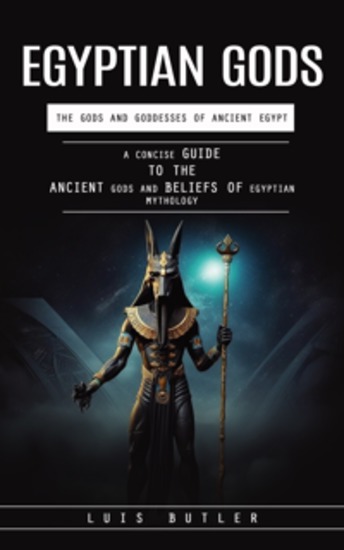
Egyptian Gods: The Gods and Goddesses of Ancient Egypt (A Concise Guide to the Ancient Gods and Beliefs of Egyptian Mythology) - cover

Egyptian Gods: The Gods and Goddesses of Ancient Egypt (A Concise Guide to the Ancient Gods and Beliefs of Egyptian Mythology)

Luis Butler

Publisher: Akshat Akshat

  • 0
  • 0
  • 0

Summary

This book is loaded with stories of the lives of the ancient Egyptians, their gods, and some of the greatest myths in antiquity. The gods played an important role in people’s lives; you might be surprised to see how much they impacted everyday life!On every page of this book, you will find yourself on an exciting journey to one of the most influential kingdoms in history.Inside you will read about...A timeline for ancient egyptHistorical egyptThe myth of creationThe pantheon of godsMythology in day to day ancient egyptThe central role of the temple and some temple ritualsSources of the history of egyptian mythologyThe underworld and life after deathPyramids and their locationsA great number of african folktales have been transmitted orally from person to person down through the ages, but since the nineteenth century, many stories have been written down and transmitted to audiences beyond the boundaries of the cultures that created them. One important—and tragic—conduit for the transmission of these stories beyond african shores was the european slave trade. Captured africans who were brought to the americas and the caribbean fought to keep alive what they could of their home cultures, and this included their folktale traditions.
Available since: 03/25/2025.
Print length: 60 pages.

Other books that might interest you

  • Dublin's Fighting Story 1916 - 21 - Told By The Men Who Made It - cover

    Dublin's Fighting Story 1916 -...

    Anonymous

    • 0
    • 0
    • 0
    Major Haig ordered them to 'prepare to fire', whereupon they the fired indiscriminately, point blank, at the people in the street. Four people were killed and thirty-seven wounded. All Ireland seethed with indignation . . . '&newpara;This new edition of Dublin's Fighting Story with an introduction by Diarmaid Ferriter features stories and reports from every aspect of the War of Independence, from the formation of the Fianna Éireann and the Volunteers, through the Great Dublin Strike and Lock-out in 1913 and the 1916 Rising to the death of Seán Treacy in a bloody street shoot-out, the triumph and tragedy of Bloody Sunday and the burning of the Customs House. Dublin's Fighting Story offers the perspective of the eye witnesses and fighting men themselves to the struggle for independence in Dublin.
    Show book
  • Globalization and Society - How the World is Connected and Why It Matters - cover

    Globalization and Society - How...

    Fred Grandsen

    • 0
    • 0
    • 0
    Globalization is a complex and multifaceted process that has shaped the modern world in profound ways. It refers to the increasing interconnectedness of societies, economies, and cultures across national borders. This phenomenon has accelerated over the past few decades due to advancements in technology, transportation, and communication, making it easier for people, goods, services, and ideas to move across the globe. While globalization is often associated with economic integration, it also has significant social, political, and cultural dimensions. 
    Historically, globalization can be traced back to ancient trade routes such as the Silk Road, which facilitated exchanges between distant civilizations. The Age of Exploration in the 15th and 16th centuries further expanded global interactions as European nations established colonies and trade networks around the world. However, modern globalization is distinct in its speed and scale. The 20th and 21st centuries have witnessed unprecedented levels of global integration, driven by technological innovations like the internet, satellite communication, and air travel. These advancements have made it possible for businesses to operate internationally, for cultures to influence one another more rapidly, and for individuals to access information from virtually anywhere.
    Show book
  • Stories on lord Ganesh series - 22 - From various sources of Ganesh purana - cover

    Stories on lord Ganesh series -...

    Anusha HS

    • 0
    • 0
    • 0
    Lord Ganesh is the son of Goddess Parvati and Lord Shiva. He is the first one to get worshipped before worshipping any other god. We can say in short that there is no Hindu who doesn't perform Lord Ganesh’s worship. In Ramayana Lord Rama had worshipped Lord Ganesh. 
    In Mahabharata Lord Krishna had also worshipped Lord Ganesh. They have become the role models to the whole world. Before the beginning of any work it is common to worship Lord Ganesh. There are many Holy hymns on Lord Ganesh. Lord Ganesh’s favorite food is modak. 
    He gets pleased if we offer Durva grass to him. He also loves red Hibiscus flower. He is called the vighnaharta because he wards off all the obstacles in our life. He is also called vighnaraja. There are infinite names to Lord Ganesh which we cannot explain. He ties a snake around his waist. 
    The vehicle of Lord Ganesh is mouse in Hindu culture. Lord Ganesh is worshipped all over India. His miracles have been described in all of the 18 Puranas. There are many forms of Lord Ganesh. 
    He has got two wives one is riddhi and the other is siddhi.Lord Ganesh has got 32 forms of incarnations. The modak which you offer to Lord Ganesh will give you good results. Lord Ganesh does not bias among his devotees. He is specially worshipped on sankashti days. On Ganesh Chaturthi people fast and perform vrath.On this day it is forbidden to see Chandra the moon.
    Show book
  • Tiny Voices Talk - Education Engagement Empowerment - cover

    Tiny Voices Talk - Education...

    Toria Bono

    • 0
    • 0
    • 0
    When tiny voices talk, three amazing things happen: they share surprising ideas and insights; they realise they are not so tiny; and they empower other tiny voices to talk too.Drawing on the winning formula of her Tiny Voice Talks podcasts, Toria Bono has compiled a great resource full of top tips and actionable advice from a range of tiny voices across the educational spectrum. The assembled voices speak on a broad range of topics relating to education and learner development - from mentoring, metacognitive skills and period education, to trauma-informed practice, nurturing curious learners and finding flow in the classroom.But above all, this book is a call to action for all those in our schools who have yet to find their voice to find it - and use it. There are big people with big voices (and big egos) in education, yet they are the minority. The majority consists of great people just getting on with doing great things - more often than not with people, not data, at the heart of their practice. This book inspires such people to find and use their voice; and when tiny voices talk to tiny voices, everyone wins. Suitable for teachers, teaching assistants and school leaders in all phases.
    Show book
  • Essays: First Series Friendship - cover

    Essays: First Series Friendship

    Ralph Waldo Emerson

    • 0
    • 0
    • 0
    A true friend is a paradox—both a mirror and a mystery, a presence that steadies yet unsettles. Emerson's Friendship is not a sentimental tribute but an exploration, as sharp as it is reverent. He does not merely celebrate companionship; he dissects it, questioning the forces that draw souls together and the invisible tensions that hold them apart.
    Friendship, in Emerson's vision, is not mere comfort—it is a force, a demand, a test. It requires space as much as closeness, silence as much as words. It thrives not in constant nearness but in the charged air of mutual respect, in the quiet certainty that the bond endures, even when distance stretches between.
    His words do not ask for easy agreement; they provoke. He suggests that the highest friendships are not found but forged, not effortless but exacting. The reader who enters Friendship expecting warmth may find, instead, a bracing clarity—a recognition that true companionship is both a gift and a discipline, an art as much as an affection. Emerson does not offer a guide to making friends; he offers something rarer: an insight into why, despite all risks, we seek them still.
    Show book
  • Assyrians and Persians - Discovering Societies from the Ancient World - cover

    Assyrians and Persians -...

    Kelly Mass

    • 0
    • 0
    • 0
    This combo consists of 3 short books, which are about the following topics: 
    1 - Assyria, frequently referred to as the Assyrian Empire, was a Mesopotamian kingdom and empire in the Ancient Near East that lasted from maybe the 25th century BC (in the form of the Assur city-state till its collapse between 612 BC and 605 BC, covering the Early to Middle Bronze Age to the Late Iron Age. 
    The Early Period (which was from about 2500 to 2025 BC), Old Assyrian Empire (2025 to 1378 BC), Middle Assyrian Empire (from 1392 to 934 BC), and Neo-Assyrian Empire (911 to 605 BC) are the 4 periods that comprise the Assyrian Empire. 
    2 - Whether you have played a Prince of Persia video game, seen the movie, or just heard about it in history class, it is hard to ignore the Persian Empire, which was among the greatest empires of the world for some time. 
    The typical area for the Persian Empire was what is now Iran. The Persians had a vast influence on surrounding countries and regions. Their style, art, music, rule, and culture has had an influence on the development of science and the forming of nations. 
    3 - Ur was a considerable Sumerian city-state in old Mesopotamia, situated near modern-day "Tell el-Muqayyar" in the Dhi Qar Governorate in southern Iraq. Ur was formerly a seaside city on the Persian Gulf, near the mouth of the Euphrates, but the shoreline has modified, and the city is now well inland, on the south bank of the Euphrates, sixteen kilometers (about 9.9 miles) from Nasiriyah in modern-day Iraq.
    Show book