Join us on a literary world trip!
Add this book to bookshelf
Grey
Write a new comment Default profile 50px
Grey
Subscribe to read the full book or read the first pages for free!
All characters reduced
QWERTY vs Dvorak - cover

QWERTY vs Dvorak

Lucas Lee

Translator A AI

Publisher: Publifye

  • 0
  • 0
  • 0

Summary

QWERTY vs Dvorak explores the curious case of the QWERTY keyboard, a layout designed to prevent typewriter jams that has stubbornly persisted despite the emergence of more efficient alternatives like the Dvorak Simplified Keyboard. This book examines why QWERTY remains the standard, even though studies suggest Dvorak allows for faster typing speeds and reduced error rates. It delves into the history and technical aspects of both layouts, considering factors like ergonomics and human-computer interaction. The central argument highlights path dependency, illustrating how an initial advantage can lock in a technology, regardless of later innovations. Network effects and switching costs play significant roles in QWERTY's continued dominance. The book unfolds by first exploring the history of typewriters and the QWERTY layout, then compares QWERTY and Dvorak in detail, considering ergonomic factors and relevant research. Finally, it analyzes the broader implications of path dependency for technology standards and innovation. This approach offers a unique perspective on the barriers to adopting potentially superior technologies.
Available since: 02/25/2025.
Print length: 76 pages.


Other books that might interest you

  • Future Wild - Nature Restoration in Ireland - cover

    Future Wild - Nature Restoration...

    Richard Nairn

    • 0
    • 0
    • 0
    Ireland has little left of its original natural habitats. Many species, like the curlew, are under pressure due to intensive practices such as farming, forestry and fisheries and some are threatened with extinction. But given a little help from us, nature has the innate capacity to restore itself.
    
    
    Nature restoration is the positive management of the environment for the benefit of wildlife and people. It looks to the future, by steering natural habitats and wildlife in a better and more sustainable direction.
    
    
    In Future Wild: Nature Restoration in Ireland, Richard Nairn explores numerous active restoration projects around Ireland which show how natural habitats and native species can be restored sustainably for the benefit of everyone. From individual landowners and voluntary organisations to state bodies such as Bord na Móna, he meets the people who are dedicated to nature restoration.
    
    
    By turns shocking, hopeful and finally positive, Future Wild shows that the damage we have done to nature can also be undone by us, and that, with nature restoration, we can create a richer and more diverse environment for generations to come.
    Show book
  • Electro Girl - cover

    Electro Girl

    Lainie Chait

    • 0
    • 0
    • 0
    Lainie Chait was diagnosed with epilepsy in 1991 at the age of 19. At the time of diagnosis, there were three roads to go down - avoidance, acceptance or rebellion.  Avoidance was her first choice. Falling in the shower, brain jerks and muscle twitches when she was 14 was the beginning of something 'not quite right' about her early teenage years. She hid these symptoms from family and friends for three years in the hope that they were just ‘growing pains’.As she started reaching the age of independence (18 in Australia) and started to drink, stay up late and go out partying, these ‘growing pains’ turned into a seizure condition that could no longer be ignored.  Eventually doctors, diagnoses and medicines were brought into the equation.She tried acceptance but at the time it wasn’t the right fit, as the very thought of taming down her young, fun life and replace it with medicine, early nights and mature personal decisions was just too hard to fathom. Rebellion then became her main focus and she achieved this by partying, staying up late and ignoring the triggers. This mindset carried with it an enormous amount of embarrassment and shame.  She constantly felt like a failure after each of the 250+ Grand Mal seizures she endured over 25 years.  But she wasn’t just rebelling against a diagnosis; she was rebelling against a system that has the capacity to make you feel better but at a price that also keeps you in a place of perpetual illness.  She needed to know why she had epilepsy and the only way she was going to find this out was to take herself off all the meds and research it, live it, feel it, document and manage it for herself.She did this much to the horror of her doctors, friends and family.  She went on a journey to get to know her brain and what makes it tick and glitch. The journey was about finding out just how much control she did and didn’t have over her seizures.Electro Girl is Lainie Chait's story of resilience, growth and self advocacy.
    Show book
  • William Stanek's The Living Everglades Biography - Water Wildlife and the Fight to Save a River of Grass - cover

    William Stanek's The Living...

    The Editors of Our American...

    • 0
    • 0
    • 0
    The Everglades is a river wide enough to look like land.
    
    Water once moved across South Florida with a freedom modern boundaries, canals, roads, farms, and cities would profoundly alter. Wildlife adapted to the timing of wet and dry. Human communities knew and used the landscape long before drainage became a vision of progress.
    
    William Stanek's The Living Everglades Biography follows water, wetlands, Indigenous presence, development, drainage, wildlife loss, park creation, pollution, restoration, invasive species, storms, and the enormous modern effort to repair a system changed far beyond its boundary.
    
    This is the story of a landscape that cannot be saved by protecting scenery alone.
    
    To save the Everglades, water itself must be allowed to live.
    Show book
  • Miner's Day - cover

    Miner's Day

    B. L. Coombes

    • 0
    • 0
    • 0
    Miner's Day is a testament to coal mining communities in the mid-twentieth century. First published by Penguin Books as a slim paperback in 1945, it married a reflective text by Britain's outstanding miner-writer, B. L. Coombes, to illustrations by the artist Isabel Alexander.
    The original text is now republished in a generous new format with a substantial introduction and the full wealth of images that Isabel Alexander made in an extended project to document people and places in the South Wales coalfield – a unique addition to the visual representation of mining communities.
    Bert Coombes in words and Isabel Alexander in images each aimed to reveal the layered reality of coal-mining communities to a distant public. They documented both work below ground and devastated environments above. They described the lives not just of working men but women, children and older people too. They saw poverty and despair but also love, hope and even humour. The South Wales they captured echoes similar communities across the world and evolving global challenges to health, work and environment. Miner's Day is as relevant now as it was in 1945.
    Show book
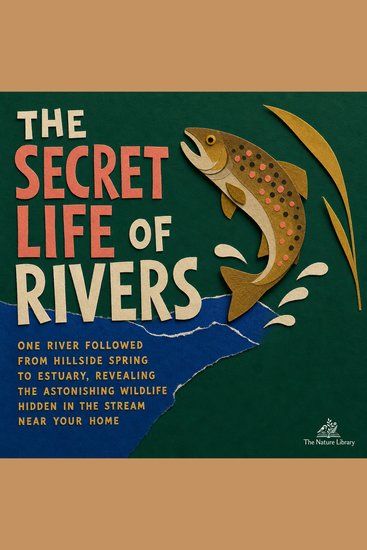
  • The Secret Life of Rivers - One River Followed from Hillside Spring to Estuary Revealing the Astonishing Wildlife Hidden in the Stream Near Your Home - cover

    The Secret Life of Rivers - One...

    The Nature Library

    • 0
    • 0
    • 0
    You loved the books that turned an ordinary wood into a hidden world of talking trees and trading fungi. Then you finished them, and the river behind your town went back to being just water.
    
    This audiobook follows one river from a cold hillside spring to the tidal mouth, and every short chapter opens inside a living scene on the water. You meet the caddisfly larva gluing itself a stone house, the beaver whose dam turns a trickle into a wetland, the salmon that smells its way home, the eel that begins and ends its life far out at sea, the kingfisher and the otter. Each chapter closes with a plain line on what the research really shows, so you know exactly which parts are proven and which are still open questions.
    
    After one chapter, the stream, canal or drainage ditch near your home stops looking empty. Press play, and take the river with you on your next walk.
    Show book
  • Ultimate UI UX Design for Professionals - Create Impactful User-Centric Designs with Research and Collaboration Techniques for Seamless Responsive Web Interfaces - cover

    Ultimate UI UX Design for...

    Sharanpreet Kaur

    • 0
    • 1
    • 0
    Design Like a Pro: Essential UI/UX Patterns and Secrets Unveiled
    Book Description
    With 70% of business success now tied to effective user experience, mastering UI/UX design is no longer optional—it's essential. [Ultimate UI/UX Design for Professionals] equips designers with the skills to create intuitive, impactful interfaces that drive user engagement and business growth.
    This comprehensive book empowers designers to elevate their skills and thrive in the fast-paced world of UI/UX. Covering every stage of the design process, from initial research to final handoff, it provides readers with practical tools and techniques to create user-centered, intuitive designs.
    Beginning with UX research and user mapping, the book introduces proven methods for understanding user needs and behaviors. It then progresses to wireframes, prototypes, and mockups, providing actionable tips for visualizing and refining design concepts. Dedicated sections on responsive design ensure your creations are seamlessly adaptable across all devices, meeting modern user expectations.
    The concluding chapters focus on the design handoff process and preparing for interviews, essential for effective collaboration with developers and advancing your career. Whether you're an aspiring designer or a seasoned professional, this book delivers valuable insights and actionable advice to thrive in any UI/UX role.
    Table of Contents
    1. The Design Thinking Process
    2. Fundamentals of UX Design
    3. Research and Analysis for UX Design
    4. The Art of UX Mapping
    5. Mastering Information Architecture and Sitemaps
    6. The Power of Wireframes and Prototypes
    7. Visual Design and UI Patterns
    8. The Power of Mockups
    9. Responsive Web Design
    10. Mastering in Design Handoff
    11. Interview Preparation for UI/UX Designer      
    
    Index
    Show book