Unisciti a noi in un viaggio nel mondo dei libri!
Aggiungi questo libro allo scaffale
Grey
Scrivi un nuovo commento Default profile 50px
Grey
Iscriviti per leggere l'intero libro o leggi le prime pagine gratuitamente!
All characters reduced
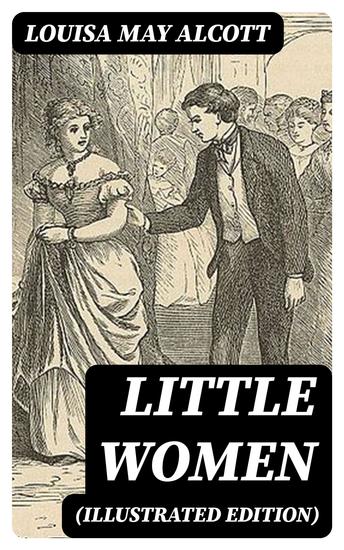
Little Women (Illustrated Edition) - cover

Little Women (Illustrated Edition)

Louisa May Alcott

Casa editrice: DigiCat

  • 0
  • 0
  • 0

Sinossi

In the Illustrated Edition of "Little Women," Louisa May Alcott masterfully recounts the lives of the March sisters—Meg, Jo, Beth, and Amy—as they navigate the complexities of adolescence and early womanhood in Civil War-era America. The novel fuses realism with a sense of nostalgia, employing a warm, conversational style that invites readers into the intimate world of familial bonds and personal growth. Richly illustrated, this edition enhances the narrative with visual interpretations that complement Alcott's detailed characterizations and poignant themes of self-discovery, love, and societal expectations. Louisa May Alcott, raised in a progressive household that valued education and social reform, drew upon her own experiences and aspirations to create the March sisters. A member of the transcendentalist movement, her writings reflect her passions for feminism and the abolitionist cause. Personal trials, including her father's sporadic employment and her family's financial struggles, shaped her worldview, resulting in a narrative that champions individuality and female empowerment amidst challenges. "Little Women" remains an essential work of American literature that transcends generations. Its exploration of identity, morality, and familial love resonates deeply, making it a compelling read for both young audiences and adults. This illustrated edition invites readers to rediscover the timeless joys and trials of the March sisters, ensuring that Alcott's vision continues to inspire.
Disponibile da: 13/11/2022.
Lunghezza di stampa: 499 pagine.
Altri libri che potrebbero interessarti

  • Highest Education The (Unabridged) - cover

    Highest Education The (Unabridged)

    Booker T. Washington

    • 0
    • 0
    • 0
    Booker Taliaferro Washington (April 5, 1856 - November 14, 1915) was an American educator, author, orator, and adviser to several presidents of the United States. Between 1890 and 1915, Washington was the dominant leader in the African American community and of the contemporary black elite. Washington was from the last generation of black American leaders born into slavery and became the leading voice of the former slaves and their descendants. They were newly oppressed in the South by disenfranchisement and the Jim Crow discriminatory laws enacted in the post-Reconstruction Southern states in the late 19th and early 20th centuries.
    THE HIGHEST EDUCATION: It may seem to some of you that I am continually talking to you about education-the right kind of education, how to get an education, and such kindred subjects-but surely no subject could be more pertinent, since the object for which you all are here is to get an education; and if you are to do this, you wish to get the best kind possible.
    Mostra libro
  • Mr Ledbetter's Vacation (Unabridged) - cover

    Mr Ledbetter's Vacation...

    H. G. Wells

    • 0
    • 0
    • 0
    Mr. Ledbetter's Vacation is a short story by H. G. Wells. Herbert George "H. G." Wells (21 September 1866 - 13 August 1946) was an English writer, now best known for his work in the science fiction genre. He was also a prolific writer in many other genres, including contemporary novels, history, politics and social commentary, even writing textbooks and rules for war games. Wells is sometimes called "The Father of Science Fiction," as are Jules Verne and Hugo Gernsback. His most notable science fiction works include The War of the Worlds, The Time Machine, The Invisible Man and The Island of Doctor Moreau. Wells's earliest specialised training was in biology, and his thinking on ethical matters took place in a specifically and fundamentally Darwinian context. He was also from an early date an outspoken socialist, often (but not always, as at the beginning of the First World War) sympathising with pacifist views. His later works became increasingly political and didactic, and he sometimes indicated on official documents that his profession was that of "Journalist." Most of his later novels were not science fiction. Some described lower-middle class life (Kipps; The History of Mr Polly), leading him to be touted as a worthy successor to Charles Dickens, but Wells described a range of social strata and even attempted, in Tono-Bungay (1909), a diagnosis of English society as a whole. Wells's first non-fiction bestseller was Anticipations of the Reaction of Mechanical and Scientific Progress Upon Human Life and Thought (1901). When originally serialised in a magazine it was subtitled, "An Experiment in Prophecy," and is considered his most explicitly futuristic work. It offered the immediate political message of the privileged sections of society continuing to bar capable men from other classes from advancement until war would force a need to employ those most able, rather than the traditional upper classes, as leaders. Anticipating what the world would be like in the year 2000, the book is interesting both for its hits (trains and cars resulting in the dispersion of population from cities to suburbs; moral restrictions declining as men and women seek greater sexual freedom; the defeat of German militarism, and the existence of a European Union) and its misses (he did not expect successful aircraft before 1950, and averred that "my imagination refuses to see any sort of submarine doing anything but suffocate its crew and founder at sea").
    Mostra libro
  • Benediction - From their pens to your ears genius in every story - cover

    Benediction - From their pens to...

    F Scott itzgerald

    • 0
    • 0
    • 0
    Francis Scott Key Fitzgerald was born on 24th September 1896 in Saint Paul, Minnesota into an upper-middle class family. Whilst his mother was pregnant with him, his two young sisters tragically died.  Fitzgerald once said this was when his destiny as a writer was ordained. 
    His intelligence and talent was recognised from an early age, with his first story, about a detective being published in the school magazine when he was just 13.   
    In 1913 he enrolled at Princeton but his devotion to his own literary pursuits resulted in him leaving and, rather bizarrely, joining the Army.  In 1918, stationed at Fort Sheridan near Montgomery, Alabama he met and became infatuated and then inseparable from Zelda Sayre.  Initially though she refused to marry him but with the success of ‘This Side of Paradise’, the fame and the flow of money enabled them both to begin a gilded life.  For them this was The Jazz Age.  For Fitzgerald he was already an alcoholic. 
    He continued to write with great mastery and the titles of his novels and many of his 164 short stories are household names.  The Great Gatsby, often cited as The Great American Novel was published to mixed reviews.  As America moved from the Great Depression to the slaughter of the Second World War his works and himself were seen as far too entwined with the decadent twenties. The world had moved on and he hadn’t.   
    Further tragedy was never far from his life. Zelda after years of erratic and now intolerable behaviour was committed to an institution in 1936.  His own sales began to decline and he became a hack for hire in Hollywood, dependent on increasing amounts of booze and the weekly pay check.  His drunken state had often resulted in arrest or hospitalisation, further imperiling his talents.   Despite his contribution to many MGM films he received only one credit. 
    The end came all too soon for one of America’s greatest ever writers.  On 21st December 1940, at only 44 years of age in Hollywood, F Scott Fitzgerald succumbed to a heart attack.
    Mostra libro
  • Gusev - cover

    Gusev

    Anton Chekhov

    • 0
    • 0
    • 0
    "Gusev"  is an 1890 short story by Anton Chekhov.
    Several discharged soldiers return home from the Far East by ship. Confined to the hospital cabin, they are all apparently dying of consumption and seemingly indifferent to their condition. Among them are Gusev, a mild, racist, slightly dim man, and the mysterious Pavel Ivanovich, an ardent "protester" who often goes on diatribes (many of which Gusev either misunderstands or ignores) about his lifelong commitment to telling people "the truth to their faces". Ivanovich is proud of having riled every single person around him during his three years' service in the East, and thinks all the other men present are fools. He later reveals that he is the son of a priest and had to disguise himself as a peasant to buy his third-class ticket. One day, while Gusev is asleep, Pavel Ivanovich dies. One of the other soldiers, seeing that Gusev will also die shortly, helps him up to the ship's deck, where they look at the waves crashing into one another. Several days later, Gusev dies. His body is sewn into a sailcloth sack and weighted. After a short prayer, it is thrown into the ocean, where a shark bites at it. Up above, the ocean begins to reflect the colors of the sky, "...tender, joyous, passionate colours for which it is hard to find a name in human speech".
    Mostra libro
  • Frankenstein - cover

    Frankenstein

    Mary Shelley

    • 0
    • 0
    • 0
    Frankenstein tells the story of Victor Frankenstein, a young scientist who creates a sapient creature in an unorthodox scientific experiment. Shelley started writing the story when she was 18, and the first edition was published anonymously in London on 1 January 1818, when she was 20. Her name first appeared in the second edition, which was published in Paris in 1821.Shelley travelled through Europe in 1815, moving along the river Rhine in Germany, and stopping in Gernsheim, 17 kilometres (11 mi) away from Frankenstein Castle, where, two centuries before, an alchemist had engaged in experiments.[note She then journeyed to the region of Geneva, Switzerland, where much of the story takes place. Galvanism and occult ideas were topics of conversation for her companions, particularly for her lover and future husband Percy B. Shelley. In 1816 Mary, Percy and Lord Byron had a competition to see who could write the best horror story. After thinking for days, Shelley was inspired to write Frankenstein after imagining a scientist who created life and was horrified by what he had made.Though Frankenstein is infused with elements of the Gothic novel and the Romantic movement, Brian Aldiss has argued for regarding it as the first true science-fiction story. In contrast to previous stories with fantastical elements resembling those of later science fiction, Aldiss states, the central character "makes a deliberate decision" and "turns to modern experiments in the laboratory" to achieve fantastic results. The novel has had a considerable influence on literature and on popular culture; it has spawned a complete genre of horror stories, films, and plays.Since the publication of the novel, the name "Frankenstein" has often been used, erroneously, to refer to the monster, rather than to his creator/father.
    Mostra libro
  • Ben Hur A Tale Of The Christ - cover

    Ben Hur A Tale Of The Christ

    Lew Wallace

    • 0
    • 0
    • 0
    Ben-Hur is a story of two very different heroes. Judah Ben-Hur, a prince of Jerusalem, is involved in an accident to the Roman procurator which is taken to be intentional. He is seized and sent to the fleet as a galley-slave, while his family is imprisoned and the family goods confiscated. When Ben-Hur saves the fleet captain from drowning after his ship is sunk in a fight with pirates, that officer adopts him as son and heir. With Roman training, Ben-Hur distinguishes himself in the arena and the palistrae and appears to be on the way to high military command. With the help of a faithful family retainer and a generous Arab sheik, Ben-Hur is enabled to take part in a widely touted chariot race, where one of the other charioteers is the boyhood friend who connived to punish him for the accident and split his estate. That rival is crippled, financially and bodily, in a no-holds-barred race (memorable from the 1959 movie with Charlton Heston). Ben-Hur turns his attention to the prophesied King of the Jews, when through the sheik he meets Balthasar, one of the Three Wise Men, and hears of the child born years ago. Will Ben-Hur be the general who brings victories to the King, and finally liberates Israel from the oppressive Roman yoke? In his quest for the answer, Ben-Hur seeks out the Nazarene, now rumored to be The Messiah. THAT hero needs no introduction. Curious about the lack of kingly trappings and ambitions about this man, Ben-Hur begins to suspect that his kingdom is not of this world. And with him, we receive a gut-wrenching eye-witness view of Jesus’ arrest, humiliation, and crucifixion. Lewis Wallace was an American lawyer, Union general in the American Civil War, governor of the New Mexico Territory, politician, diplomat, and author from Indiana.
    Mostra libro