Unisciti a noi in un viaggio nel mondo dei libri!
Aggiungi questo libro allo scaffale
Grey
Scrivi un nuovo commento Default profile 50px
Grey
Iscriviti per leggere l'intero libro o leggi le prime pagine gratuitamente!
All characters reduced
The bitter cry of outcast London - cover

The bitter cry of outcast London

London Congregational Union

Casa editrice: e-artnow

  • 0
  • 0
  • 0

Sinossi

"The bitter cry of outcast London" by London Congregational Union. Published by e-artnow. e-artnow publishes a wide range of titles that encompasses every genre. From well-known classics & literary fiction and non-fiction to forgotten−or yet undiscovered gems−of world literature, we issue the books that need to be read. Each e-artnow edition has been meticulously edited and formatted to boost readability for all e-readers and devices. Our goal is to produce eBooks that are user-friendly and accessible to everyone in a high-quality digital format.
Disponibile da: 28/11/2023.
Lunghezza di stampa: 21 pagine.

Altri libri che potrebbero interessarti

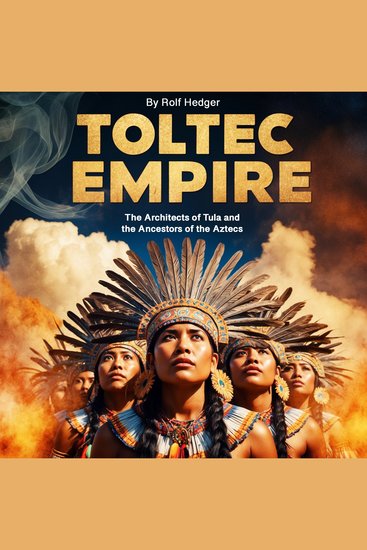
  • Toltec Empire - The Architects of Tula and the Ancestors of the Aztecs - cover

    Toltec Empire - The Architects...

    Rolf Hedger

    • 0
    • 0
    • 0
    The Toltec civilization emerged in central Mexico following the decline of Teotihuacan, one of the most powerful and influential cities of ancient Mesoamerica. With Teotihuacan’s fall around the 7th or 8th century, the region experienced a power vacuum, creating an opportunity for new societies to rise. Among them were the Toltecs, a people who would shape the political, military, and cultural landscape of Mesoamerica for centuries to come. 
    The origins of the Toltecs remain a subject of scholarly debate, but many sources trace their roots to northern Mexico, possibly the arid regions of modern-day Zacatecas or the deserts beyond. By the 10th century, they had established themselves in the Valley of Mexico, where they founded their capital, Tula. The early rulers of the Toltecs, including the semi-legendary Mixcoatl, are credited with uniting various groups under a centralized government and fostering a warrior-based society that would come to dominate the region. Mixcoatl's son, Ce Acatl Topiltzin Quetzalcoatl, is one of the most famous figures in Toltec history. Said to be both a king and a priest, he promoted the worship of Quetzalcoatl, the feathered serpent deity, and encouraged a cultural shift away from excessive militarism and human sacrifice. However, his reign was met with opposition from factions who favored more warlike practices, leading to his eventual exile. His departure, shrouded in myth, would later influence Aztec beliefs and the idea of a prophesied return. 
    Tula, the heart of the Toltec Empire, reflected the ambitions and architectural ingenuity of its people. Expanding over several square miles, the city featured impressive pyramids, colonnaded halls, and massive stone warriors that stood as sentinels over its ceremonial centers. The city's strategic location allowed the Toltecs to control trade networks that extended as far as the Yucatán Peninsula and beyond.
    Mostra libro

  • Your Story Matters - Find Your Voice Sharpen Your Skills Tell Your Story - cover

    Your Story Matters - Find Your...

    Nikesh Shukla

    • 0
    • 0
    • 0
    Stories can be powerful tools for our aspirations. Stories that reflect the society we want to be in, that show the multitudinousness and multiculturalism of the UK, make us citizens of everywhere. And that’s why, to me, stories matter.Your Story Matters is an indispensable and inclusive guide not only to the how of writing, but also the why. Nikesh Shukla, author, writing mentor and bestselling editor of The Good Immigrant, knows better than most the power that every unique voice has to effect change. Everyone has a story inside that only they can tell; all you need is the friendly, informal and practical advice in this book to help draw it out and let you know that your story is worthy of being told. Whether it's a novel, personal essay, non-fiction work or short story – or even just the formless desire to write something –  Your Story Matters will hone your skill and help you along the way.This book includes exercises and prompts that will develop your idea, no matter what genre you're writing in. It is practical, to the point and focused on letting you figure out WHAT you want to write, HOW you want to write and WHY this is the best use of your voice. This book will challenge you to write in styles you don't like as well as styles you feel comfortable with, inspiring you to push against the boundaries of others' expectations - and your own. Accessible and thought-provoking, Your Story Matters will inspire you to keep thinking about writing, even when you don't have the time to put pen to paper.
    Mostra libro
  • The Divine Comedy - Inferno Purgatory Paradise - cover

    The Divine Comedy - Inferno...

    Dante Alighieri

    • 0
    • 0
    • 0
    The Divine Comedy (La Divina Commedia) by Dante Alighieri is one of the greatest works of art known to the world, a "comedy", that became a "divine book" for ancestors. It is an encyclopedia of "moral, natural, philosophical and theological" knowledges, a tremendous synthesis of the feudal catholic ideology and the same tremendous epiphany that spread during the new culture times. A great poetic genius of the author put this comedy above the era and made it a legacy of centuries.It is divided into three parts: Inferno, Purgatory, Paradise.
    Mostra libro
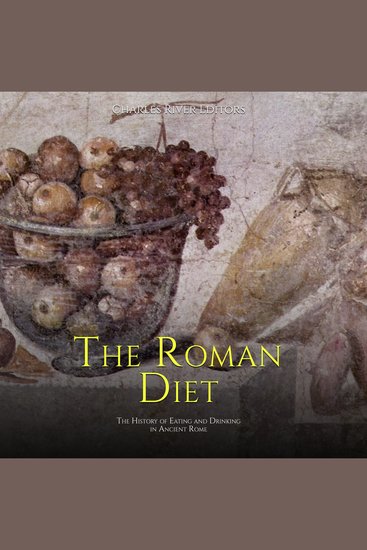
  • Roman Diet The: The History of Eating and Drinking in Ancient Rome - cover

    Roman Diet The: The History of...

    Editors Charles River

    • 0
    • 0
    • 0
    Indulgence is at the heart of modern perceptions of eating and drinking for the ancient Romans. The majority of primary sources depicting food and drink that have survived show rich patricians reclining at a table loaded with exotic foods, and Roman diners are often depicted as gorging themselves over numerous courses served over many hours. Of course, the history of eating and drinking for the wider population within the more than 1,000-year span of the empire was somewhat different. These feasts depicted in the images of Roman dining were relevant to only the very elite and ignore the fact that Roman society was rigidly hierarchical. What the richest ate was markedly different from the fare on offer to their slaves, and between these two extremes, there were numerous socioeconomic groups whose eating and drinking habits varied enormously. Moreover, since the Roman Empire encompassed much of Europe and the Middle East, the different kinds of food and drinks available in Rome were vast.  
    	While there are several sources of evidence to help determine what Romans ate and drank, tangible evidence of the Romans’ diets can be found in one particular source: human waste. The cities of Herculaneum and Pompeii, in particular, have left intact sewers and rubbish heaps packed with digested food that scientists and archaeologists have been able to analyze, and which have revealed details of what the ordinary Romans consumed.  
    	Literature and art also provide some information. For example, Petronius’ Satyricon is probably the inspiration for the modern concept of the decadent Roman banquet, while the poets Horace and Juvenal included detailed information in their Satires. Perhaps the most significant written source is a large cookbook, Apicius’s De re coquinaria, which was written in the 4th century CE. Pliny the Elder’s Natural History is also a valuable source on the edible plants used in Roman cooking.
    Mostra libro
  • How To Make People Laugh: Learn To Develop Confidence and Improve Your Humor - cover

    How To Make People Laugh: Learn...

    Christopher Rothchester

    • 0
    • 0
    • 0
    Have you ever asked yourself how you can make people laugh? 
    The undoubted answer is by developing a sense of humor. There's no greater way to make people happy than by making them laugh, and improving your humor can be as easy as putting on a funny mask. 
    The time and effort you spend developing your sense of humor will pay off in countless little ways. You will be able to make people laugh at pretty much anything, whether it's yourself or other people, especially those who are more awkward than you are. It can help with crowd work and socializing too. 
    This audiobook will help you develop a funny mask, or at least some of the key elements that you might need to be able to make people laugh. 
    In this audiobook, you learn how to develop different joke styles and your own sense of humor, how to astutely perceive situations, how you can take risks and still come away with the laughs, and how you can use your sense of humor as a tool for learning from others. 
    This audiobook will cover:The science of charisma.How you can develop confidence and charisma.The role of body language in the equation.The role of personality in the types of jokes and delivery.Guidance for great improv.Examples of possible improv responses.And much more! 
    You will learn about the psychology of humor and how you can use it to your advantage. You'll also be able to develop a new way of doing crowd work, as well as perform better in social situations. As time goes on, you'll also be able to use that same way of thinking in other aspects of your life. This audiobook is going to help you become better at making people laugh, and it's something that you can use not only when you're on stage, but whenever you're around other people.
    Mostra libro
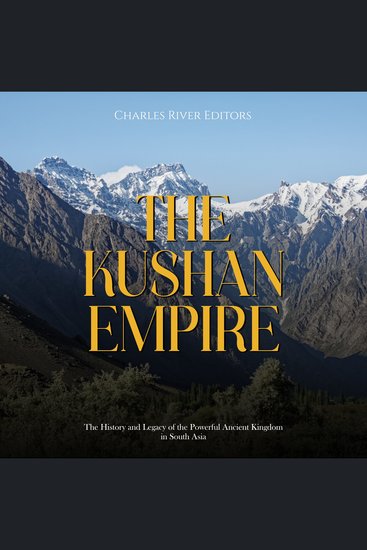
  • Kushan Empire The: The History and Legacy of the Powerful Ancient Dynasty in South Asia - cover

    Kushan Empire The: The History...

    Editors Charles River

    • 0
    • 0
    • 0
    Long before it was known as Afghanistan, and even longer before it acquired its current reputation, Afghanistan’s modern borders were fairly congruent with the ancient country known as Bactria. Bactria was the seat of several different kingdoms during the course of many centuries, but none were as successful as the Kushan Empire, the dominant political entity in Central Asia from the early 2nd century BCE until the early 3rd century CE, during which time the Kushan rulers played a major role in the first iteration of the trade networks known collectively as the Silk Road. The Kushans began as nomadic steppe warriors who eventually grew tired of constantly migrating and subsequently put their skills and experience to use by conquering Bactria and creating a kingdom that was stronger economically than it was militarily. Taking advantage of their location on the Silk Road trade routes, the Kushan kings charged fees and tolls for goods passing through their empire and developed over-land and sea routes that brought goods from China to Rome and vice versa. But silk, textiles, gold, silver, and other commodities were not the only things that entered the Kushan Empire from the East and West; the Kushan Empire was a focal point for the spread of ideas, diplomats, and diseases. Although the Romans and the Chinese never had direct contact, they both had diplomatic relations with the Kushan kings, who proved to be outstanding diplomats. The Kushan Empire eventually became a transit point of people and ideas, where enormous wealth was exchanged alongside early forms of monotheism, such as Zoroastrianism and Buddhism. The Kushan kings recognized these cultural benefits and so practiced a policy of patronizing different religious philosophies and maintaining peaceful relations with other powers along the Silk Roads to keep the flow of goods moving. 
    Mostra libro