¡Acompáñanos a viajar por el mundo de los libros!
Añadir este libro a la estantería
Grey
Escribe un nuevo comentario Default profile 50px
Grey
Suscríbete para leer el libro completo o lee las primeras páginas gratis.
All characters reduced
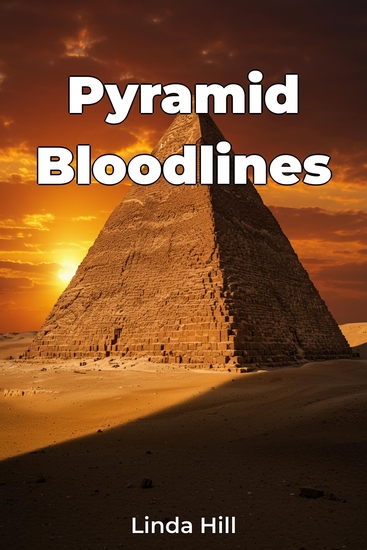
Pyramid Bloodlines - cover

Pyramid Bloodlines

Linda Hill

Traductor A Ai

Editorial: Publifye

  • 0
  • 0
  • 0

Sinopsis

"Pyramid Bloodlines" examines the profound connection between ancient pyramids and the royal dynasties that commissioned them, arguing that these monumental structures were far more than just elaborate tombs. The book explores how pyramid construction served as a critical tool for legitimizing royal power, consolidating resources, and projecting divine authority. For example, the evolution of pyramid design often mirrored shifts in political landscapes, with each dynasty imprinting its unique style and ideology onto these imposing structures. 

 
The book begins by surveying notable pyramid complexes worldwide, from Egypt to Mesoamerica, before delving into the intricacies of pyramid design and construction techniques relative to dynastic changes. It analyzes the role of pyramids in royal succession, funerary rituals, and ancestor worship, highlighting their function as focal points for reinforcing the legitimacy of rulers and ensuring the continuity of royal bloodlines. Through archaeological findings, textual sources, and interdisciplinary connections, "Pyramid Bloodlines" offers a fresh perspective on ancient history and elite rule. 

 
The book progresses by first introducing the world’s most notable pyramid complexes and then examining in detail the evolution of pyramid design in relation to dynastic changes and the role of pyramids in royal succession and funerary rituals. This approach culminates in demonstrating the tangible benefits, such as validated authority, derived from investing in pyramid building. 

 
By focusing on the intertwining of royal bloodlines, ancient civilizations, and pyramid construction, "Pyramid Bloodlines" provides valuable insights into the power dynamics that shaped the ancient world.
Disponible desde: 20/02/2025.
Longitud de impresión: 68 páginas.

Otros libros que te pueden interesar

  • Healing Rage - Women Making Inner Peace Possible - cover

    Healing Rage - Women Making...

    Ruth King, Jack Kornfield

    • 0
    • 0
    • 0
    Healing Rage is the self-published success that provides guidance for women in identifying and transforming one of the most challenging emotions of our lives 


    Self-help authors rarely distinguish between anger and rage, but Ruth King has devoted her career to exploring the subtle varieties of this emotion. In Healing Rage, she gives all listeners access to her pioneering, breakthrough program, which has already changed thousands of lives through workshops nationwide. 


    Written for every woman—from counselors and their patients to those who may not realize that rage is at the root of their unhappiness and have just begun to seek new paths of hope—Healing Rage is a unique invitation for transformation.
    Ver libro
  • George Washington Carver - A Biography of a Scientist Botanist and Former Slave - cover

    George Washington Carver - A...

    John Perry

    • 0
    • 0
    • 0
    Christian Encounters, a series of biographies from Thomas Nelson Publishers, highlights important lives from all ages and areas of the Church. Some are familiar faces. Others are unexpected guests. But all, through their relationships, struggles, prayers, and desires, uniquely illuminate our shared experience. 
    A generation of 20th-century Americans knew him as a gentle, stoop-shouldered old black man who loved plants and discovered more than a hundred uses for the humble peanut. George Washington Carver goes beyond the public image to chronicle the adventures of one of history's most inspiring and remarkable men. 
    George Washington Carver was born a slave. After his mother was kidnapped during the Civil War, his former owners raised him as their own child. He was the first black graduate of Iowa State, and turned down a salary from Thomas Edison higher than the U.S. President to stay at the struggling Tuskegee Institute, where he taught and encouraged poor black students for nearly half a century. 
    Carver was an award-winning painter and acclaimed botanist who saw God the Creator in all of nature. The more he learned about the world, the more convinced he was that everything in it was a gift from the Almighty, that all people were equal in His sight, and that the way to gain respect from his fellow man was not to demand it, but to earn it.
    Ver libro
  • Overcoming fears meditation course - panic attacks disorder - alternative healing therapy transform your fears into power deep calmness peace diving into unknown PTSD syndrome causes new coping - cover

    Overcoming fears meditation...

    Think ThinkAndBloom

    • 0
    • 0
    • 0
    Do you feel you have sabotaged your life by your fears? Are there unknown fears or panic attacks in life that you do not know how to deal with? Do you want to heal your fears and move forward in life? 
    In this guided meditation course, we will learn to understand how fears are formed and where they originate from. Sometimes the fears come from our childhood conditioning. In some other cases, they are stem from unknown sources. 
    In this audiobook we will cover:The cause of fearsHow our brain cope with fearsFears vs phobiaspowerful guided meditations to release fears and panicsStrong affirmations guide for everyday useRelieve stress anxieties and worriesTransforming your life from withinTake back your powerand much more 
    We will guide you in steps to heal fears in a fast and gentle process. You will regain the sense of balance, clarity, and confidence in dealing with people and circumstances in moving forward in life.
    Ver libro
  • Most Famous Leaders of Native American Resistance The: The History of the Indigenous Chiefs Who Fought the Expansion of White Settlers - cover

    Most Famous Leaders of Native...

    Editors Charles River

    • 0
    • 0
    • 0
    Throughout history, there have been men of war and men of peace, but few have actually had a war named after them. One of them was Pontiac, also known as Obwandiyag, an Odawa chief who left his mark on history by continuing the battle against the British after their official triumph during the French and Indian War.  
    	The new United States was faced with a fundamental problem: to expand, it had to settle lands to the west of the Appalachian Mountains, ceded to it by the British. However, the mountains were occupied by Native American groups who had no desire to make way for white settlers. The treaty had created a vast frontier for the fledgling nation, and any American settlers pushing west along it were bound to encounter hostile natives.  
    	For the most part, the conflicts that followed consisted mostly of the Native Americans suffering defeat in the face of a better-equipped adversary, interspersed with binding treaties, which, on the side of the federal government, proved not very binding at all. Occasionally, however, there arose a Native American leader of such ability that such defeats were temporarily reversed, and Little Turtle, the war chief of the Miami tribe, was one such man. Under his leadership, a confederation of Miami and other tribes inflicted the worst defeat ever suffered by an American army in the newly independent nation. Almost a quarter of the Army’s total strength was lost in a single battle, but while later Native American leaders such as Sitting Bull and Crazy Horse have become legends, Little Turtle is not as well-remembered. This is particularly odd, given that he actually defeated the American military and helped shape the development of the nascent United States and its military.
    Ver libro
  • Anarchism: The Basics - An Introduction to the Philosophy and Principles of Anarchy - cover

    Anarchism: The Basics - An...

    Arlo Holders

    • 0
    • 0
    • 0
    Anarchism is often misunderstood as simply chaos or disorder, but it is, in fact, a political and philosophical ideology that seeks the abolition of unjust systems of power, particularly the state and hierarchical structures. At its core, anarchism advocates for a society based on voluntary cooperation, mutual aid, and the dismantling of coercive institutions. It emphasizes individual freedom, collective responsibility, and the rejection of authority in all its forms, whether governmental, economic, or social. 
    The roots of anarchist thought can be traced back to the early 19th century, with thinkers like Pierre-Joseph Proudhon, who famously declared that "property is theft," and later, figures like Mikhail Bakunin and Peter Kropotkin. These early anarchists critiqued the existing state, capitalism, and organized religion, arguing that they were inherently oppressive and exploitative. Anarchism, for these thinkers, was not just about rejecting government, but also about challenging societal norms that perpetuate inequality and injustice. 
    One of the most important aspects of anarchism is its emphasis on direct action and the creation of alternative systems of organization. Anarchists believe that meaningful change does not come from traditional political structures like elections or parliamentary processes, but through grassroots action and community-based solutions. This can involve protests, strikes, and other forms of resistance, but also the establishment of cooperative enterprises, mutual aid networks, and non-hierarchical communities.
    Ver libro
  • Aliens - The Chequered History of Britain's Wartime Refugees - cover

    Aliens - The Chequered History...

    Paul Dowswell

    • 0
    • 0
    • 0
    The welcome given to refugees from fascist Europe is part of our fond nostalgia for Britain's role in the Second World War, nestling in our imagination next to images of evacuees clutching teddy bears, and milkmen picking their way through bomb rubble during the Blitz. But there is a darker side to this story. Then, as now, there was great suspicion, resentment and fear towards new arrivals, much of it kindled by the tabloid press. Then, as now, politicians dealt with a reluctance to accommodate refugees by hiding behind bureaucratic hurdles and obfuscation.
    Many of the 10,000 Kindertransport children who arrived here in the late 1930s have warm memories of the kindness they were shown, but half a million refugees were refused entry and most of them died as a result. And those who were accepted found their troubles far from over. While Britain fearfully awaited invasion in 1940, 30,000 Jews were interned as 'enemy aliens' and some were sent off to the colonies on dangerous and sometimes fatal voyages. Nor were Jews the only refugees clamouring for the thin gruel of public sympathy. Those fleeing fascism and civil war elsewhere in Europe found that whether they were met with kindness or hostility depended on the locals' political affiliations and newspapers of choice.
    Interweaving personal testimonies with historical sources, Paul Dowswell casts a fresh eye on the wartime era, painting a vivid picture of what life was really like for Britain's refugees.
    Ver libro