Unisciti a noi in un viaggio nel mondo dei libri!
Aggiungi questo libro allo scaffale
Grey
Scrivi un nuovo commento Default profile 50px
Grey
Iscriviti per leggere l'intero libro o leggi le prime pagine gratuitamente!
All characters reduced
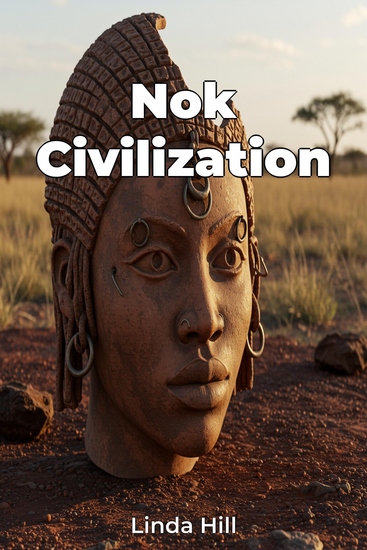
Nok Civilization - cover

Nok Civilization

Linda Hill

Traduttore A AI

Casa editrice: Publifye

  • 0
  • 0
  • 0

Sinossi

Nok Civilization explores the fascinating yet mysterious Nok culture of West Africa, flourishing from around 1500 BCE to 500 CE. Renowned for their advanced ironworking and striking terracotta sculptures, the Nok present a compelling case for independent technological and artistic development in pre-colonial Africa. The book delves into the intricacies of Nok society, examining how their mastery of iron metallurgy may have enabled agricultural advancements and even influenced warfare, indicating a complex social structure.

 
The book's approach is multidisciplinary, integrating archaeological findings, art historical analysis, and scientific data to paint a comprehensive picture. It begins by establishing the geographical and chronological context, then explores Nok ironworking technology and the stylistic features of their terracotta sculptures. The analysis of Nok terracotta, known for their expressive realism, offers insights into their belief systems and social structures.

 
Organized into three distinct sections, the book first introduces the discovery of Nok artifacts and the challenges of research. Second, it examines their ironworking technology, and finally, analyzes their terracotta sculptures. It challenges simplistic views of African history and encourages critical evaluation of the evidence surrounding this influential, ancient civilization.
Disponibile da: 19/03/2025.
Lunghezza di stampa: 52 pagine.

Altri libri che potrebbero interessarti

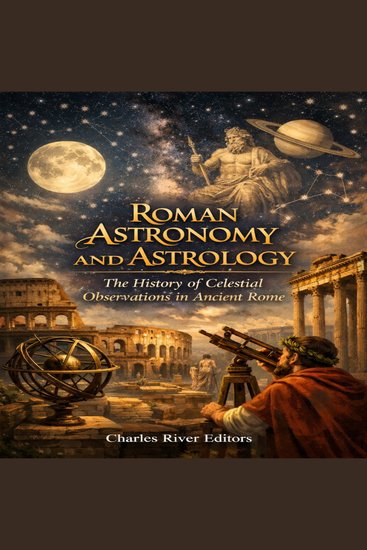
  • Roman Astronomy and Astrology: The History of Celestial Observations in Ancient Rome - cover

    Roman Astronomy and Astrology:...

    Charles River Editors

    • 0
    • 0
    • 0
    The development of Roman astronomy evolved over the centuries, embracing the ideas of many cultures as the Romans conquered much of the known world, soaking up knowledge from Asia, Europe, and Africa. Each civilization brought distinct traditions and scientific understanding, and Rome was a bridge, preserving and spreading the concepts and technologies of its conquered lands, including astronomy. For example, After Cyrus the Great conquered Babylon in 539 BCE, he appointed Chaldean astronomers to his Persian court and safeguarded the detailed Babylonian star charts. The skill of predicting eclipses using these historical charts and mathematics passed from the Persians to the Greeks, and finally to the Romans.  
    Roman astronomy had practical purposes, like timekeeping, and Roman ships used the stars for navigation. The Romans oriented monuments, temples, tombs, and cities with specific constellations, and like most ancient people, the Romans believed in astrology. They thought the Sun, Moon, planets, and stars influenced human lives and earthly events, and most Romans viewed astrology as a natural extension of astronomy. They gave the names of their deities to the planets and stars, and they thought the stars, moon, and planets had mystical power and represented the deities. Thus, they studied the movements of the stars and planets to discern their personal fortunes and the will of their gods. The five planets that can be seen with the naked eye still have the names of Roman gods: Mercury, Venus, Mars, Jupiter, and Saturn, and modern astronomers use Roman records of solar storms, comets, and eclipses, along with consulting ancient Roman data to analyze Earth’s climate history, orbital mechanics, and long-term patterns for the 11-year solar cycle. 
    Mostra libro
  • Artificial Intelligence in Education - cover

    Artificial Intelligence in...

    Introbooks Team

    • 0
    • 0
    • 0
     Sci-fi authors, Movie-makers and futurists have been dreaming Artificial Intelligence taking over for decades now. They have been defining the new horizon of robotic technology, artificial brain and artificial intelligence for a long time. However, what was their dreams, the researchers and scientists of the twenty-first century have turned it almost into a mere reality. Artificial Intelligence nowadays has surrounded us. Almost all the technical and some of the non-technical fields are improving pretty fast, holding the hands of Artificial Intelligence. From the auto parking facility in your car to the sometimes frustrating voice assistance application in your Smartphone. From defining diseases and their medication in the healthcare sector to our education system nowadays, you name it. Almost everything that contains the word *smart* before its name is been operated with Artificial Intelligence. 
     True is the fact that we are not going to make robots that are self-aware like they were in the Star Wars movies in the next decade (with these capable scientists of this century, it is safe to talk only about the next decade and not more than that). However, we are already using Artificial Intelligence not only in the technological sectors but also in different sectors of society like medicine and healthcare. Even in Education. This might isn’t as mind-blowing as it seems in your Smartphone and you don’t expect the humanoid robots teaching you in your class. At least not in the next decade like we said. However, there are some cases where AI has been involved with our education system.  
     There are a lot of Projects where the Artificial Brains have been helping both the teachers and the students to get the maximum out in return from our education system.
    Mostra libro
  • Literary Theory for Robots - How Computers Learned to Write - cover

    Literary Theory for Robots - How...

    Dennis Yi Tenen

    • 0
    • 0
    • 0
    Literary Theory for Robots reveals the hidden history of modern machine intelligence, taking listeners on a spellbinding journey from medieval Arabic philosophy to visions of a universal language, past Hollywood fiction factories, and missile defense systems trained on Russian folktales. In this provocative reflection on the shared pasts of literature and computer science, former Microsoft engineer and professor of comparative literature Dennis Yi Tenen provides crucial context for recent developments in AI, which holds important lessons for the future of humans living with smart technology. 


    Intelligence expressed through technology should not be mistaken for a magical genie, capable of self-directed thought or action. Rather, in highly original and effervescent prose with a generous dose of wit, Yi Tenen asks us to read past the artifice—to better perceive the mechanics of collaborative work. Something as simple as a spell-checker or a grammar-correction tool, embedded in every word-processor, represents the culmination of a shared human effort, spanning centuries. 


    With its masterful blend of history, technology, and philosophy, Yi Tenen's work ultimately urges us to view AI as a matter of labor history, celebrating the long-standing cooperation between authors and engineers.
    Mostra libro
  • The Night House - Folklore Fairy Tales Rites and Magick for the Wise and Wild - cover

    The Night House - Folklore Fairy...

    Danielle Dulsky

    • 0
    • 0
    • 0
    Fairy tales are more than mere bedtime stories; they are living, breathing repositories of ancient wisdom and magick.In The Night House, bestselling author and word-witch Danielle Dulsky peels back the layers of these timeless narratives to reveal their potent role as guides for navigating today's world. Historically kept and passed on by women, fairy tales are distinguishable from other types of folk tales by their supernatural elements, and because of this, they were often dismissed as trivial fantasies for women and children. Danielle illuminates how this marginalization kept these stories safe from the witch-hunter's noose and allowed women to safely store and transmit their sacred age-old wisdom for new generations to uncover and explore. Her fresh and relevant commentary will support your kinship with the Earth, ancestors, and your own living myth. The Night House shows how a single fairy tale is actually a treasure box of coded knowledge and magickal practice that has remained largely intact, preserved under the floorboards of the Yaga's hut for us to find.
    Mostra libro
  • The Mindful Brain - The Neurobiology of Well-Being - cover

    The Mindful Brain - The...

    MD Daniel Siegel

    • 0
    • 0
    • 0
    Does mindfulness practice improve your physical, social, and mental well-being? To what extent can your mind shape your brain? What does the latest research have to say about meditation and other awareness practices?Now on The Mindful Brain, Dr. Daniel J. Siegel, a pioneer of the emerging field known as interpersonal neurobiology, answers these questions and more in this original adaptation to complement his breakthrough book.From paradigm-stretching new discoveries in brain science, to the ways that mindfulness practice can amplify health and meaning in your life, Dr. Siegel invites you to discover the many facets of the mindful brain, including:For meditators of all levels, mental health professionals, educators, or anyone wanting to know more about the power of human consciousness, this acclaimed psychiatrist offers an illuminating exploration of The Mindful Brain.Course objectives:Gain an understanding of the science behind Mindful Awareness• Receive direct, first-person experience of mindful awareness• Integrate the science of mindful awareness with that of mind, brain, and relationships• Understand ways in which mindful living can be directly applied to everyday lifeThe long-term effects of mind training on your physiology and mental health• Attunement and mindfulness: the measurable influence of individual consciousness• Curiosity, openness, acceptance, and love: the extraordinary effects of simultaneously experiencing these qualities• How mindfulness practices foster emotional balance, physical health, body-based empathy, and deep self-understanding
    Mostra libro
  • No Land to Stand On - Notes from Detention - cover

    No Land to Stand On - Notes from...

    Mahmoud Khalil

    • 0
    • 0
    • 0
    A revelatory and powerful testament of protest, courage, and imprisonment in America’s deportation regime“Are you Mahmoud Khalil?” The question marked the start of a politically charged odyssey that took the Palestinian graduate student and legal resident from his pregnant wife and home in New York City, transported him across the country, and locked him up in a Louisiana detention camp under threat of deportation. His “crime”: exercising his right to free speech at Columbia University, where he emerged as a leading voice against the slaughter of Palestinians in Gaza. No Land to Stand On is his indelible account, the story of a man confronting the reality that he had become target number one in a lawless regime shredding basic rights.Drawing on his prison diary and writing in vivid, page-turning detail, Mahmoud Khalil conjures the despair and cruelty of ICE detention, where prisoners can vanish overnight and visiting families risk their own deportation. There is humanity, too, in the men’s acts of care—their mutual help with documents, the prison cake they make after Mahmoud can only follow the birth of his son on the public payphone. In tandem, he tells the multi-generational story of a family expelled from Palestine to a Syrian refugee camp, of flight from Assad’s regime to Lebanon, of arrival in an America that promised permanence and protection, and of the enduring struggle for Palestine.A work of courage and resistance, No Land to Stand On is a call to integrity, to staying true to one’s life’s mission, and to defending the inalienable right to safety, freedom, and a land to stand on.
    Mostra libro