Unisciti a noi in un viaggio nel mondo dei libri!
Aggiungi questo libro allo scaffale
Grey
Scrivi un nuovo commento Default profile 50px
Grey
Iscriviti per leggere l'intero libro o leggi le prime pagine gratuitamente!
All characters reduced
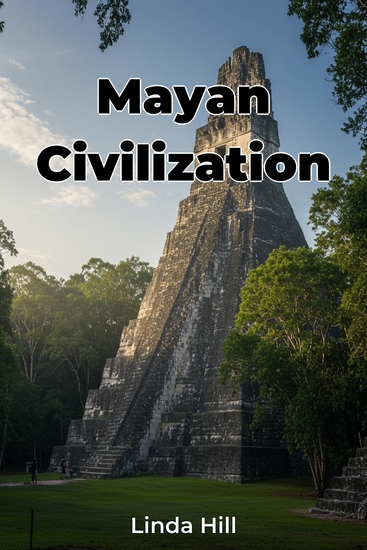
Mayan Civilization - cover

Mayan Civilization

Linda Hill

Traduttore A AI

Casa editrice: Publifye

  • 0
  • 1
  • 0

Sinossi

Mayan Civilization explores the fascinating world of the Maya and their profound impact on Mesoamerican history. The book reveals that Mayan society wasn't a single entity but a collection of diverse city-states, like Tikal, constantly interacting through trade and warfare. These interactions fostered a rich tapestry of regional identities and cultural expressions.

 
The Maya made remarkable advancements in calendrical systems and monumental architecture, reflecting their complex worldview. This book examines Mayan civilization from its Preclassic origins to its Postclassic transformations, offering insights into their political structures, social hierarchies, and cultural achievements. It highlights the significance of Mayan hieroglyphs in documenting royal histories and religious beliefs.

 
By drawing on archaeological excavations and epigraphic inscriptions, the book presents a balanced perspective on Mayan society, acknowledging both its achievements and limitations. Structured in three parts, the book first introduces the geographic and temporal setting of the Maya, then delves into their political and social systems, and finally explores their cultural accomplishments. This approach provides a comprehensive understanding of Mayan civilization, making it a valuable resource for anyone interested in Mesoamerican history and the dynamics of complex societies.
Disponibile da: 19/03/2025.
Lunghezza di stampa: 62 pagine.

Altri libri che potrebbero interessarti

  • The Silver Women - How Black Women's Labor Made the Panama Canal - cover

    The Silver Women - How Black...

    Joan Flores-Villalobos

    • 0
    • 0
    • 0
    In The Silver Women, Joan Flores-Villalobos argues that Black West Indian women made the Panama Canal construction possible by providing the indispensable everyday labor of social reproduction. West Indian women built a provisioning economy that fed, housed, and cared for the segregated Black West Indian labor force, in effect subsidizing the construction effort and the racial calculus that separated pay in silver for Black workers and gold for white Americans. But while also subject to racial discrimination and segregation, West Indian women mostly worked outside the umbrella of US canal authorities. They did not hold contracts, had little access to official services and wages, and received pay in both silver and gold. From this position, they found ways to skirt, and at times subvert, the legal, moral, and economic parameters imperial authorities sought to impose on the migrant workforce. West Indian women developed important strategies of claims-making, kinship, community building, and market adaptation that helped them navigate the contradictions and violence of the US empire. These strategies of social reproduction nurtured further West Indian migrations, linking Panama to places like Harlem and Santiago de Cuba. The Silver Women is thus a history of Black women's labor of social reproduction as integral to US imperial infrastructure, the global Caribbean diaspora, and women's own survival.
    Mostra libro
  • Educating for Purposeful Life - A New Conception of Schooling for the 21st Century - cover

    Educating for Purposeful Life -...

    S. David Brazer, Michael B. Matsuda

    • 0
    • 0
    • 0
    Educating for Purposeful Life documents positive change within the Anaheim Union High School District, whose overarching mission is to prepare high school graduates who possess a clear sense of purpose and the capacity to achieve their goals. Superintendent Michael Matsuda and education consultant David Brazer lay out the district's innovative approaches to organizing, leading, teaching, and learning. They demonstrate how education policy, organization theory, and external partnerships work together to scaffold student success, resulting in greater high school graduation rates and four-year college matriculation and persistence rates. 


    This work illuminates the district's Career Preparedness Systems Framework, which integrates affective and cognitive development opportunities, trade and professional development programs, and community engagement efforts. Matsuda and Brazer show how this framework, combined with a strengths-based approach, helps meet the educational needs of all students, including those from traditionally underserved populations. 


    Presenting secondary education as a means to support democracy, address employability gaps, and elevate student voice and purpose, this thought-provoking work provides ample ideas for how other districts might engage in educating for purposeful life.
    Mostra libro
  • Geographical Oddities - Discovering the World's Most Dangerous and Mysterious Places (2 in 1) - cover

    Geographical Oddities -...

    John Harpoon

    • 0
    • 0
    • 0
    This book consists of the following titles: 
      
    - The Great Escape from the Inescapable Prison: The Inescapable Prison has long stood as a symbol of absolute confinement, a fortress so impenetrable that even the thought of escape seemed futile. Perched on an isolated island, surrounded by treacherous waters and patrolled by an elite cadre of guards, this prison was designed to crush not just the body but also the spirit. Its towering walls, crafted from stone rumored to be unbreakable, and its maze-like interiors presented an overwhelming challenge for anyone bold—or desperate—enough to dream of freedom. Over decades, countless prisoners tried to outwit the prison’s relentless grip, and every attempt ended the same way: failure. 
    - World's Deadliest Destinations: The world is full of places that, for various reasons, have earned a reputation as deadly destinations. From war zones to natural disasters, some locations are marked by extreme danger, making them almost inhospitable for those who venture too close. This chapter aims to explore the factors that contribute to these perilous places, offering a broader understanding of what makes a destination deadly. At the core of every dangerous place is a unique combination of environmental, political, and social factors that amplify the risks for those who live or travel there. Conflict zones, for instance, are often marked by violence, political instability, and lawlessness, creating environments where human life is under constant threat. In these regions, wars, civil unrest, and insurgent groups create an atmosphere of chaos where survival can be a daily struggle.
    Mostra libro
  • Notorious Memphis Gangster Diggs Nolen - cover

    Notorious Memphis Gangster Diggs...

    Mr. Patrick O'Daniel

    • 0
    • 0
    • 0
    The Memphis Underworld King   Diggs Nolen's name was the byword for crime in 1920s Memphis. As a child, he dreamed of becoming a swashbuckling outlaw. He turned his back on a promising career, his family and consorted with the worst elements of society. Under the tutelage of train robber Frank Holloway, Nolen became a notorious con artist. Later, he and his gun-slinging wife built an empire out of selling narcotics and trafficking stolen goods. Law enforcement caught Nolen, but they could not hold him. Nolen escaped from Leavenworth Prison, led the largest jailbreak in Memphis history and confounded prosecutors with legal wranglings. Author Patrick O'Daniel details Nolen's quixotic quest for criminal fame that earned him the title King of the Memphis Underworld.
    Mostra libro
  • American Civil War The: An Enthralling Overview of the War Between States - cover

    American Civil War The: An...

    Enthralling History

    • 0
    • 0
    • 0
    A nation divided, a war between brothers, and immense political and social consequences—the American Civil War is certainly one of the most famous conflicts in world history. 
    Everyone has heard of the bloody conflict that cost the lives of over one million people. When people think of the Civil War, they think of Abraham Lincoln, the Emancipation Proclamation, and the North-South divide between the American states, but there is so much more to uncover about the American Civil War. 
    This audiobook will dive into the details of the Civil War and explore what caused it, how it unfolded, and its short- and long-term consequences. 
    You will discover the following in this audiobook:        The socio-political situation of 19th-century America before the war        Roots of the problem of slavery        Abraham Lincoln and the creation of the Republican Party        The infamous North-South divide        Causes of secession and the beginning of the war        Main actors on both sides, including Ulysses S. Grant, Jefferson Davis, and Robert E. Lee        Military campaigns that shaped the four-year-long war        The influential battles of Gettysburg, Chancellorsville, Vicksburg, and Fredericksburg        The passing of the Emancipation Proclamation        The assassination of President Lincoln 
    Scroll up and click the “add to cart” button to begin unpacking the history of the US Civil War!
    Mostra libro
  • Unequal - How extreme inequality is damaging democracy and what we can do about it - cover

    Unequal - How extreme inequality...

    David Buckham, Robyn Wilkinson,...

    • 0
    • 0
    • 0
    ‘Twenty-first-century capitalism and the democracies that enabled it are self-destructing... a sobering ― and impeccably researched ― warning of what is likely to come next’ Bruce Whitfield  
    The leading lights of the tech revolution – Gates, Bezos, Zuckerberg, Musk – have been hailed as savants and saviours of the modern age. And yet they are at the forefront of wealth inequality not seen since the heyday of the robber barons in the late 19th century, part of the slide to the First World War. Today, rampant inequality is inciting social unrest and undermining faith in the institutions of the democratic state. Citizens have been left at the mercy of unfettered capitalism – mere data subjects, endlessly surveilled, marshalled and increasingly angry and polarised. 
    The decoupling of capitalism from democracy has fostered an economic system seemingly powered by greed alone, with the marginalisation of democratic principles facilitating the rise of authoritarians and populists like Putin, Xi Jinping, Trump and Boris Johnson. 
    How has it come to this? And does the unanticipated fightback in Ukraine, with support from the West, show us the way to reclaiming the lost spirit of freedom inherent in liberal democracy?
    Mostra libro