Unisciti a noi in un viaggio nel mondo dei libri!
Aggiungi questo libro allo scaffale
Grey
Scrivi un nuovo commento Default profile 50px
Grey
Iscriviti per leggere l'intero libro o leggi le prime pagine gratuitamente!
All characters reduced
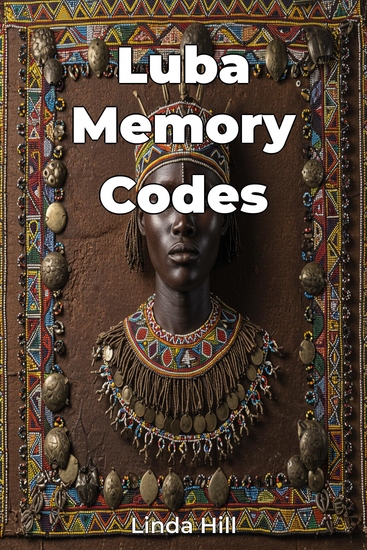
Luba Memory Codes - cover

Luba Memory Codes

Linda Hill

Traduttore A AI

Casa editrice: Publifye

  • 0
  • 0
  • 0

Sinossi

Luba Memory Codes explores the ingenious methods employed by the pre-literate Luba Kingdom of Central Africa to preserve and transmit their history and governance. Lacking a written language, the Luba people developed sophisticated memory aids, most notably the lukasa, a wooden board adorned with beads and carvings. These served as mnemonic devices, enabling trained specialists (basangwa) to recount intricate narratives and legal precedents. This book delves into the Luba's system of indigenous knowledge, highlighting their capacity for abstract thought.

 
The book examines the lukasa in detail, deciphering its symbolic language and demonstrating its function as a memory aid. It also considers the broader cultural context, including oral traditions and initiation ceremonies, that reinforced the memory codes. By understanding these elements, readers gain insight into the complex governance structures of the Luba Kingdom, which flourished from the 16th to the 19th centuries.

 
Organized into three parts, Luba Memory Codes first introduces the Luba Kingdom, then analyzes the lukasa and finally explores the social context of memory in Luba culture. Through a combination of historical accounts, museum collections, and ethnographic research, the book offers a nuanced perspective on pre-colonial African history and challenges conventional views reliant solely on written records. This interdisciplinary approach will appeal to scholars, students, and anyone interested in African history, cultural preservation, and the fascinating world of mnemonic devices.
Disponibile da: 03/05/2025.
Lunghezza di stampa: 58 pagine.


Altri libri che potrebbero interessarti

  • Invisible Trap The: How Mobile Phones Steal Your Time and Mind - cover

    Invisible Trap The: How Mobile...

    Danish khan

    • 0
    • 0
    • 0
    Discover how mobile addiction drains time focus and mental well-being Learn the negative effects of constant phone use and how to regain control of your life Take the first step towards better mental clarity and balance.
    Mostra libro
  • Creative Thinking in Schools - A Leadership Playbook - cover

    Creative Thinking in Schools - A...

    Bill Lucas, Nia Richards, Ellen...

    • 0
    • 0
    • 0
    This leadership playbook has been published to coincide with the global release of the first PISA test results on creative thinking, the Creativity Collaboratives under way in England and the growing importance of creative thinking in countries across the world.Creative Thinking in Schoolsfocuses on how leaders can create capacity among their staff to embed creative thinking, both in their own lives and in the lives of their pupils. Itoffers a framework for improving creative thinking based on the widely used five creative habits framework developed by the Centre for Real-World Learning. The framework focuses on developing learners who are inquisitive, persistent, collaborative, disciplined and imaginative.
    Underpinned by research and analysis of practice in hundreds of schools across the world, and more recently by an in-depth study of fifty schools in England,Creative Thinking in Schoolsprovides a range of accessible resources, planning tools and practical examples. These support leaders to reflect on their core purposes, understand the changes needed to embed creative thinking, develop leaders across their staff, facilitate the development of their teachers, plan, teach and assess creative thinking, and work with external partners, all the while developing a vibrant professional learning community.
    Complemented by a dedicated website which contains additional downloadable materials and case studies,the playbook will allow leaders and teachers around the world to connect with each other and share their own experiences in order to develop, spread, extend and evaluate creative thinking within and across schools.
    Creative Thinking in Schoolswill support a professional learning community of leaders and teachers who see creative thinking as a core purpose of education and are interested in making it a priority in their school. It will encourage pupils to develop their creativity in the classroom, allowing future generations to thrive in a world that is increasingly complex.
    Creative Thinking in Schools: A Leadership Playbookhas been supported by the Mercers Company, Creativity, Culture and Education and the Arts Council of Wales.
    Suitable for school and system leaders, teacher leaders and policy makers who see creative thinking as a core purpose in education.
    Mostra libro
  • History of Poland: A Captivating Guide to Polish History - cover

    History of Poland: A Captivating...

    Captivating History

    • 0
    • 0
    • 0
    If you want to discover the captivating history of Poland, then keep listening… 
    Poland, a modern state in the very center of Europe, used to be a battlefield of many nations. Throughout its history, Poland had to fight for its independence—for its very existence. This Captivating Guide to Polish History will get you acquainted with the country that is probably most overlooked in historical studies. Sure, everyone knows the Second World War started with the Nazi occupation of Poland, but the country is old and very rich in events, great kings, ruling nobles, and defining culture. 
    In the History of Poland, you will find answers to questions such as: 
    -         When did the Slavs first settle in central Europe? 
    -         Who united the Slavic tribes and founded the medieval Polish kingdom? 
    -         How did Poland develop during the Piast period? 
    -         How was the kingdom divided among brothers? 
    -         How did distinguished individuals try to reunite Poland, and how did they fail? 
    -         Who was Władysław I Łokietek, and why did he succeed in reuniting the kingdom? 
    -         What was the rule of Casimir III the Great like? 
    -         Why was a Lithuanian grand duke chosen to rule Poland? 
    There are so many interesting facts and pieces of information in this Captivating Guide to Polish History. 
    So pick up this audio book now by clicking the “add to cart” button and learn more about what lies in the very heart of Europe.
    Mostra libro
  • The Book of Fear - cover

    The Book of Fear

    Billy Pedro

    • 0
    • 0
    • 0
    As human, our thought processes, actions and reactions, outcomes and the psychological effects of our fear experiences influence our beliefs, lifestyles and other factors. These life changing experiences and factors determine our behaviour in communication and interaction with our environment, whether logial or illogical. As we grow, learn and develop our own environment, we choose to avoid, confront, ignore or learn to live with our fears. The most intriguing part of it is that we voluntarily believe that our fear is a major problem and a hindrance to us making our goals attainable. We become completely powerful when we are able to put our fear reactions in context, reflect on our reactions which are birthed from situations of perceived fear, and dissect the often unrecognised counter-reactions that make our situation affect our actions.
    Mostra libro
  • Victor Lustig: The Life and Legacy of the 20th Century’s Most Notorious Con Artist - cover

    Victor Lustig: The Life and...

    Charles River Editors

    • 0
    • 0
    • 0
    “Never pry into a person's personal circumstances (they'll tell you all eventually).” – “The Ten Commandments for Con Men,” attributed to Victor Lustig 
    The art of the confidence trick is a controversial craft that is as old as time itself. In the early years of civilization, unscrupulous folks bottled and peddled assortments of fake cures and potions. Snake oil salesmen aside, charlatans posed as mystical beings with supernatural powers, promising to end droughts and other misfortunes of the gullible with what were in reality parlor tricks and illusions. 
    Despite several famous con men, there is one con man in particular who, despite being frequently overshadowed by various counterparts, managed to pull off capers so audacious that they seemed to come straight out of an adventure thriller. As a matter of fact, the mystery man in question, Victor Lustig, has often been credited with authoring the figurative handbook that modern-day con artists continue to rely on, and his story has been studied or described in countless works of literature, most notably Robert Greene's 48 Laws of Power. Lustig was a notorious master of deception, a dangerously charismatic and conniving fellow, and could boast of exploits as incredible as selling the Eiffel Tower, not once, but twice. 
    Victor Lustig: The Life and Legacy of the 20th Century’s Most Notorious Con Artist profiles one of the most eccentric personalities of his age.
    Mostra libro
  • Crime and Punishment in Ancient Egypt: The History and Legacy of the Egyptians’ Concepts of Justice - cover

    Crime and Punishment in Ancient...

    Editors Charles River

    • 0
    • 0
    • 0
    In ancient Egypt, the underpinning concept in law, in theory, was that rich and poor citizens should be treated equally, but this was an aspiration that was rarely fulfilled in practice. At the same time, the types of treatment delivered to those deemed guilty could also be harsh - common punishments included confiscation of property, slavery, beatings, and mutilation. During both the Old Kingdom (c. 2700 BCE – 2200 BCE) and Middle Kingdom (c. 2030 BCE – 1650 BCE), crime was dealt with by local officials using their own private police forces. However, during the New Kingdom (c. 1539 BCE – 1075 BCE) a centralized police force emerged, consisting of Nubian tribesmen under an Egyptian supervisor, who were armed with staffs and used specially trained dogs. 
    	In extreme cases, the death penalty was invoked, sometimes with the additional punishment of ensuring that the convicted were refused a burial or were buried but without full rituals. Based on the Egyptians’ religious beliefs, both situations resulted in the guilty being denied entry to the afterlife. 
    	Perhaps not surprisingly, not all laws related directly to criminal activity. Civil disputes were common, and suits by a plaintiff against a defendant provide another major source about the Egyptian legal system, as do the copies of the many legal transactions and contracts that date from the 7th century BCE onwards when the popular form of the written language (Demotic) started to become more widely used. Indeed, it is often difficult to distinguish between civil and criminal cases in the available records. Following the introduction of writing, however, written deeds or contracts quickly replaced traditional oral agreements, and many of these extant documents reveal considerable detail about the laws of ancient Egypt.
    Mostra libro