Unisciti a noi in un viaggio nel mondo dei libri!
Aggiungi questo libro allo scaffale
Grey
Scrivi un nuovo commento Default profile 50px
Grey
Iscriviti per leggere l'intero libro o leggi le prime pagine gratuitamente!
All characters reduced
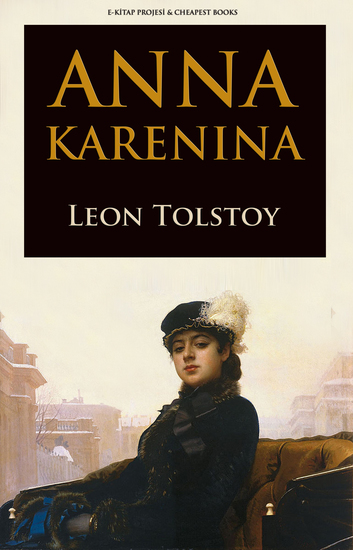
Anna Karenina - cover

Anna Karenina

Leon Tolstoy

Casa editrice: E-Kitap Projesi & Cheapest Books

  • 0
  • 0
  • 0

Sinossi

Anna Karenina is a novel by the Russian writer Leon Tolstoy, published in serial installments from 1873 to 1877 in the periodical The Russian Messenger.

Tolstoy clashed with editor Mikhail Katkov over political issues that arose in the final installment (Tolstoy's unpopular views of volunteers going to Serbia); therefore, the novel's first complete appearance was in book form. Widely regarded as a pinnacle in realist fiction, Tolstoy considered Anna Karenina his first true novel, when he came to consider War and Peace to be more than a novel.

Fyodor Dostoevsky declared it to be "flawless as a work of art". His opinion was shared by Vladimir Nabokov, who especially admired "the flawless magic of Tolstoy's style", and by William Faulkner, who described the novel as "the best ever written". The novel is currently enjoying popularity, as demonstrated by a recent poll of 125 contemporary authors by J. Peder Zane, published in 2007 in "The Top Ten" in Time, which declared that Anna Karenina is the "greatest novel ever written"

"..The novel opens with a scene introducing Prince Stepan Arkadyevich Oblonsky ("Stiva"), a Moscow aristocrat and civil servant who has been unfaithful to his wife Darya Alexandrovna ("Dolly"). Dolly has discovered his affair with the family's governess, and the household and family are in turmoil. Stiva's affair and his reaction to his wife's distress show an amorous personality that he cannot seem to suppress. In the midst of the turmoil, Stiva informs the household that his married sister, Anna Arkadyevna Karenina, is coming to visit from Saint Petersburg.

Meanwhile, Stiva's childhood friend, Konstantin Dmitrievich Levin ("Kostya"), arrives in Moscow with the aim of proposing to Dolly's youngest sister, Princess Katerina Alexandrovna Shcherbatskaya ("Kitty"). Levin is a passionate, restless, but shy aristocratic landowner who, unlike his Moscow friends, chooses to live in the country on his large estate. He discovers that Kitty is also being pursued by Count Alexei Kirillovich Vronsky, an army officer.

Whilst at the railway station to meet Anna, Stiva bumps into Vronsky who is there to meet his mother, the Countess Vronskaya. Anna and Vronskaya have traveled and talked together in the same carriage. As the family members are reunited, and Vronsky sees Anna for the first time, a railway worker accidentally falls in front of a train and is killed. Anna interprets this as an "evil omen." Vronsky, however, is infatuated with her. Anna is uneasy about leaving her young son, Sergei ("Seryozha"), alone for the first time.
At the Oblonsky home, Anna talks openly and emotionally to Dolly about Stiva's affair and convinces her that Stiva still loves her despite the infidelity. Dolly is moved by Anna's speeches and decides to forgive Stiva.

Kitty, who comes to visit Dolly and Anna, is just eighteen. In her first season as a debutante, she is expected to make an excellent match with a man of her social standing. Vronsky has been paying her considerable attention, and she expects to dance with him at a ball that evening. Kitty is very struck by Anna's beauty and personality and becomes infatuated with her just as Vronsky is. When Levin proposes to Kitty at her home, she clumsily turns him down, believing she is in love with Vronsky and that he will propose to her, and encouraged to do so by her mother who believes Vronsky would be a better match.

At the big ball Kitty expects to hear something definitive from Vronsky, but he dances with Anna, choosing her as a partner over a shocked and heartbroken Kitty.

Levin, crushed by Kitty's refusal, returns to his estate, abandoning any hope of marriage. Anna returns to her husband Alexei Alexandrovich Karenin, a senior government official, and her son Seryozha in Saint Petersburg. On seeing her husband for the first time since her encounter with Vronsky, Anna realises that she finds him unattractive, though she tells herself he is a good man.."
Disponibile da: 03/01/2024.
Lunghezza di stampa: 1000 pagine.


Altri libri che potrebbero interessarti

  • The Law of Life - cover

    The Law of Life

    Jack London

    • 0
    • 0
    • 0
    "The Law of Life" is a short story by the American naturalist writer Jack London. It was first published in McClure's Magazine, Vol.16, March, 1901. In 1902, it was published in a collection of Jack London's stories, The Children of Frost, by Macmillan Publishers.
    This short story covers the last 5 hours of the old and dying Inuit chief Koskoosh. His tribe needs to travel in search of clothing and shelter so he is left to die because of his age and inability to see properly. Even his son has to leave him because he has a new family to feed and take care of.
    However, the old Koskoosh is not dissatisfied as he knows the law of life and his desires. He accepts his fate peacefully and starts to visualize the events of his past. The images of both great famine and times of plenty vividly comes to his mind. As an experienced person he contemplates nature and ultimately accepts its individualism.
    Mostra libro
  • At the Villa Rose - cover

    At the Villa Rose

    Edward Woodley Mason

    • 0
    • 0
    • 0
    ""At the Villa Rose" is a captivating detective novel written by the British author A. E. W. Mason in 1910. It marks the debut of his character, Inspector Hanaud. The story unfolds against the backdrop of Aix-les-Bains, a picturesque French town.    Here's a glimpse into the intriguing plot:    The Crime: A wealthy widow named Mme Dauvray is found murdered at the Villa Rose. Her valuable jewels have vanished, and her maid, Hélène Vauquier, lies unconscious, chloroformed, and bound.  The Suspects: Suspicion falls on Mme Dauvray's young English companion, Celia Harland, who has mysteriously disappeared. Celia is in love with a fellow Englishman, Harry Wethermill, who pleads with Inspector Hanaud to prove her innocence.  Spiritualism and Deception: Mme Dauvray was fascinated by spiritualism, and Celia's role included staging séances for her. But beneath the veneer of mediumship lies trickery.  The Cunning Criminal: Enter Adèle Tacé, a seasoned criminal who arrives in Aix with the intent to steal Mme Dauvray's jewels. She goads the widow into holding a séance, where Celia is expected to perform while bound hand and foot.  The Unexpected Twist: Celia becomes a prisoner during the séance, and her life takes a dark turn. The true identity of the murderer remains shrouded in mystery.  Abduction and Pursuit: Celia is abducted and taken to Geneva, kept alive only to reveal the hidden location of the stolen jewels.  The Unraveling: As the investigation unfolds, Inspector Hanaud navigates deception, love, and betrayal to unmask the killer.  "At the Villa Rose" weaves together elements of suspense, illusion, and human frailty, making it a compelling read. The novel's success led to adaptations as a stage play and several films."
    Mostra libro
  • Hypnos (Unabridged) - cover

    Hypnos (Unabridged)

    H. P. Lovecraft

    • 0
    • 0
    • 0
    "Hypnos" is a first-person narrative, written from the perspective of an unnamed character living in Kent and later London, England. The narrator writes that he fears sleep, and is resolved to write his story down lest it drive him further mad, regardless of what people think after reading it. The narrator, a sculptor, recounts meeting a mysterious man in a railway station. The moment the man opened his "immense, sunken, and widely luminous eyes", the narrator knew that the stranger would become his friend--"the only friend of one who had never possessed a friend before." In the eyes of the stranger, he witnessed important knowledge of the mysteries he always sought to learn. From this point on, he would touch his friend and sculpt him daily. At night they would commence their adventures, exploring worlds beyond human comprehension. Over time, the narrator's companion begins to speak of using their ability to transcend into the unknown as a way to rule the universe (via a set of drugs). The narrator is frightened by the prospect and disavows such hubris to the reader. Soon the narrator is off on a foray with his friend, travelling through a void that he explains is beyond human sensation. Passing through several barriers, eventually the narrator comes to one he cannot cross, though his friend does. Opening his "physical eyes", the narrator wakes up and awaits the return of his friend, who awakes severely shaken and reticent, warning only that they must avoid sleep at all cost. From then on, with the aid of drugs, the two avoid sleep, as each time they succumb, they both seem to rapidly age and are plagued by nightmares that the narrator refuses to explain. The story ends with the narrator explaining that one night, his friend fell into a "deep-breathing sleep" and was impossible to arouse. The narrator shrieks, faints, and awakes surrounded by police and neighbors, who inform him that his friend was not real. There is only a bust of his friend in his room, engraved with the Greek word: _____ (Hypnos).
    Mostra libro
  • Cambridge - The Dark Masters - Dark short story collection from authors that graduated one of the worlds most prestigious universities - cover

    Cambridge - The Dark Masters -...

    M R James, E F Benson, Arthur Gray

    • 0
    • 0
    • 0
    Cambridge University is esteemed as one of the great learning centres of the world, and has been for many centuries. 
     
    Whatever its gravitas as a seat of learning it should come as no surprise that Cambridge has a malevolent and dark side.  Within the ranks of its Academics and Alumni lurk the strange minds who have created despicable stories with heinous characters. 
     
    M R James, E F Benson, Christopher Blayre and E G Swain are but a few of these transgressors who have lurked within its glittering yet tortured walls. 
     
    1 - Cambridge - The Dark Masters - A Short Story Collection - An Introduction 
    2 - Oh Whistle and I'll Come to You My Lad by M R James 
    3 - Mrs Amworth by E F Benson 
    4 - The Man With The Roller by E G Swain 
    5 - The Necromancer by Arthur Gray 
    6 - The Closed Window by A C Benson 
    7 - A Collector's Company by R H Malden 
    8 - The Thing That Smelt by Christopher Blayre
    Mostra libro
  • Children Listen! - How the Camel Got His Hump & Other Curiosities Collected & Read by Dennis Edward Delaney - cover

    Children Listen! - How the Camel...

    Percy J. Billinghurst, Carolyn...

    • 0
    • 0
    • 0
    Children, Listen! 
    How the Camel Got His Hump & Other Curiosities Collected & Read by Dennis Edward DelaneyCover Design by David Earl DeWitt | ZacaPublishingPublic Domain Material was used in the Publishing of this Audiobook 
    - 
    Our Stories: 
    - 
    A Few Just So Stories by Rudyard Kipling  
    - 
    1. Just So Stories 
    2. How the Camel Got His Hump 
    3. The Elephant's Child 
    4. How the Leopard Got His Spots 
    5. How the Wale Got His Throat 
    6. The Beginning of The Armadillos 
    7. The Crab that Played with the Sea 
    8. The Sing Song of Old Man Kangaroo 
    - 
    Five Short Tales from Once Upon A Time Animal Stories by Carolyn Sherwin Bailey 
    - 
    9. How the Eagle Went Hungry 
    10. Brother Wolf and the Rock 
    11. Mr. Elephant and Mr. Frog 
    12. The Robin's Christmas Song 
    13. Why the Bear has a Stumpy Tail 
    - 
    Animal Anecdotes by Percy J. Billinghurst 
    - 
    14. Anecdotes of Animals - Animal Concerts 
    15. A Newfoundland Dog 
    16. The Bear and the Child 
    17. A Child Saved 
    18. A Comedy of Elephants 
    19. Crab Fishing 
    20. The Dog and the Goose 
    21. The Dolphin 
    22. An Elephant's Revenge 
    23. Escape of Genghis Khan 
    - 
    Other Curiosities 
    - 
    24. Peter Rabbit by Beatrix Potter 
    25. The Three Little Pigs by Joseph Jacobs 
    26. The Wolf and the Seven Little Kids by the Brother's Grimm 
    27. The Frog Prince by the Brothers Grimm 
    28. Goldilocks by Robert Southey 
    - 
    Run Time: 
    03:48:43.55 
    -
    Mostra libro
  • Middlemarch (Book 5: The Dead Hand) - cover

    Middlemarch (Book 5: The Dead Hand)

    George Eliot

    • 0
    • 0
    • 0
    Middlemarch (Book 5: The Dead Hand), A Study of Provincial Life is a novel by English author George Eliot, the pen name of Mary Ann Evans. It appeared in eight installments (volumes) in 1871 and 1872. Set in Middlemarch, a fictional English Midlands town, from 1829 to 1832, it follows distinct, intersecting stories with many characters. Issues include the status of women, the nature of marriage, idealism, self-interest, religion, hypocrisy, political reform, and education. Leavened with comic elements, Middlemarch approaches significant historical events in a realist mode: the Reform Act 1832, early railways, and the accession of King William IV. It looks at medicine of the time and reactionary views in a settled community facing unwelcome change. Eliot began writing the two pieces that formed the novel in 1869–1870 and completed it in 1871. Initial reviews were mixed, but it is now seen widely as her best work and one of the great English novels.
    Mostra libro