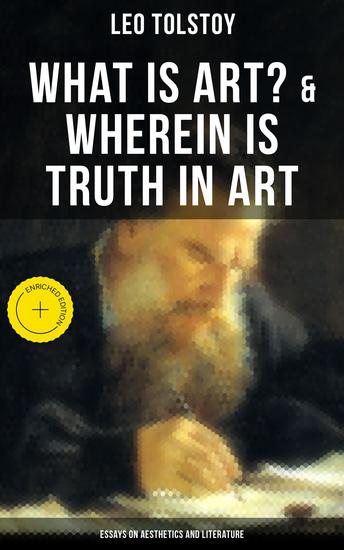
Tolstoy: What is Art? & Wherein is Truth in Art (Essays on Aesthetics and Literature) - Enriched edition
Leo Tolstoy
Traduttore Aylmer Maude, Louise Maude, Nathan Haskell Dole, Isabel Hapgood
Casa editrice: Musaicum Books
Sinossi
Leo Tolstoy's 'What is Art? & Wherein is Truth in Art' explores the complex relationship between art and truth. In this collection of essays on aesthetics and literature, Tolstoy delves into the nature of art, focusing on its ability to convey universal truths and communicate with the audience on a profound level. Through his unique blend of philosophical insight and literary analysis, Tolstoy challenges conventional notions of art and calls for a return to a more authentic and meaningful form of artistic expression. His writing style is clear and concise, making this book accessible to both scholars and general readers interested in the intersection of art and truth in creative works. Tolstoy's ideas on art as a vehicle for moral and spiritual enlightenment continue to resonate with readers worldwide. Known for his masterpieces such as 'War and Peace' and 'Anna Karenina,' Tolstoy's own experiences as a writer and thinker undoubtedly influenced his exploration of the deeper meaning behind artistic creation. 'What is Art? & Wherein is Truth in Art' is a must-read for anyone seeking to understand the essential role of art in reflecting and shaping human experience.

In this enriched edition, we have carefully created added value for your reading experience:
- An Introduction draws the threads together, discussing why these diverse authors and texts belong in one collection.
- Historical Context explores the cultural and intellectual currents that shaped these works, offering insight into the shared (or contrasting) eras that influenced each writer.
- A combined Synopsis (Selection) briefly outlines the key plots or arguments of the included pieces, helping readers grasp the anthology's overall scope without giving away essential twists.
- A collective Analysis highlights common themes, stylistic variations, and significant crossovers in tone and technique, tying together writers from different backgrounds.
- Reflection questions encourage readers to compare the different voices and perspectives within the collection, fostering a richer understanding of the overarching conversation.
Disponibile da: 21/06/2017.
Lunghezza di stampa: 474 pagine.