Unisciti a noi in un viaggio nel mondo dei libri!
Aggiungi questo libro allo scaffale
Grey
Scrivi un nuovo commento Default profile 50px
Grey
Iscriviti per leggere l'intero libro o leggi le prime pagine gratuitamente!
All characters reduced
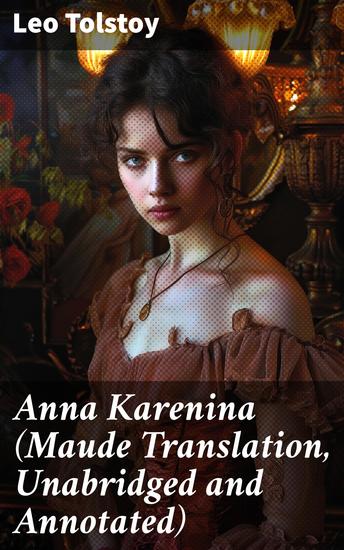
Anna Karenina (Maude Translation Unabridged and Annotated) - A Tale of Love Passion and Moral Complexity in 19th-Century Russia - cover

Anna Karenina (Maude Translation Unabridged and Annotated) - A Tale of Love Passion and Moral Complexity in 19th-Century Russia

Leo Tolstoy

Casa editrice: Good Press

  • 0
  • 0
  • 0

Sinossi

Leo Tolstoy's "Anna Karenina," presented in the Maude translation as an unabridged and annotated edition, serves as a profound exploration of love, morality, and the complexities of human relationships within the fabric of 19th-century Russian society. Tolstoy masterfully intertwines the lives of his characters, most notably the tragic figure of Anna and the idealistic Konstantin Levin, through a realist lens that captures the stark realities of passion, infidelity, and personal turmoil. The annotations provide valuable context, enriching the reader's understanding of the cultural and philosophical underpinnings that shape the narrative. Tolstoy, a giant of world literature and a moral philosopher, draws upon his own existential inquiries and societal observations to create this seminal work. His experiences navigating the contrasting worlds of aristocracy and peasantry, coupled with his deep introspection on love and faith, lend authenticity to the emotional and psychological struggles faced by his characters. The novel reflects Tolstoy's profound belief in the interconnectedness of individual lives and the moral implications of one's choices. This edition of "Anna Karenina" is highly recommended for readers seeking an immersive experience into the depths of human emotion and ethical dilemmas. Through its rich narrative and detailed annotations, it not only captures the essence of Tolstoy'Äôs genius but also invites readers to reflect on the timeless questions of love and fidelity, making it an essential reading for literature enthusiasts and scholars alike.
Disponibile da: 20/12/2023.
Lunghezza di stampa: 1048 pagine.
Altri libri che potrebbero interessarti

  • Notes From The Underground - cover

    Notes From The Underground

    Fyodor Dostoyevsky

    • 0
    • 0
    • 0
    "I don't want to be happy; I want to be myself."
    
    Notes from Underground (1864), is often considered one of the first existentialist works, exploring themes of free will, alienation, moral ambiguity and the conflict between individualism and societal norms.
    
    Alienated from society and paralysed by a sense of his own insignificance, the anonymous narrator—a bitter, self-aware, and deeply conflicted man—tells the story of his tortured life, describing, with blistering irony, his refusal to become a worker in the 'anthill' and his gradual withdrawal from society, his sharp and relentless inner monologue dissecting human behaviour, societal norms, and the illusion of rational progress.
    Notes from Underground serves as a critique of 19th-century Russian society while also posing deeper questions about the nature of existence, morality, and the individual's place within the world.
    Fyodor Dostoyevsky was a Russian novelist, journalist, and short-story writer renowned for his profound explorations of psychology, morality, and the human condition. Born in Moscow, his tumultuous life was marked by early literary success and followed by arrest and exile due to his radical political activities. He is widely regarded as one of the world's finest novelists, penning classics that include Crime and Punishment, The Idiot, Demons, and The Brothers Karamazov. He had an immense influence on 20th-century fiction and his ideas have profoundly shaped literary modernism, existentialism, and various schools of psychology, theology, and literary criticism.
    Mostra libro
  • First and Last Things (Unabridged) - cover

    First and Last Things (Unabridged)

    H. G. Wells

    • 0
    • 0
    • 0
    First and Last Things is a 1908 work of philosophy by H. G. Wells setting forth his beliefs in four "books" entitled "Metaphysics," "Of Belief," "Of General Conduct," and "Some Personal Things." Parts of the book were published in the Independent Magazine in July and August 1908. Wells revised the book extensively in 1917, in response to his religious conversion, but later published a further revision in 1929 that restored much of the book to its earlier form. Its main intellectual influences are Darwinism and certain German thinkers Wells had read, such as August Weismann. The pragmatism of William James, who had become a friend of Wells, was also an influence.
    Mostra libro
  • Note on Realism A (Unabridged) - cover

    Note on Realism A (Unabridged)

    Robert Louis Stevenson

    • 0
    • 0
    • 0
    Robert Louis Stevenson was a Scottish novelist, essayist, poet and travel writer. Born and educated in Edinburgh, Stevenson suffered from serious bronchial trouble for much of his life, but continued to write prolifically and travel widely in defiance of his poor health. As a young man, he mixed in London literary circles, receiving encouragement from Andrew Lang, Edmund Gosse, Leslie Stephen and W. E. Henley, the last of whom may have provided the model for Long John Silver in Treasure Island.
    A NOTE ON REALISM: Style is the invariable mark of any master; and for the student who does not aspire so high as to be numbered with the giants, it is still the one quality in which he may improve himself at will. Passion, wisdom, creative force, the power of mystery or colour, are allotted in the hour of birth, and can be neither learned nor simulated.
    Mostra libro
  • Bartleby the Scrivener (Unabridged) - cover

    Bartleby the Scrivener (Unabridged)

    Herman Melville

    • 0
    • 0
    • 0
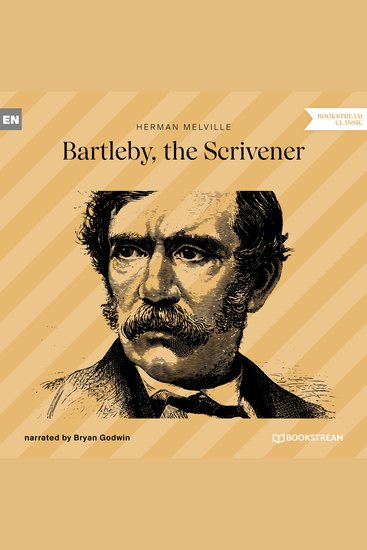
    The tale is one of the final works of fiction published by Melville before, slipping into despair over the continuing critical dismissal of his work after Moby-Dick, he abandoned publishing fiction. The work is presented here exactly as it was originally published in Putnam's magazine to, sadly, critical disdain.
    Mostra libro
  • Twenty-Six Men and a Girl - From their pens to your ears genius in every story - cover

    Twenty-Six Men and a Girl - From...

    Maxim Gorky

    • 0
    • 0
    • 0
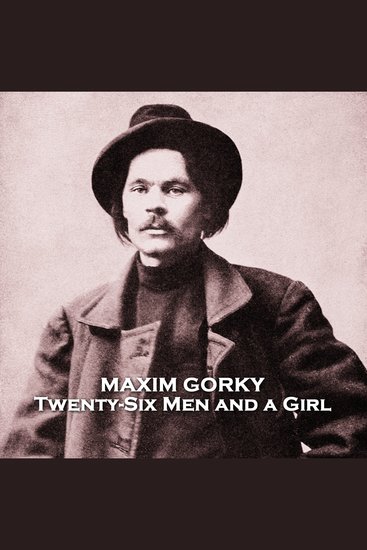
    Alexei Maximovich Peshkov was born on 28th March 1868, in Nizhny Novgorod, Russia. 
    Better known as Maxim Gorky he was orphaned at 11 and ran away from home at 12.  At 19 he had already attempted suicide and thereafter travelled, by foot, across the Russian Empire for 5 years. 
    His first book ‘Essays & Stories’ in 1898 was a sensation and so began a long career as an author of short stories, novels and plays.  Gorky saw writing as a moral and political act that would help to change the unjust world around him.  He was an ardent early advocate of the emerging Marxist movement and publicly opposed the Tsarist regime leading several times to his arrest.  
    In 1904 he began his own theatre but the censor banned every play and Gorky was forced to abandon the project. 
    But Gorky was a financially successful author, editor, and playwright and gave monies to political parties as well as for civil rights and social reform.  The brutal shooting of workers, which set in motion the Revolution of 1905, pushed Gorky more decisively toward radical solutions.  
    In 1906 he went to the United States to raise funds for the Bolsheviks. Those experiences including a scandal over travelling with his lover and not his wife deepened his contempt for the ‘bourgeois soul.’ 
    Gorky now moved to Capri in Italy, both for health reasons and to escape the increasingly repressive times in Russia.  
    An amnesty for the 300th anniversary of the Romanov dynasty saw him return to Russia in 1914. His politics remained close to the Bolshevik cause.  But soon, after the 1918 revolution, his essays referred to Lenin as a tyrant for his senseless arrests and repression.  He was soon appealing to the outside world for food aid after the catastrophic crop failure. 
    In October 1921 Gorky returned to Italy, now in Fascist hands, and settled in Sorrento until 1932.  His health worsened with the onset of tuberculosis. 
    He wrote several successful books there but now decided to find an understanding with the communist regime. Stalin invited him home and his return was hailed as a major propaganda victory.  He was decorated with the Order of Lenin, and a province, a park, and various streets re-named in his honour. 
    But he had his faults too.  In 1933, Gorky co-edited a book on the White Sea-Baltic Canal and denied even a single prisoner died during its construction, but thousands had. As well, knowing that some Nazis were homosexual, a phrase was attributed to him that said ‘exterminate all homosexuals and fascism will vanish’.  Although he was himself was quoting another he was decidedly homophobic. 
    With the increase of Stalinist repression in 1935 Gorky was placed under unannounced house arrest. 
    Maxim Gorky died on the 18th June 1936 from pneumonia.  He was 68. 
    Stalin and Molotov were among those who carried Gorky's urn of ashes at his funeral.
    Mostra libro
  • The Wizard of Oz - cover

    The Wizard of Oz

    L. Frank Baum

    • 0
    • 0
    • 0
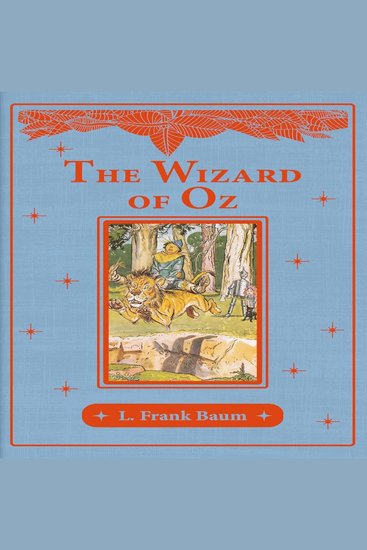
    ‘“Come along, Toto,” she said. “We will go to the Emerald City and ask the Great Oz how to get back to Kansas again.”’ 
    Swept away from her home in Kansas by a tornado, Dorothy and her dog Toto find themselves stranded in the fantastical Land of Oz. As instructed by the Good Witch of the North and the Munchkins, Dorothy sets off on the yellow brick road to try and find her way to the Emerald City and the Wizard of Oz, who can help her get home. 
    With her companions the Scarecrow, the Tin Woodman and the Cowardly Lion, Dorothy experiences an adventure full of friendship, magic and danger. A much-loved children’s classic, The Wizard of Oz continues to delight readers young and old with its enchanting tale of witches, flying monkeys and silver shoes.
    Mostra libro