Unisciti a noi in un viaggio nel mondo dei libri!
Aggiungi questo libro allo scaffale
Grey
Scrivi un nuovo commento Default profile 50px
Grey
Iscriviti per leggere l'intero libro o leggi le prime pagine gratuitamente!
All characters reduced
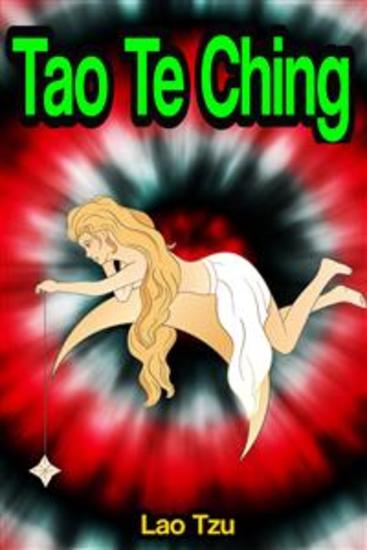
Tao Te Ching (Dao de Jing or Tao-te King) - cover

Tao Te Ching (Dao de Jing or Tao-te King)

Lao Tzu

Casa editrice: Memorable Classics eBooks

  • 0
  • 0
  • 0

Sinossi

Tao Te Ching (Dao de Jing or Tao-te King) - Lao Tzu is a Chinese classic text written around 400 BC and traditionally credited to the sage Laozi. The text's authorship, date of composition and date of compilation are debated.

The oldest excavated portion dates back to the late 4th century BC,but modern scholarship dates other parts of the text as having been written—or at least compiled—later than the earliest portions of the Zhuangzi.

The Tao Te Ching, along with the Zhuangzi, is a fundamental text for both philosophical and religious Taoism. It also strongly influenced other schools of Chinese philosophy and religion, including Legalism, Confucianism, and Chinese Buddhism, which was largely interpreted through the use of Taoist words and concepts when it was originally introduced to China.

Many artists, including poets, painters, calligraphers, and gardeners, have used the Tao Te Ching as a source of inspiration. Its influence has spread widely out and it is one of the most translated texts in world literature.
Disponibile da: 02/06/2022.
Altri libri che potrebbero interessarti

  • Getting Russia Right - 1st Edition - cover

    Getting Russia Right - 1st Edition

    Thomas Graham

    • 0
    • 0
    • 0
    As US-Russian relations scrape the depths of cold-war antagonism, the promise of partnership that beguiled American administrations during the first post-Soviet decades increasingly appears to have been false from the start. Why did American leaders persist in pursuing it? Was there another path that would have produced more constructive relations or better prepared Washington to face the challenge Russia poses today? 


    With a practitioner's eye honed during decades of work on Russian affairs, Thomas Graham deftly traces the evolution of opposing ideas of national purpose that created an inherent tension in relations. Getting Russia Right identifies the blind spots that prevented Washington from seeing Russia as it really is and crafting a policy to advance American interests without provoking an aggressive Russian response. Distilling the Putin factor to reveal the contours of the Russia challenge facing the United States whenever he departs the scene, Graham lays out a compelling way to deal with it so that the United States can continue to advance its interests in a rapidly changing world.
    Mostra libro
  • A Rare Recording of William Faulkner - cover

    A Rare Recording of William...

    William Faulkner

    • 0
    • 0
    • 0
    William Faulkner, a Pulitzer Prize recipient, is considered one of the finest writers in American literature. Hear his 1949 Nobel Prize acceptance speech, and excerpts from his works: As I Lay Dying, The Old Man, and A Fable.
    Mostra libro
  • Confucianism - The Philosophy of Ethics Relationships and Governance in East Asia - cover

    Confucianism - The Philosophy of...

    Amman Hirsch

    • 0
    • 0
    • 0
    Confucianism, one of the world’s oldest and most influential philosophies, has deeply shaped Chinese culture, governance, and social structures for over two millennia. Rooted in the teachings of Confucius, a revered teacher and philosopher who lived in ancient China, Confucianism is less a religion than a guiding framework for leading an ethical life, cultivating personal virtues, and fostering harmonious relationships. Its principles emphasize respect for family, reverence for tradition, and a commitment to education and self-betterment—values that resonate universally, even as they are uniquely expressed in East Asian societies. 
    Confucius himself envisioned a society where individuals behaved with compassion and integrity, rulers governed with wisdom and justice, and families formed the foundation of moral learning. Central concepts such as *ren* (humaneness), *li* (ritual propriety), and *xiao* (filial piety) highlight the importance of empathy, respectful conduct, and devotion to family, which lie at the heart of Confucian teachings. Over centuries, these ideals have expanded to influence countless aspects of life, from governance and social etiquette to education and family dynamics. 
    As Confucianism has evolved, it has also encountered both support and criticism, adaptations and reinterpretations. In modern times, the philosophy faces new questions: How does Confucianism reconcile with individual rights and equality? What role does it play in an increasingly globalized world? This book aims to explore Confucianism in its depth and breadth, unraveling its rich history, core teachings, and its dynamic role in contemporary society.  
    For anyone seeking to understand the values and perspectives that have helped shape one of the most enduring societies on earth, Confucianism offers both timeless wisdom and a meaningful framework for personal and social growth.
    Mostra libro
  • Inventors - A Guide to the Lives of Isaac Newton Nikola Tesla Thomas Edison and Albert Einstein - cover

    Inventors - A Guide to the Lives...

    Kelly Mass

    • 0
    • 0
    • 0
    This bundle of audiobooks contains the following topics: 
    Isaac Newton - We often think about Newton when we see an apple falling from a tree: The man who came up with the gravity theory, a physics scientist who gave said event and others significant thought. 
    Sir Isaac Newton was an English mathematician, physicist, astronomer, theologian, and writer who was commonly seen as one of the best mathematicians, physicists, and most prominent researchers of perpetuity. He was hailed as a "natural theorist" in his time. 
    Nikola Tesla - Nikola Tesla was a Serbian-American innovator, electrical engineer, mechanical engineer, and futurist who helped establish the contemporary rotating present (AC) electrical energy delivery system. 
    Tesla, who was born and raised in the Austrian Empire, studied engineering and physics without getting a grade in the 1870s and acquired useful experience in the early 1880s operating in telephone and at Continental Edison in the nascent electrical power business. He relocated to the USA in the year 1884 and ended up being a naturalized person. Before setting out on his own, he worked for a brief time at the Edison Device Works in N.Y. City.  
    Thomas Edison - Thomas Alva Edison, called "America's biggest developer," was an American developer and businessperson. In disciplines consisting of electrical power generation, mass communication, sound recording, and movie, he developed many devices. 
    Albert Einstein - Albert Einstein was a theoretical physicist who was born in Germany and is mainly considered one of the finest physicists of perpetuity. Even though Einstein is best acknowledged for developing the principle of relativity, he also contributed considerably to the development of quantum mechanics.
    Mostra libro
  • Getting Russia Right - 1st Edition - cover

    Getting Russia Right - 1st Edition

    Thomas Graham

    • 0
    • 0
    • 0
    As US-Russian relations scrape the depths of cold-war antagonism, the promise of partnership that beguiled American administrations during the first post-Soviet decades increasingly appears to have been false from the start. Why did American leaders persist in pursuing it? Was there another path that would have produced more constructive relations or better prepared Washington to face the challenge Russia poses today? 


    With a practitioner's eye honed during decades of work on Russian affairs, Thomas Graham deftly traces the evolution of opposing ideas of national purpose that created an inherent tension in relations. Getting Russia Right identifies the blind spots that prevented Washington from seeing Russia as it really is and crafting a policy to advance American interests without provoking an aggressive Russian response. Distilling the Putin factor to reveal the contours of the Russia challenge facing the United States whenever he departs the scene, Graham lays out a compelling way to deal with it so that the United States can continue to advance its interests in a rapidly changing world.
    Mostra libro
  • Voices of Famous Inventors - cover

    Voices of Famous Inventors

    Thomas Edison, Thomas Watson,...

    • 0
    • 0
    • 0
    Thomas Alva Edison (February 11, 1847 – October 18, 1931) was an American inventor and businessman. He developed many devices that greatly influenced life around the world, including the phonograph, motion picture camera, and a long-lasting, practical electric light bulb. Dubbed "The Wizard of Menlo Park", he was one of the first inventors to apply the principles of mass production and large-scale teamwork to the process of invention, and because of that, he is often credited with the creation of the first industrial research laboratory. The following, from 1908, is a commemoration at the New York Electrical Show of the 50th anniversary of the first Atlantic cable. Thomas Augustus Watson (January 18, 1854 – December 13, 1934) was as a bookkeeper and a carpenter before becoming an assistant to Alexander Graham Bell, aiding in the the invention of the telephone in 1876. He is best known because his name was one of the first words spoken over the telephone. "Mr. Watson, come here, I want to see you," were the first words Bell said using the new invention, according to Bell's laboratory notebook. Guglielmo Marconi (25 April 1874 – 20 July 1937) was an Italian inventor, known for his pioneering work on long distance radio transmission and radio telegraph system. Marconi shared the 1909 Nobel Prize in Physics with Karl Ferdinand Braun "in recognition of their contributions to the development of wireless telegraphy". As an entrepreneur, businessman, and founder of the The Wireless Telegraph & Signal Company in Britain in 1897, Marconi succeeded in making a commercial success of radio by innovating and building on the work of previous experimenters and physicists. The following is from a talk he gave in 1935 about how he received the first transatlantic message by wireless telegraphy.
    Mostra libro