Unisciti a noi in un viaggio nel mondo dei libri!
Aggiungi questo libro allo scaffale
Grey
Scrivi un nuovo commento Default profile 50px
Grey
Iscriviti per leggere l'intero libro o leggi le prime pagine gratuitamente!
All characters reduced
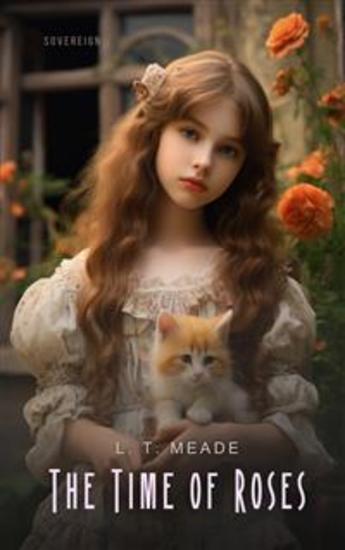
The Time of Roses - cover

The Time of Roses

L. T. Meade

Casa editrice: Interactive Media

  • 0
  • 0
  • 0

Sinossi

"The Time of Roses" by L. T. Meade is a heartwarming story of friendship and personal growth. Set in a charming English village, it follows the lives of several young women as they navigate the complexities of love, family, and society. The novel explores themes of resilience, self-discovery, and the enduring power of female bonds. With its vivid characters and picturesque setting, "The Time of Roses" is a timeless tale of life's joys and challenges.
Disponibile da: 30/09/2023.
Lunghezza di stampa: 264 pagine.


Altri libri che potrebbero interessarti

  • Twilight Alley - An early 20th century of a man exploring the underworld of a French port city - cover

    Twilight Alley - An early 20th...

    Stefan Zweig

    • 0
    • 0
    • 0
    Stefan Zweig was born on the 28th November 1881 in Vienna, then part of the Austro-Hungarian Empire, and into a wealthy Jewish family with interests in banking and textiles. 
     
    He studied philosophy at the University of Vienna and achieved his degree in 1904. 
     
    Zweig first published in 1900 and two decades later was a popular and highly regarded author in many parts of the world, although not in England.    
     
    During the Great War he served in the Archives of the Ministry of War and supported Austria's war effort through his writings in the ‘Neue Freie Presse’.  Whilst his work praised his Country’s progress and, on occasions, its excesses and massacres, he later claimed, in his memoir, that he was a pacifist. 
     
    In 1912 he began an affair with the married, and mother or two, Friderike Maria von Winternitz, but it was only in 1920 that circumstances allowed them to marry.  She took care of much of his business interests and supported him artistically.  In this decade too many of his most famous works including the short stories; ‘Amok’, and ‘Letter from an Unknown Woman’ (filmed in 1948 by Max Ophüls), novels; ‘Confusion of Feelings’ and biographies including that on Marie Antoinette (filmed by MGM in 1938) were published. 
     
    He was also the librettist with Richard Strauss of two operas and a keen collector of autographed musical manuscripts.  His collection of over two hundred pieces was later donated to the British Library.  
     
    In 1934, Zweig, as a Jew, and finding life very difficult under his anti-Semitic government and the neighbouring Nazi’s persuaded him to leave Austria for England.   
     
    In 1940 Zweig, now divorced and married to his second wife, and former secretary, Lotte Altmann, left London and via New York moved to Petrópolis, a German-colonized town 50 miles north of Rio de Janeiro in Brazil.  Although he continued to write he became, along with his wife, increasingly depressed about the situation in Europe and the future for humanity,  
     
    His memoir ‘The World of Yesterday’ was completed on the 22nd February 1942. 
     
    The following day the Zweig’s were found in their house dead of a barbiturate overdose, holding each other’s hand.  He was 60.
    Mostra libro
  • The Cubical City - cover

    The Cubical City

    Janet Flanner

    • 0
    • 1
    • 0
    The New Yorker’s legendary Paris correspondent explores life and love in the Jazz Age in this novel inspired by her days in Greenwich Village.From the 1920s to the 1970s, Janet Flanner kept Americans abreast of the goings-on in Paris with a biweekly New Yorker column written under the name Genêt. But before she became one of the country’s most famous expats, she lived among the artists and writers of the Algonquin Round Table. Flanner shares a vivid depiction of the New York she knew in this tale of a young woman’s self-discovery.Having left Ohio in search of liberation, Delia Poole struggles to find her place in the big city. After getting work as a costume designer for musical revues, she and her dear friend Nancy are finally finding happiness on their own terms. But nothing is simple. From her adoring suitor, Paul, to her widowed mother’s decision to move to New York, Delia must grapple with expectations, responsibilities, and her own uncertainty.The Cubical City is Janet Flanner’s only published novel. Though homosexuality is never overtly expressed, it is considered by literary scholars to be one of the first examples of modernist lesbian literature.
    Mostra libro
  • To the Lighthouse - cover

    To the Lighthouse

    Virginia Woolf

    • 0
    • 0
    • 0
    The Ramsay family is on holiday on the Isle of Sky in Scotland. As the family and their guests decide on whether or not to visit a nearby lighthouse, Virginia Woolf spins a tale that focuses on the intricate web of family life and the conflict that occurs between genders.
    Mostra libro
  • Devdas - cover

    Devdas

    Saratchandra Chattopadhyay

    • 0
    • 0
    • 0
    Saratchandra Chatterjee's Devdas became a reader's delight right after its first publication in 1917, and since then, its protagonist Devdas has been the tragic hero in the hearts of millions of readers.
    
    Devdas is a tragic story of a man called Devdas who loved but never got his lover. The protagonist Devdas shared a magnetic childhood with his lovely playmate Parvati (popularly known as Paro), and the supreme love matured in Paro's heart much before Devdas could realize. As the two playmates became youths, the love intensified in Parvati so much so that she was ready to do anything to get Devdas. But, unfortunately, Devdas failed to understand Paro's passionate love towards him and his whimsical 'no' at a very critical time created a permanent wall of separation between him and his beloved Paro. When he did realize how much his heart felt for Paro, it was too late, as the heartbroken Paro became the wife of another man.
    
    This completely shattered Devdas. He was unable to bear the agony of a life without Paro. The absence of his beloved Paro in his life made alcohol his constant companion, but that could not make him forget the piercing pain. Even the unconditional love and devotion of a beautiful courtesan, Chandramukhi, could not
    ease the pain of losing Paro. The pain ultimately brought his untimely death as he breathed his last at Paro's doorstep to keep his earlier promise that he would meet her at least once before his death.
    
    Devdas is a 'timeless' story of a tragic hero that is admired even today.
    Mostra libro
  • Cohen of Trinity - From their pens to your ears genius in every story - cover

    Cohen of Trinity - From their...

    Amy Levy

    • 0
    • 0
    • 0
    Amy Levy was born in London, England in 1861, the second of seven in a fairly wealthy Anglo-Jewish family. The children read and participated in secular literary activities and became firmly integrated into Victorian life. 
    Her education was at Brighton High School, Brighton, before studies at Newnham College, Cambridge; she was the first Jewish student when she arrived in 1879, but left after four terms. 
    Amy’s writing career began early; her poem ‘Ida Grey’ appeared when she was only fourteen. Her acclaimed short stories ‘Cohen of Trinity’ and ‘Wise in Their Generation,’ were published by Oscar Wilde in his magazine ‘Women's World’. 
    Her poetic writings reveal feminist concerns; ‘Xantippe and Other Verses’, from 1881 includes a poem in the voice of Socrates's wife. ‘A Minor Poet and Other Verse’ from 1884 comprises of dramatic monologues and lyric poems. 
    In 1886, Amy began a series of essays on Jewish culture and literature for the Jewish Chronicle, including ‘The Ghetto at Florence’, ‘The Jew in Fiction’, ‘Jewish Humour’ and ‘Jewish Children’. 
    That same year while travelling in Florence she met the writer Vernon Lee. It is generally assumed they fell in love and this inspired the poem ‘To Vernon Lee’. 
    Her first novel ‘Romance of a Shop’, written in 1888 is based on four sisters who experience the pleasures and hardships of running a London business during the 1880s. This was followed by Reuben Sachs (also 1888) and concerned with Jewish identity and mores in the England of her time and was somewhat controversial. 
    Her final book of poems, ‘A London Plane-Tree’ from 1889, shows the beginnings of the influence of French symbolism. 
    Despite many friendships and an active life, Amy suffered for many years with serious depressions and this, together with her growing deafness, led her to commit suicide by inhaling carbon monoxide on September 10th, 1889. She was 27.
    Mostra libro
  • Quest of Iranon The (Unabridged) - cover

    Quest of Iranon The (Unabridged)

    H. P. Lovecraft

    • 0
    • 0
    • 0
    The story is about a golden-haired youth who wanders into the city of Teloth, telling tales of the great city of Aira, where he was a prince. While Iranon enjoys singing and telling his tales of wonder, few people appreciate it. A city solon even orders Iranon to cease his singing & music, and become apprenticed to a cobbler - or leave the city by sunset. When a disenfranchised boy named Romnod suggests leaving Teloth to go to the famed city of Oonai (which he thinks may be Aira, now under a different name), Iranon takes him up on his offer. Iranon and Romnod spend years on their journey to Oonai. Along the way, Romnod grows up while Iranon remains exactly the same. Eventually they reach Oonai, which Iranon is disappointed (although not surprised) to discover isn't Aira. Iranon is loved by the people in Oonai, however, so he stays there even though he still desires to return to Aira. As the years pass, people appreciate him less and less, and he is eventually upstaged by dancers from the desert. By this point, Romnod has grown old and has become a drunkard. After Romnod's death, Iranon decides to leave Oonai and continue his search for Aira. Eventually Iranon comes across an old shepherd and asks him if he knows of Aira. The shepherd tells him that he has indeed heard of it, for in his youth there was a beggar's boy who had always talked about it. The boy, who presumed himself to be a prince, was laughed at by everyone and ran away. With the truth revealed, that Aira was merely a figment of his imagination, Iranon loses his eternal youth. Now aged significantly, Iranon wanders into the quicksands to his death.
    Mostra libro