Unisciti a noi in un viaggio nel mondo dei libri!
Aggiungi questo libro allo scaffale
Grey
Scrivi un nuovo commento Default profile 50px
Grey
Iscriviti per leggere l'intero libro o leggi le prime pagine gratuitamente!
All characters reduced
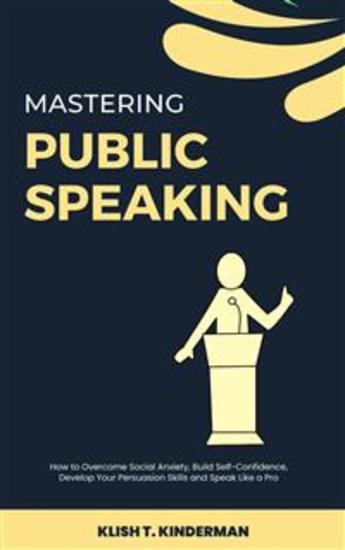
Mastering Public Speaking - How to Overcome Social Anxiety Build Self-Confidence Develop Your Persuasion Skills and Speak Like a Pro - cover

Mastering Public Speaking - How to Overcome Social Anxiety Build Self-Confidence Develop Your Persuasion Skills and Speak Like a Pro

Klish T. Kinderman

Casa editrice: Klish T. Kinderman

  • 0
  • 0
  • 0

Sinossi

Overcome Stage fright, Develop Your Persuasion Skills, and Speak Like a Pro
When you think of public speaking, do you get nervous, anxious, or even sweaty?
 Do you dream of commanding attention, inspiring crowds, and leaving a lasting impact with your words?
 Well, I’ve got some good news for you…
This book will help you unleash your true potential as a captivating orator.
In today's fast-paced world, effective communication is the key that unlocks countless doors of opportunity. 

Whether you're an aspiring leader, an ambitious entrepreneur, a seasoned professional, or simply someone who wants to conquer their fear of public speaking, this book is your game-changer.

Get ready to say goodbye to sweaty palms, racing heartbeats, and stumbling over words. It's time to embrace the spotlight and become a master of the stage.
Inside the pages of this book, you will discover a treasure trove of expert techniques, insider secrets, and practical exercises meticulously crafted to sharpen your speaking skills.

You'll learn how to craft mesmerizing speeches that resonate with your audience, conquer stage fright like a true champion, and deliver presentations with confidence, poise, and an unwavering presence. 
From captivating introductions to powerful conclusions, every aspect of public speaking is demystified and laid bare for you to conquer.
 This is more than just another self-help book. It's a transformative journey, with each chapter guiding you step-by-step toward mastery.
In the chapters of  this book, you will discover:

	Elements of Successful Public Speaking
	Types of Public Speaking Engagements
	How to Overcome Public Speaking Fear
	How to Overcome Social Anxiety
	Gradual Exposure and Desensitization Techniques in Public Speaking
	How to Build Self-Confidence for Public Speaking
	Persuasion Techniques in Public Speaking
	How to Develop Persuasion Skills
	How to Utilize Emotional Intelligence in Persuasion
	How to Apply Cognitive Biases in Persuasion During Public Speaking
	How to Utilize Humor and Wit in Public Speaking
	How to Handle Q&A Sessions and Audience Interaction
	How to Handle Challenges and Overcome Setbacks During Public Speaking
	How to Deal with Stage Fright and Performance Anxiety
	How to Manage Unexpected Situations During Speeches
	How to Address Difficult Questions and Handle Criticism During Public Speaking

And More...
So, what are you waiting for?
 Take the first step toward your transformation by grabbing your copy of this book right now and get ready to unleash your voice, captivate the world, and leave an indelible mark wherever you go.
Disponibile da: 31/05/2023.
Altri libri che potrebbero interessarti

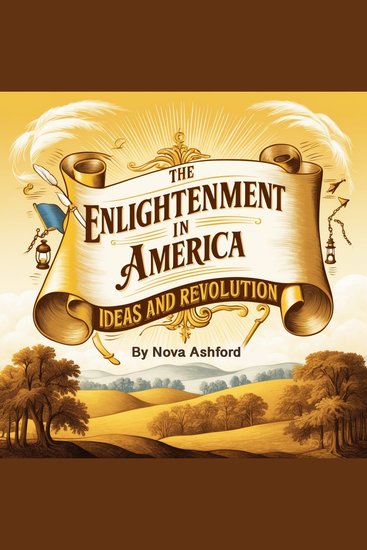
  • The Enlightenment in America - Ideas and Revolution - cover

    The Enlightenment in America -...

    Nova Ashford

    • 0
    • 0
    • 0
    The Enlightenment, a period of intellectual and philosophical advancement in Europe during the 17th and 18th centuries, laid the groundwork for many of the principles that would shape modern democratic societies. Its influence reached far beyond Europe, significantly impacting the American colonies and their path to independence. Understanding the roots of Enlightenment thought requires exploring the major intellectual movements that preceded it, including the Renaissance, the Scientific Revolution, and the Reformation. 
    At the heart of the Enlightenment was a growing emphasis on reason, individualism, and skepticism toward traditional authority. The Renaissance, which spanned the 14th to the 17th centuries, marked a resurgence in classical learning and a renewed focus on humanism—the belief in the value and agency of human beings. Renaissance thinkers, such as Leonardo da Vinci and Michelangelo, laid the groundwork for later intellectual revolutions by advocating for a more secular view of the world, emphasizing human capability and creativity. This shift from a purely religious worldview to one that incorporated human reason would directly influence Enlightenment thinkers who challenged the authority of both the church and monarchy. 
    The Scientific Revolution, which began in the 16th century with figures like Copernicus, Galileo, and Newton, was a key precursor to Enlightenment thought. The scientific discoveries of this era demonstrated the power of reason and observation in understanding the natural world. These discoveries not only transformed scientific inquiry but also encouraged a new way of thinking about society and governance. The methods of empirical observation and logical reasoning that characterized the Scientific Revolution were adopted by Enlightenment philosophers, who sought to apply them to human behavior, politics, and ethics.
    Mostra libro
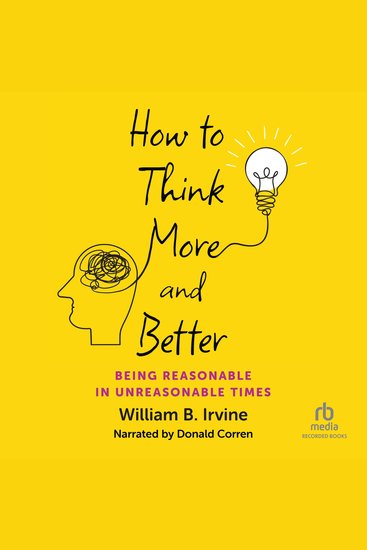
  • How to Think More and Better - Being Reasonable in Unreasonable Times - cover

    How to Think More and Better -...

    William B. Irvine

    • 0
    • 0
    • 0
    William B. Irvine, author of the popular book "A Guide to the Good Life," offers much needed philosophical advice on how to become a more rational and critical thinker in today's emotionally-driven and complex world. 
      
    Even the most reasonable of us can be selective about when we think reasonably. We may realize that the best thing to do is to take the advice of our doctor when facing a medical issue. When shopping for a new car or appliance we might carefully assess online reviews and weigh our options calmly before making an informed decision. But when it comes to things that feel more fraught—voting, navigating a challenge in our family, figuring out what to do in a difficult professional situation—we might throw this approach out the window, dismissing facts and patterns that form a body of evidence, and trust our gut. (Of course, there is a time and place for this, but not every big decision is purely a matter of the heart.) Likewise, when we think about big ideas, about right and wrong, or about concepts so complex they make anyone's head spin, we can freeze, jumping to conclusions rather than wading into the details, or considering the existing arguments that others offer as a trail through challenging terrain. How can we do better? How can we train our minds to be more consistent? How can we practice using the best of our rational abilities when it matters most? 
      
    How to Think More and Better offers a philosopher's advice on becoming a more rational and critical thinker, rather than relying on emotions or hearsay to reach important decisions. It trains the reader in open-minded critical thinking. This thinking is crucial in a time of political polarization, social media, politicized news media, and echo chambers, to help us pursue truth and understanding in a world of rabbit holes, echo chambers, and disinformation. Irvine explains the prevalence of emotion-driven thinking is often at the expense of engagement with evidence, and then lays out strategies readers can use to train themselves to think more critically, drawn from what worked for him in the classroom. He also covers important areas to aid intellectual self-transformation, such as Mindcare and Mindcleaning.  
      
    With practice, most people can become evidence-based thinkers. Seemingly intractable contemporary problems might be solved if we all start engaging more in this kind of slow and careful thinking, considering arguments and evidence even from those on opposite sides of key debates. 
      
    "William B. Irvine is the voice of reason—and reasoned thinking—in a world that feasts on attention and spectacle and drama. How to Think More and Better is a guide to recovering our senses not only as citizens, but as judicious and thoughtful human beings."—Tom Nichols, author of The Death of Expertise
    Mostra libro
  • The Letters of Mark Twain - cover

    The Letters of Mark Twain

    Mark Twain

    • 0
    • 0
    • 0
    These letters were arranged in two volumes by Albert Bigelow Paine, Samuel L. Clemens's literary executor, as a supplement to Mark Twain, A Biography, which Paine wrote. They are, for the most part, every letter written by Clemens known to exist at the time of their publication in 1917. They begin with a fragment of a letter from teenaged Sam Clemens to his sister, Pamela, and conclude with a letter to his attorney two weeks before his death. 
     
    These letters give us some degree of insight into the evolution of Twain's style of speech and prose over the period of his lifetime; they are a small window into the psyche that created the various characters of his stories. 
     
    But they also reveal the tragedies of his life: the lack of success in his business ventures, and the passing of his family. And as I read each one in this collection, I can almost detect the faint odor of one of his “devilish” cigars wafting across the room. 
     
    Samuel Langhorne Clemens, known by his pen name Mark Twain, was an American writer, humorist, entrepreneur, publisher, and lecturer. He was praised as the "greatest humorist the United States has produced", and William Faulkner called him "the father of American literature".
    Mostra libro
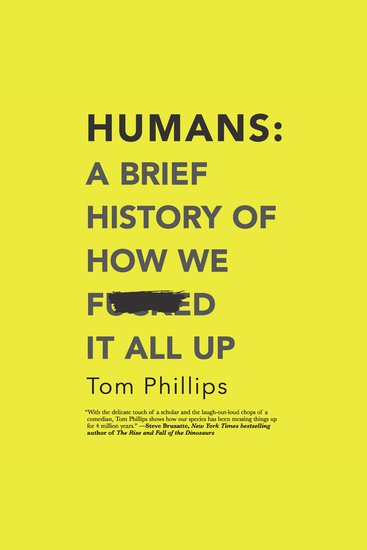
  • Humans: A Brief History of How We F*cked It All Up - cover

    Humans: A Brief History of How...

    Anonimo

    • 0
    • 0
    • 0
    Modern humans have come a long way in the seventy thousand years they’ve walked the earth. Art, science, culture, trade—on the evolutionary food chain, we’re true winners. But it hasn’t always been smooth sailing, and sometimes—just occasionally—we’ve managed to truly f*ck things up.Weaving together history, science, politics and pop culture, Humans offers a panoramic exploration of humankind in all its glory, or lack thereof. From Lucy, our first ancestor, who fell out of a tree and died, to General Zhou Shou of China, who stored gunpowder in his palace before a lantern festival, to the Austrian army attacking itself one drunken night, to the most spectacular fails of the present day, Humans reveals how even the most mundane mistakes can shift the course of civilization as we know it. Lively, wry and brimming with brilliant insight, this unique compendium offers a fresh take on world history and is one of the most entertaining reads of the year.
    Mostra libro
  • A Journey Through America - Patriotic Observations and Commentary - cover

    A Journey Through America -...

    Lawrence Kadish

    • 0
    • 0
    • 0
    A Journey Through America introduces insightful commentary on our American democracy. Author Lawrence Kadish draws from over eighty-five years of lived experience, allowing him to celebrate our nation's strengths, reflect on our self-inflicted errors, and draw attention to the challenges of a nation that remains humanity's last hope. 


    An astute and insightful observer of our nation's political experience, Lawrence Kadish draws on his decades of advocacy on behalf of a nation he loves to advance its founding principles. A Journey Through America offers cautionary advice, inspiring words, and a reminder that a great nation needs to remain strong and united in the face of challenges from within and abroad.
    Mostra libro
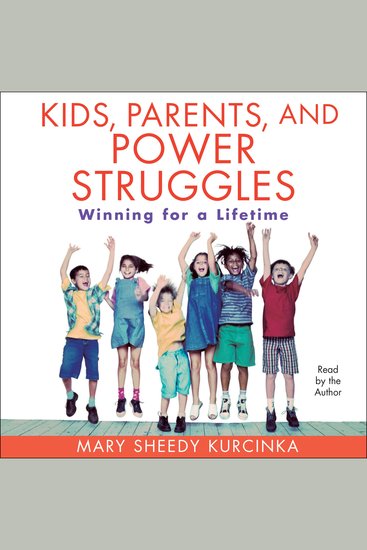
  • Kids Parents and Power Struggles - Winning For A Lifetime - cover

    Kids Parents and Power Struggles...

    Mary Sheedy Kurcinka

    • 0
    • 0
    • 0
      
    Parents and kids pitted against one another, opposing forces pulling in different directions - both determined to win! Every family experiences power struggles, but these daily tugs of war are not inevitable. In Kids, Parents, and Power Struggles, Mary Sheedy Kurcinka presents real strategies for getting to the root of the emotions and needs that can creates daily hassles. But power struggles aren't just about winning and losing. They provide rich opportunities for learning how to deal with strong emotions and for parents and children to solve problems together. 
    Kids, Parents, and Power Struggles helps to unravel the mysteries of power struggles by recognizing that every child is unique and every discipline situation different. The author presents successful strategies for understanding emotions, managing intensity, and identifying triggers. In a new light, she views power struggles as an opportunity to teach you child essential life skills: such as how to calm themselves, to be assertive rather than aggressive, to solve problems, and to work cooperatively with you and others. 
    Hard as it may seem in the heat of the battle, conflict really does present an opportunity to connect with your child! 
     
    Mostra libro