Join us on a literary world trip!
Add this book to bookshelf
Grey
Write a new comment Default profile 50px
Grey
Subscribe to read the full book or read the first pages for free!
All characters reduced
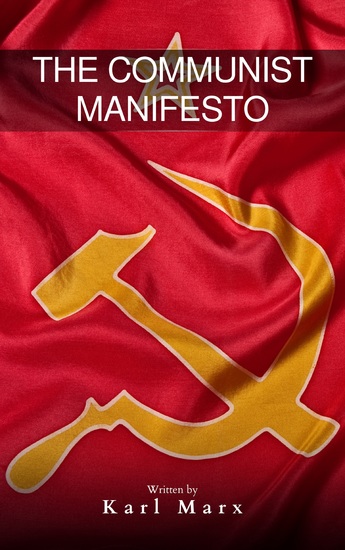
The Communist Manifesto - The Revolutionary Words - cover

The Communist Manifesto - The Revolutionary Words

Karl Marx, Bookish

Translator Samuel Moore

Publisher: Bookish

  • 0
  • 0
  • 0

Summary

🚀 Embark on a Journey of Ideological Transformation! 🚀
Discover the timeless power of Karl Marx and Friedrich Engels' groundbreaking manifesto with our ebook, "The Communist Manifesto." This revolutionary work has shaped the course of history and continues to resonate in today's dynamic world.
🔥 Ignite Your Intellectual Fire 🔥
Dive into the pages that ignited social revolutions and challenged the status quo. "The Communist Manifesto" is not just a historical document; it's a call to action, a blueprint for societal change that echoes through the ages.
💡 Why Choose 'The Communist Manifesto' Ebook? 💡

- 🌍 Unravel the Philosophical Foundations: Explore the core tenets of communism that shook the foundations of 19th-century society.
- 🧠 Insights into Social Dynamics: Gain profound insights into class struggles, historical materialism, and the inevitability of a proletarian revolution.
- 🌐 Relevant for Today: Witness the enduring relevance of Marx and Engels' ideas in the contemporary landscape.👥 Join the Ideological Vanguard 👥
Be part of the community that recognizes the impact of 'The Communist Manifesto.' Hear the echoes of change from readers who found inspiration and a deeper understanding of societal structures within its pages.
"An eye-opener! This manifesto transcends time, making us rethink the very fabric of our society." - A. Reader
🔍 Experience the Revolution, Order Now! 🔍
Seize the opportunity to delve into this transformative masterpiece. Order your copy of "The Communist Manifesto" now and join the ranks of those who seek intellectual enlightenment and societal evolution.
Available since: 11/28/2023.
Print length: 75 pages.

Other books that might interest you

  • The Making of Black Lives Matter - A Brief History of an Idea (2nd Edition) - cover

    The Making of Black Lives Matter...

    Christopher J. Lebron

    • 0
    • 0
    • 0
    Started in the wake of George Zimmerman's 2013 acquittal in the death of Trayvon Martin, the #BlackLivesMatter movement has become a powerful and incendiary campaign demanding redress for the brutal and unjustified treatment of black bodies by law enforcement in the United States. The movement is only a few years old, but as Christopher J. Lebron argues in this book, the sentiment behind it is not; the plea and demand that "Black Lives Matter" comes out of a much older and richer tradition arguing for the equal dignity—and not just equal rights—of black people. 


    In this updated edition, The Making of Black Lives Matter presents a condensed and accessible intellectual history of the #BlackLivesMatter movement and expands on the movement's relevancy. This edition includes a new introduction that explores how the movement's core ideas have been challenged, re-affirmed, and re-imagined during the white nationalism of the Trump years, as well as a new chapter that examines the ideas and importance of Angela Davis and Amiri Baraka as significant participants in the Black Power Movement and Black Arts Movement, respectively. Drawing on the work of Davis, Baraka, and other revolutionary black public intellectuals, Lebron clarifies what it means to assert that "Black Lives Matter" when faced with contemporary instances of anti-black law enforcement.
    Show book
  • Above the Ground - A True Story of the Troubles in Northern Ireland - cover

    Above the Ground - A True Story...

    Dan Lawton

    • 0
    • 0
    • 0
    “The fascinating true story of [Kevin Barry] Artt . . . and how his life was pummeled and turned upside down by being dragged unjustly into ‘the Troubles.’” —Los Angeles Daily JournalThe account of a man convicted for a murder that he did not commit, Above the Ground: A True Story of the Troubles in Northern Ireland takes readers through one of the darkest periods in Northern Ireland’s history, highlighting themes of injustice, perseverance, and hope through Kevin Barry Artt’s escape and struggle.In this deep and exposing novel, readers are shown for the first time, the true story of the murder of British prison official Albert Miles by Irish Republican Army assassins and the best efforts of former IRA men and the British government to keep hidden the secrets of their dirty war during the Troubles in Northern Ireland. No matter where you stand regarding the bloody conflict, Above the Ground will have you turning the pages to keep revealing the truth. Filled with courtroom drama and true crime, you will not want to put this new release down!“Lawton’s account, honed by years on Kevin Barry Artt’s legal team, brings an advocate’s insight and dedication to exposing injustice. A must-read for anyone interested in Irish history, true crime, or courtroom drama.” —The Irish Echo “A startling, memorable forensic analysis and account of British rule in Ireland.” —Seamus Deane, Irish historian and writer“One of the best books ever written by an American about Northern Ireland and a must-read for those interested in promoting peace.” —Nancy Soderberg, former deputy assistant to President Clinton for national security affairs and author of The Superpower Myth
    Show book
  • The Poverty of Philosophy - cover

    The Poverty of Philosophy

    Karl Marx

    • 0
    • 1
    • 0
    Marx started work on this book in January 1847, as can be judged from Engel's letter to Marx on January 15, 1847. By the beginning of April 1847, Marx's work was completed in the main and had gone to the press. On June 15, 1847, he wrote a short foreword.Published in Paris and Brussels in 1847, the book was not republished in full during Marx's lifetime. Excerpts from section five of Chapter Two appeared in different years, mostly between 1872 - 1875 in papers such as La Emancipacion, Der Volksstaat, Social-Demokrat, and others. In 1880 Marx attempted to publish the Poverty of Philosophy in the French socialist newspaper L'Égalité, the organ of the French Workers' Party, but only the foreword and section one of Chapter One were published.This translation is from the original 1847 French edition. It has been updated to also include the changes/corrections Marx made in the copy of the book he presented to N. Utina in 1876, as well as the corrections made by Frederick Engels in the second French edition and the German editions of 1885 and 1892. The first English edition of this work was published in 1900 by Twentieth Century Press.
    Show book
  • Why Nations Fail: Book Summary & Analysis - cover

    Why Nations Fail: Book Summary &...

    Briefly Summaries

    • 0
    • 0
    • 0
    This is a concise summary and analysis of Why Nations Fail, by Daron Acemoglu and James Robinson.
     
    It is not the original book and is not affiliated with or endorsed by Daron Acemoglu and James Robinson.
    Ideal those seeking a quick and insightful overview.
     
    Why do some nations prosper while others remain trapped in poverty and dysfunction? Why Nations Fail explores the root causes of economic success and failure, arguing that it all comes down to institutions. Using a blend of historical case studies and cutting-edge economic theory, the book demonstrates how inclusive political and economic systems create innovation and growth, while extractive systems stifle development and perpetuate inequality. This engaging and thought-provoking work challenges conventional wisdom and offers a roadmap for understanding the dynamics of power, politics, and progress.
    Show book
  • China - Fragile Superpower - cover

    China - Fragile Superpower

    Susan L. Shirk

    • 0
    • 0
    • 0
    Susan L. Shirk, a former Deputy Assistant Secretary of State responsible for China, knows many of today's Chinese rulers personally and has studied them for three decades. She offers invaluable insight into how they think—and what they fear. In this revealing book, you will see the world through the eyes of men like President Hu Jintao and former President Jiang Zemin. We discover a fragile communist regime desperate to survive in a society turned upside down by miraculous economic growth and a stunning new openness to the greater world. Theirs is a regime afraid of its own citizens, and this fear motivates many of their decisions when dealing with the US and other foreign nations. In particular, the fervent nationalism of the Chinese people, combined with their passionate resentment of Japan, and attachment to Taiwan, have made relations with these two regions a minefield. It is here, Shirk concludes, in the tangled interactions between Japan, Taiwan, China, and the United States, that the greatest danger lies. 


    Shirk argues that rising powers such as China tend to provoke wars in large part because other countries mishandle them. Unless we understand China's brittle internal politics and the fears that motivate its leaders, we face the very real possibility of avoidable conflict with China.
    Show book
  • Thinking Historically - A Guide to Statecraft and Strategy - cover

    Thinking Historically - A Guide...

    Francis J. Gavin

    • 0
    • 0
    • 0
    It seems obvious that we should use history to improve policy. If we have a good understanding of the past, it should enable better decisions in the present, especially in the extraordinarily consequential worlds of statecraft and strategy. But how do we gain that knowledge? How should history be used? Sadly, it is rarely done well, and historians and decision-makers seldom interact. But in this remarkable book, Francis J. Gavin explains the many ways historical knowledge can help us understand and navigate the complex, often confusing world around us. Good historical work convincingly captures the challenges and complexities the decisionmaker faces. At its most useful, history is less a narrowly defined field of study than a practice, a mental awareness, a discernment, and a responsiveness to the past and how it unfolded into our present world—a discipline in the best sense of the word. Gavin demonstrates how a historical sensibility helps us to appreciate the unexpected; complicates our assumptions; makes the unfamiliar familiar and the familiar unfamiliar; and requires us, without entirely suspending moral judgment, to try to understand others on their own terms. This book is a powerful argument for thinking historically as a way for listeners to apply wisdom in encountering what is foreign to them.
    Show book