Unisciti a noi in un viaggio nel mondo dei libri!
Aggiungi questo libro allo scaffale
Grey
Scrivi un nuovo commento Default profile 50px
Grey
Iscriviti per leggere l'intero libro o leggi le prime pagine gratuitamente!
All characters reduced
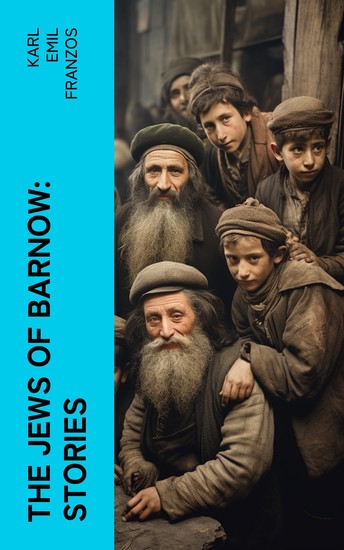
The Jews of Barnow: Stories - cover

The Jews of Barnow: Stories

Karl Emil Franzos

Traduttore M. W. Macdowall

Casa editrice: e-artnow

  • 0
  • 0
  • 0

Sinossi

"The Jews of Barnow" by Karl Emil Franzos is a collection of short stories set in a small town in Galicia during the late nineteenth century. This period was turbulent for the Jewish community - the traditional Judaism was confronted with individuals seeking reforms, Jews started receiving civil rights. Also, the interactions between Jews and Christians were increasing. The book describes how this interaction led both to more misunderstandings and more tolerance.
Disponibile da: 30/11/2023.
Lunghezza di stampa: 249 pagine.

Altri libri che potrebbero interessarti

  • Timeless Adventures - The Unofficial Story of How Doctor Who Conquered Television - cover

    Timeless Adventures - The...

    Brian J. Robb

    • 0
    • 0
    • 0
    This critical history of Doctor Who covers the series 60 years, from the creation of the show to its triumph as Britain's number one TV drama.
    
    Opening with an in-depth account of the creation of the series within the BBC of the early 1960s, each decade of the show is tackled through a unique political and pop cultural historical viewpoint, exploring the links between contemporary Britain and the stories Doctor Who told, and how such links kept the show popular with a mass television audience.
    
    Timeless Adventures reveals how Doctor Who is at its strongest when it reflects the political and cultural concerns of a mass British audience (the 1960s, 1970s and 21st Century), and at its weakest when catering to a narrow fan-based audience (as in the 1980s). The book also addresses the cancellation of the show in the late 1980s (following the series becoming increasing self-obsessed) and the ways in which a narrowly-focused dedicated fandom contributed to the show's demise and yet was also instrumental in its regeneration for the 21st Century under Russell T. Davies, and analyses the new series to reveal what has made it so popular, reflecting real world issues like consumerism and dieting.
    Mostra libro
  • Start of World War II in the Pacific Theater The: The History of the Attack on Pearl Harbor the Doolittle Raid and the Philippines Campaign of 1941-42 - cover

    Start of World War II in the...

    Editors Charles River

    • 0
    • 0
    • 0
    All Americans are familiar with the “day that will live in infamy.” At 9:30 a.m. on Sunday, December 7, 1941, Pearl Harbor, the advanced base of the United States Navy’s Pacific Fleet, was ablaze. It had been smashed by aircraft launched by the carriers of the Imperial Japanese Navy. All eight battleships had been sunk or badly damaged, 350 aircraft had been knocked out, and over 2,000 Americans lay dead. Indelible images of the USS Arizona exploding and the USS Oklahoma capsizing and floating upside down have been ingrained in the American conscience ever since. In less than an hour and a half the Japanese had almost wiped out America’s entire naval presence in the Pacific.  
    	Those who had decoded and seen the Japanese communications in early December 1941 would not be surprised when they heard about an attack on December 7, 1941. They would, however, be astonished when they heard where that attack took place. Posted on the other side of the world, it was early on the morning of December 8 in the Philippines when American general Douglas MacArthur received news of the Japanese attack on Pearl Harbor hours earlier. With that, it could only be a matter of time before the Japanese attacked the Philippines. 
    	The Americans would turn the war in the Pacific around in the middle of 1942, but in the wake of Pearl Harbor and the Japanese invasion of the Philippines, the country was in desperate need of a morale boost, and it would come in the form of the Doolittle Raid. In part to show that the Japanese were not invincible, and in part to reassure the American public that the nation would not lose the war, the Doolittle Raid included both Army and Navy units that launched 16 land-based medium bombers from an aircraft carrier, a feat that was the first of its kind but also one involving a great deal of risk.
    Mostra libro
  • Dealing With Toxic People - Protect Yourself From Jerks Narcissists and Other Difficult People - cover

    Dealing With Toxic People -...

    Mia Carter

    • 0
    • 0
    • 0
    How Much Longer Will You Let Toxic People Control Your Life? 
    They manipulate. They gaslight. They make you question your own reality. Whether it’s a narcissistic partner, a controlling boss, or a so-called friend who drains your energy, toxic people know exactly how to twist your emotions and keep you stuck in their web. 
    You’ve had enough. 
    Maybe you’ve tried to set boundaries, only to be met with guilt-tripping and drama. Maybe you’ve spent sleepless nights replaying conversations, wondering if you’re overreacting. Maybe you’ve convinced yourself that things will change—only to end up in the same painful cycle. 
    This audiobook is your way out. No more second-guessing. No more falling into their traps. 
    Inside, you’ll discover: 
    The red flags that reveal a toxic person—before they pull you in 
    Why toxic people target you (and how to stop attracting them) 
    Gaslighting tactics exposed—so you’ll never be manipulated again 
    The real reason narcissists behave the way they do (and how to stop playing their game) 
    How to protect yourself from emotional vampires—without turning cold or bitter 
    Break free from toxic relationships—without guilt or regret 
    Practical scripts and strategies to handle toxic coworkers, family members, and “friends” 
    This isn’t about avoiding difficult people—it’s about becoming so mentally strong that they can’t control you anymore.You don’t have to keep walking on eggshells. You don’t have to keep explaining yourself. You can take back your confidence, your peace of mind, and your life.
    Mostra libro
  • The Gods of the Nile - Exploring Ancient Egyptian Deities and Their Stories - cover

    The Gods of the Nile - Exploring...

    Julia Blacksmith

    • 0
    • 0
    • 0
    Ancient Egypt was a civilization deeply rooted in religion, where gods and goddesses played an essential role in shaping daily life, governance, and the afterlife. The Egyptian pantheon was vast, with deities representing natural forces, human emotions, and cosmic order. These gods were not distant or abstract figures but were actively involved in the lives of the people, influencing everything from the flooding of the Nile to the fate of the soul after death. The Egyptians believed that by honoring their gods through rituals, prayers, and temple offerings, they could maintain harmony in the universe.  
    One of the defining aspects of Egyptian religion was its polytheistic nature. Unlike monotheistic faiths, which center around a single divine being, the Egyptians worshipped hundreds of gods, each with unique attributes, symbols, and responsibilities. Some, like Ra, the sun god, were powerful and widely revered, while others, such as Taweret, the hippo goddess of childbirth, had more specialized roles. Many deities evolved over time, merging with others or taking on new characteristics as different cities and dynasties rose to prominence. This fluidity allowed Egyptian religion to remain relevant for over three thousand years.  
    The gods were not only worshipped in grand temples but were also deeply integrated into the personal lives of the people. Pharaohs were believed to be divine or semi-divine figures, ruling as representatives of the gods on Earth. Priests conducted elaborate ceremonies in temple complexes dedicated to major deities, ensuring their favor and protection over the land. Ordinary Egyptians also kept small shrines in their homes, prayed to household gods for blessings, and wore protective amulets bearing sacred symbols. Magic and mythology were intertwined with religious practice, with spells and sacred texts often invoking the names of gods for healing, guidance, and protection. 
    Mostra libro
  • Kings and Queens - The History of Mary Tudor Charlemagne and Anne Boleyn - cover

    Kings and Queens - The History...

    Kelly Mass

    • 0
    • 0
    • 0
    This is a book that consists of 3 titles, which are these: 
    1 - As King Henry VIII's 2nd marriage partner, Anne Boleyn ruled as Queen of England from 1533 till 1536. Her marriage and execution by beheading for treason and other criminal offenses made her an essential player in the political and religious chaos that identified the start of the English Reformation. Anne was the daughter of Thomas Boleyn, first Earl of Wiltshire, and his marriage partner, Girl Elizabeth Howard. She got her education in Holland and France, mainly as a housemaid of honor to Queen Claude of France. Anne went to England in early 1522, meaning to wed her Irish cousin James Butler, 9th Earl of Ormond; nevertheless, the marriage failed, and she found work as a housemaid of honor to Henry VIII's partner, Catherine of Aragon. 
    2 - Mary I, typically called Mary Tudor and called "Bloody Mary" by her Protestant challengers, ruled as Queen of England and Ireland from July 1553 till November 17th, 1558. She is well recalled for her solid attempts to reverse the English Reformation, which started throughout her dad's reign, Henry VIII's reign. 
    Bloody Mary was cruel, cold, and from what we know, there was a cause for this. Let’s take a look at her life, her problems, and the way she handled them. 
    3 - From 768 to 800, Charlemagne, also referred to as Charles the Great, was King of the Franks, King of the Lombards, and Emperor of the Romans. Charlemagne combined many western and main Europe at the time of the Early Middle Ages. Since the fall of the Western Roman Empire 3 centuries before, he was the first acknowledged emperor to rule from western Europe. The Carolingian Empire is the name given to Charlemagne's broadening Frankish world. Antipope Paschal the Third later canonized him.
    Mostra libro
  • The Albigensian Crusade - Heresy and Conflict - cover

    The Albigensian Crusade - Heresy...

    Harris Ropes

    • 0
    • 0
    • 0
    The Cathars emerged as one of the most distinctive and controversial religious movements of medieval Europe, particularly in the Languedoc region of modern-day southern France. Rooted in dualist beliefs, the Cathars rejected many of the core teachings of the Catholic Church, viewing the material world as the creation of an evil force and striving for spiritual purity. Their growing influence in the 12th and 13th centuries alarmed both the Church and secular rulers, eventually leading to their violent suppression during the Albigensian Crusade. 
    The origins of Catharism can be traced to earlier dualist traditions, particularly those of the Bogomils in the Balkans. These beliefs likely spread into western Europe through trade routes and missionary activity, finding fertile ground in the tolerant and prosperous culture of Languedoc. Cathar teachings were based on a stark division between the material and spiritual realms. They believed that the physical world was ruled by a malevolent force, often associated with Satan, while the true God presided over the spiritual world. This view led them to reject the Catholic Church, which they saw as corrupt and complicit in the worship of the material. Unlike the Church, which emphasized hierarchical structure, the Cathars maintained a simpler, more egalitarian approach to religious life. 
    Cathar society was structured around two primary groups: the Perfects and the Believers. The Perfects, considered the spiritual elite, led austere lives dedicated to prayer, fasting, and celibacy. They followed strict moral codes, renouncing wealth and worldly pleasures in pursuit of spiritual enlightenment. Believers, while not held to the same rigorous standards, supported the Perfects and aspired to receive the consolamentum, a ritual that purified the soul before death. Cathars rejected many Catholic sacraments, including baptism by water, believing instead in a form of spiritual baptism.
    Mostra libro