Unisciti a noi in un viaggio nel mondo dei libri!
Aggiungi questo libro allo scaffale
Grey
Scrivi un nuovo commento Default profile 50px
Grey
Iscriviti per leggere l'intero libro o leggi le prime pagine gratuitamente!
All characters reduced
Time Measurement Evolution - cover

Time Measurement Evolution

Kaia Stonebrook

Traduttore A AI

Casa editrice: Publifye

  • 0
  • 0
  • 0

Sinossi

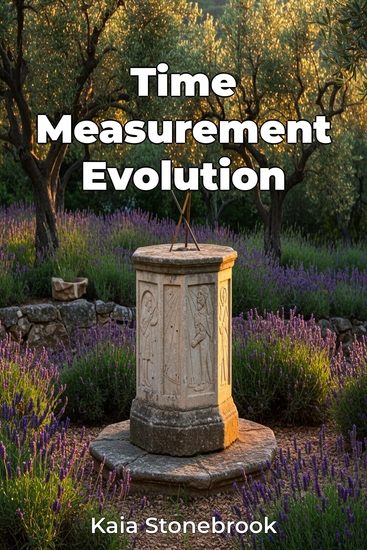
Time Measurement Evolution explores the fascinating journey of how humans have measured time, from ancient sundials to modern atomic clocks. It highlights how our perception of time has been shaped by technological advancements and societal shifts, emphasizing that time isn't a static concept but a fluid construct influenced by innovation.

 
The book examines the development of calendars and early timekeeping devices, revealing how ancient civilizations like Egypt and Mesopotamia first attempted to quantify time through astronomical observations. The book progresses chronologically, first exploring the development of early timekeeping methods, like lunar and solar calendars. It then transitions to the mechanical clock revolution in medieval Europe, detailing the technological innovations that made them possible and the profound economic and social changes that followed.

 
Did you know that the ability to measure time accurately underpins global communication networks, scientific experimentation, and financial markets?

 
The final section delves into the modern era, scrutinizing the discovery of quartz and atomic clocks and their crucial role in synchronizing global systems. By connecting history, science, and society, Time Measurement Evolution provides a unique perspective on how timekeeping has evolved alongside human culture and technological capabilities. The book avoids being overly technical, focusing instead on the human stories and cultural contexts that drove each significant advancement.
Disponibile da: 22/02/2025.
Lunghezza di stampa: 67 pagine.


Altri libri che potrebbero interessarti

  • Those About To Die - cover

    Those About To Die

    Daniel P. Mannix

    • 0
    • 0
    • 0
    Putting the games in the context of Rome's rise and dramatic fall, Mannix captures all the history, planning, and savage pageantry that went into creating the first spectator sports. 


    The games began in 238 BC as nearly county fair–like entertainment, with trick riding, acrobats, trained animals, chariot racing, and athletic events. The contests then evolved into slave fights thanks to wealthy patricians Marcus and Decimus Brutus, who wanted to give their father an unforgettable funeral by reviving an old tradition. What the brothers wrought, Rome devoured, demanding even greater violence to satisfy the bloodlust of the crowd. Architectural wonders in themselves, massive arenas like Circus Maximus and the Colosseum were built, able to host sea battle reenactments on actual water. Successful gladiators found fame, fortune—and freedom. 


    But as Rome begin to fall in the fifth century, so did the games, devolving into nothing more than pointless massacres. In the end, millions of humans and animals were sacrificed in barbaric displays. What were once ceremonies given in honor of gods met an inglorious fate, yet they still captivate the imagination of people today. 


    Contains mature themes.
    Mostra libro
  • Shoot - cover

    Shoot

    Aliyah Jackson

    • 0
    • 0
    • 0
    SHOOT is a collection of 13 poems inspired by the many incidents of police brutality in 2020 as well and the black expeience of systemic racism in the United States. Written to heal myself, published to heal others.
    Mostra libro
  • Milk - cover

    Milk

    Matthew Evans

    • 0
    • 0
    • 0
    A powerful, entertaining and, at times, eviscerating commentary on the most controversial of original superfoods. 
     
    Milk. It's in our coffee, on our cereal. We see it in processed form – yoghurt, butter, cheese, skimmed and lactose free. It's there in almond form, or made from oats or soy, and is as lauded as the 'perfect' food or lambasted as not fit for human consumption and a toxic planet killer, depending on who you trust. Which type you drink, whether you were raised on breastmilk, what you think of it, is affected by culture, biology and fashion. How you view it is driven by your gender and your politics, as well as your geography. 
     
    The miracle liquid has suffered an image problem. It has been used to keep people poor, to keep women subjugated, and to build corporate and medical careers. It's been blamed for climate change, the breakdown of human health, and an enabler of the industrial revolution. From perfect food to pariah, milk's role in life has often been debased. 
     
    Milk celebrates the majesty of this noble liquid, and delves into the pretenders to its throne, from formula to Mylk. It looks at the transformation of what a milk-producer eats into one of the most nutrient dense foods available, and how that can be transformed again into the butter, cheese and clotted cream that we know and love today. It's an exploration of the science, history and politics of what makes mammals different from every other life form on earth.
    Mostra libro
  • Germanic Tribes in Antiquity The: The History and Legacy of the Ancient Peoples Who Spread across Europe - cover

    Germanic Tribes in Antiquity...

    Editors Charles River

    • 0
    • 0
    • 0
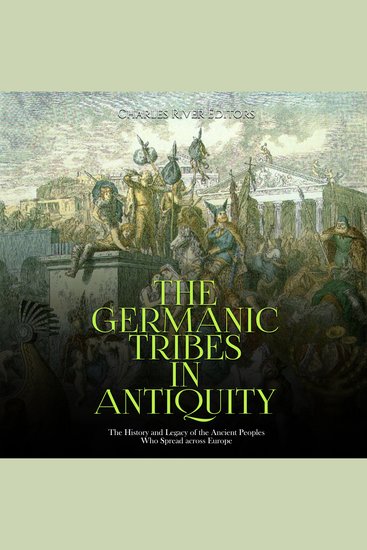
    Despite all the accomplishments and widespread victories and conquests that the ancient Romans accrued over the centuries, one of their most critical failures was the inability to subjugate Germany. Indeed, historians have singled out this one failure as central to the ultimate downfall of Rome, as the constant wars against the Germanic tribes and the need to defend the frontier on the Rhine helped bring the Roman Empire to its knees. 
    There are elements of truth in such a conclusion, but the reality was far more fluid than is often realized. From the 1st century BCE until the collapse of the Western Roman Empire in the 5th century CE, the relationships between the Romans and those living in what is now modern Germany were extremely complicated, involving much more than simple warfare. As a Roman territory, Germania at one point included significant areas of land east of the Rhine, all the way up to the Elbe. The Romans would maintain a significant force on this eastern side until the 3rd century CE, but eventually a Frankish invasion ended that presence, and the term Germania came to refer specifically to the territory west of the Rhine, which included the two provinces of Germania Superior and Germania Inferior, or Upper and Lower Germany. Those provinces were key to the defense of the empire, so much so that Triers provided the location of one of the four seats of government near the end of Rome’s reign. 
    The people that came to be known as Germans originally came from Scandinavia and were mainly shepherds and hunters, but they comprised a number of distinct groups. Within each group, there were separate tribes, and as their populations grew, the land they occupied in Scandinavia was unable to support them, so they began migrating south, settling outside the borders of the Roman Empire. The Germans were fierce warriors who employed rather crude but effective tactics in battle.
    Mostra libro
  • Beyond The Game: A Rowing Romance (Short Story) - Tattoos training and teasing - cover

    Beyond The Game: A Rowing...

    Bradley Conrad Jr.

    • 0
    • 0
    • 0
    Beyond The Game: A Rowing Romance (Varsity Hearts Athletics, Short Story) 
    Two rowing rivals, a sweaty London locker room, and a tension so thick it could sink a scull. 
    Freddy, a disciplined, senior-squad rower and corporate architect, lives by the clock: 5 AM training, tight work deadlines, and zero emotional distractions. When his intense focus is broken by a gorgeous blonde guy in an upscale Richmond café, Freddy’s perfect schedule is thrown overboard. 
    Andy, a semi-pro photographer with a knack for trouble, is new to the development rowing squad. He should be focused on proving his athletic worth, but all his attention—and his most explicit fantasies—are suddenly focused on the beautiful, snobbish rower he keeps accidentally flashing. 
    Their lives clash when Andy’s leg brushes Freddy’s under a table at a swanky Fulham bar, turning a casual drink into a high-stakes game of seduction. From judging PEI oysters and Tattinger champagne to revealing explicit photography on a phone screen, the lines between rivalry and reckless lust blur completely. 
    They’re teammates. They’re competitors. And in the damp, secretive corners of the boat club, they might just become each other's dirtiest secret. 
    If you love sizzling tension, high-stakes sport, and unexpected encounters, grab this fast-paced, high-heat short story. It's the perfect taste of what happens when two athletes let their desire run wild.
    Mostra libro
  • The Ark Deluge and the World’s Great Year - Ancient Egypt the Light of the World Book 9 - cover

    The Ark Deluge and the World’s...

    Gerald Massey

    • 0
    • 0
    • 0
    After the deluge in “the destruction of mankind” the god Ra establishes a covenant with those who have escaped from the flood. He says that what he commanded is well done, and that the destruction of his enemies removes destruction from themselves. “Said by the majesty of Ra, It is well done, all this. I shall now protect men on account of this. Said by Ra, I now raise my hand that I shall not destroy men” i.e. not again. The making of this covenant after the deluge is followed by the establishment of the New Year’s festival under the direction of the young priestesses of Hathor. ―from “The Ark, the Deluge, and the World’s Great Year” It goes unappreciated by modern Egyptologists, but it is embraced by those who savor the concept of a “hidden history” of humanity, and those who approach all human knowledge from the perspective of the esoteric. Gerard Massey’s massive Ancient Egypt: The Light of the World―first published in 1907 and the crowning achievement of the self-taught scholar―redefines the roots of Christianity via Egypt, proposing that Egyptian mythology was the basis for Jewish and Christian beliefs. Here, Cosimo proudly presents Book 9 of Ancient Egypt, in which Massey explores the prevalent imagery across numerous mythological traditions of a global flood unleashed at the behest of an angry god, and shows how they all sprang from Egyptian folklore. Peculiar and profound, this work will intrigue and delight readers of history, religion, and mythology. British author GERALD MASSEY (1828–1907) published works of poetry, spiritualism, Shakespearean criticism, and theology, but his best-known works are in the realm of Egyptology, including A Book of the Beginnings and The Natural Genesis.
    Mostra libro