Junte-se a nós em uma viagem ao mundo dos livros!
Adicionar este livro à prateleira
Grey
Deixe um novo comentário Default profile 50px
Grey
Assine para ler o livro completo ou leia as primeiras páginas de graça!
All characters reduced
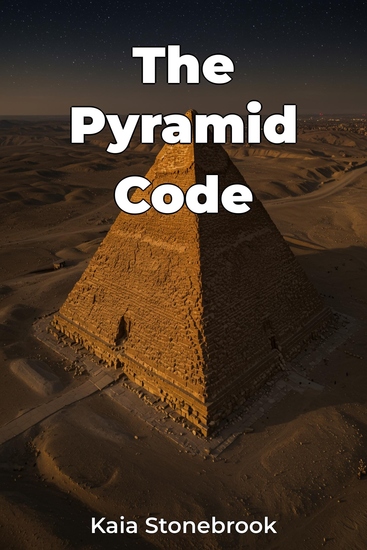
The Pyramid Code - cover
LER

The Pyramid Code

Kaia Stonebrook

Tradutor A AI

Editora: Publifye

  • 0
  • 0
  • 0

Sinopse

"The Pyramid Code" delves into the world of ancient pyramids, particularly those in Egypt, exploring the idea that they contain encoded information reflecting advanced knowledge of mathematics, astronomy, and perhaps even physics. It challenges conventional historical timelines by suggesting that ancient civilizations possessed scientific understanding far exceeding what is typically acknowledged. The book suggests the Great Pyramid of Giza, for example, may be more than just a tomb; it may be a repository of lost knowledge intended for future generations.

 
The book progresses by first establishing the historical context, then dissecting the symbols, inscriptions, and mathematical ratios embedded within these structures. These are analyzed for their potential mathematical and astronomical significance. The book examines hieroglyphs and architectural designs, fostering a connection between history, mathematics, and astronomy. This approach encourages readers to consider alternative interpretations about the construction and purpose of these ancient marvels, potentially reshaping our understanding of human history.
Disponível desde: 20/02/2025.
Comprimento de impressão: 67 páginas.

Outros livros que poderiam interessá-lo

  • Majestic 12: The History and Conspiracy Theories Surrounding the Federal Government’s Investigation of UFOs - cover

    Majestic 12: The History and...

    Editors Charles River

    • 0
    • 0
    • 0
    When people think about unidentified flying objects (UFOs), they tend to think of flying discs piloted by gray beings with large heads and enormous eyes. They tend to think that these sightings only started relatively recently and that belief in UFOs is some sort of modern religion brought on, perhaps, by the very justifiable fears of a nuclear age. But a study of the phenomenon quickly reveals that people have been seeing UFOs since the beginning of recorded history and perhaps a lot longer than that. 
    	Naturally, as technological advances and the creation of flying aircraft became realities, the sighting of UFOs increased, as did the interest in potential contact with aliens.  Some of the American investigations of UFOs from the 1940s and 1950s were documented, but nothing exemplifies the debate between those who believe that extraterrestrials visit the Earth and skeptics than the top secret papers that emerged in the 1980s and seemed to prove the existence of a shadowy secret organization known as MJ-12 or Majestic 12. To believers, these papers proved beyond a doubt not only that UFOs were real and of extraterrestrial origin, but also that the federal government had been aware of this since the 1940s and had even managed to recover one or more crashed alien spacecrafts. To skeptics, this notion simply proved how gullible UFO believers were. There was no middle ground - people either believed in the MJ-12 papers completely or laughed at them. 
    	Decades later, it’s finally possible to take a more balanced view of the history of the MJ-12 papers, including where these documents originated from and who created them. It now seems virtually certain that there never was an organization called Majestic 12 and that the papers describing it were faked, but what makes the story truly fascinating is that it now also appears likely that these papers were faked by people actually working within the Air Force or another government agency.
    Ver livro
  • Stories on lord Ganesh series - 25 - From various sources of Ganesh Purana - cover

    Stories on lord Ganesh series -...

    Anusha HS

    • 0
    • 0
    • 0
    Lord Ganesh is the son of Goddess Parvati and Lord Shiva. He is the first one to get worshipped before worshipping any other god. We can say in short that there is no Hindu who doesn't perform Lord Ganesh’s worship. In Ramayana Lord Rama had worshipped Lord Ganesh. 
    In Mahabharata Lord Krishna had also worshipped Lord Ganesh. They have become the role models to the whole world. Before the beginning of any work it is common to worship Lord Ganesh. There are many Holy hymns on Lord Ganesh. Lord Ganesh’s favorite food is modak. 
    He gets pleased if we offer Durva grass to him. He also loves red Hibiscus flower. He is called the vighnaharta because he wards off all the obstacles in our life. He is also called vighnaraja. There are infinite names to Lord Ganesh which we cannot explain. He ties a snake around his waist. 
    The vehicle of Lord Ganesh is mouse in Hindu culture. Lord Ganesh is worshipped all over India. His miracles have been described in all of the 18 Puranas. There are many forms of Lord Ganesh. 
    He has got two wives one is riddhi and the other is siddhi.Lord Ganesh has got 32 forms of incarnations. The modak which you offer to Lord Ganesh will give you good results. Lord Ganesh does not bias among his devotees. He is specially worshipped on sankashti days. On Ganesh Chaturthi people fast and perform vrath.On this day it is forbidden to see Chandra the moon.
    Ver livro
  • Highly Effective Ways to Influence and Persuade People - Mastering the Arts of Convincing and Persuading People with Proven Techniques - cover

    Highly Effective Ways to...

    Edward Hamilton

    • 0
    • 0
    • 0
    "Highly Effective Ways to Influence and Persuade People" is an indispensable guide that reveals the secrets to mastering the art of persuasion and becoming a highly influential communicator. With a focus on practicality and real-world application, this transformative book equips readers with a comprehensive toolkit to navigate the intricacies of influence successfully. 
    Through a meticulous exploration of various topics, this book goes beyond the surface-level techniques and dives deep into understanding emotional triggers, building genuine rapport, leveraging rhetoric, and crafting compelling arguments. Drawing from a wealth of research and real-world examples, the author unveils proven strategies for overcoming objections, implementing effective negotiation techniques, and developing an authentic charisma that captivates audiences. 
    Packed with invaluable insights, this book takes readers on a journey through the most effective methods of communication and persuasion. Whether you're a sales professional seeking to enhance your sales skills, an entrepreneur aiming to negotiate more effectively, or an individual desiring to communicate more persuasively in both personal and professional settings, this book provides the knowledge, tools, and actionable techniques necessary for success. 
    Immersed in a rich tapestry of practical tips and techniques, "Highly Effective Ways to Influence and Persuade People" empowers readers to elevate their persuasive abilities. Real-world case studies and examples illustrate the application of these techniques, allowing readers to grasp their transformative potential and apply them in their own lives with confidence and precision.
    Ver livro
  • Joan of Arc - The Historical Heroine of France during the French Revolution - cover

    Joan of Arc - The Historical...

    Kelly Mass

    • 0
    • 0
    • 0
    The painting of her on the battlefield with only one breast covered and holding a flag is probably one of the most famous paintings from European history. Many people have heard of Joan of Arc, but only few know what she did or how her life was. 
    Joan of Arc (French: Jeanne d' Arc) is a French heroine who was venerated as a saint for her role in the Lancastrian part of the Hundred Years' War. She was born in Domrémy, in the Vosges area of northeast France, to Jacques d' Arc and Isabelle Romée, a peasant family. Joan said she saw visions of the archangel Michael, Saint Margaret, and Saint Catherine of Alexandria telling her to support Charles VII and free France from English supremacy late in the Hundred Years' War. Joan was sent out as part of a relief army to the siege of Orléans by the as-yet-unanointed King Charles VII. After the siege was raised only 9 days later, she rose to fame. 
    She ended up being a sign of the Catholic League in the 16th century, and Napoleon Bonaparte called her a nationwide sign of France in 1803. 
    In 1909, she was beatified, and in 1920, she was canonized. One of France's 9 secondary tutelary saint is Joan of Arc. 
    Since her death, Joan of Arc has stayed a popular character in literature, painting, sculpture, and other cultural works, with many popular authors, playwrights, filmmakers, artists, and composers creating and continuing to produce cultural representations of her.
    Ver livro
  • The Lost Language of Symbolism Volume 1 - An Inquiry Into the Origin of Certain Letters Words Names Fairy-Tales Folklore and Mythologies - cover

    The Lost Language of Symbolism...

    Harold Bayley

    • 0
    • 0
    • 0
    Mining information from mythology, folklore, religious texts, and fairy tales from around the world, a foremost expert on symbols explains word origins and their meanings. The ultimate symbols are the letters and words in language as Bayley moves beyond mere pictures to understand the vital messages that have been ignored or lost across the centuries
    Ver livro
  • Satavahana Empire - Buddhism Trade and the Power of the Deccan - cover

    Satavahana Empire - Buddhism...

    Rolf Hedger

    • 0
    • 0
    • 0
    The Satavahana Empire, one of the earliest and most influential dynasties in ancient India, emerged in the Deccan region after the decline of the Mauryan Empire. The origins of the Satavahanas remain a subject of historical debate, but they are believed to have belonged to the Andhra region, gaining prominence as local chieftains before consolidating their rule into a powerful dynasty. Their rise marked a significant transition in Indian history, bridging the gap between the Mauryan administration and later regional powers. 
    The early history of the Satavahanas is primarily reconstructed through inscriptions, numismatic evidence, and references in ancient texts. The Puranas mention them as the Andhra dynasty, while inscriptions such as the Naneghat and Nasik inscriptions provide valuable insights into their rulers and governance. The first known ruler of the dynasty, Simuka, is credited with establishing Satavahana rule by overthrowing remnants of Mauryan authority in the Deccan and expanding his control over parts of present-day Maharashtra, Telangana, and Andhra Pradesh. His successors continued to strengthen the empire, laying the foundation for centuries of Satavahana dominance. 
    Following Simuka, his brother and successor Krishna further expanded the territory, but it was under the reign of Satakarni I that the empire gained considerable power. Satakarni I led successful military campaigns, extending his influence northward to the Narmada region and challenging the Shunga and Kshatrapa rulers. His achievements were commemorated in inscriptions and coins, some of which depict him performing Vedic sacrifices such as the Ashvamedha, indicating his aspirations for imperial legitimacy. This period also saw the Satavahanas emerging as key players in trade, administration, and culture, integrating diverse communities into their governance system.
    Ver livro