Join us on a literary world trip!
Add this book to bookshelf
Grey
Write a new comment Default profile 50px
Grey
Subscribe to read the full book or read the first pages for free!
All characters reduced
Ancient Cleaning Methods - cover

Ancient Cleaning Methods

Kaia Stonebrook

Translator A AI

Publisher: Publifye

  • 0
  • 0
  • 0

Summary

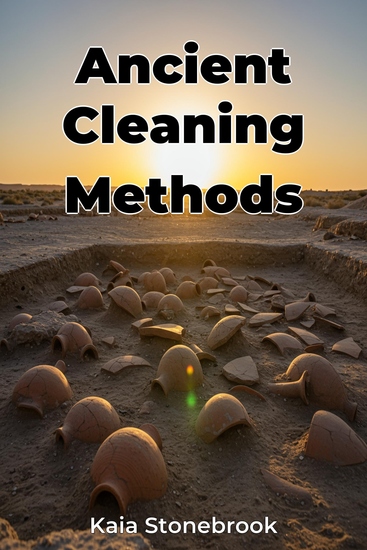
Ancient Cleaning Methods explores the fascinating history of how civilizations maintained cleanliness using natural resources. Long before modern chemicals, ancient societies utilized plant-based solutions like herbal infusions and mineral-based cleansers such as clays and ashes. Archaeological findings reveal that these early methods weren't just about surface cleaning; they were sustainable practices deeply rooted in ecological awareness.

 
The book journeys through time, analyzing cleaning practices from various cultures and continents. It highlights how fermented ingredients and biological processes served as early forms of germ control. By examining excavated sites and ancient texts, the book uncovers the cultural significance of hygiene and offers insights into eco-friendly cleaning alternatives valuable for environmental advocates and anyone seeking a healthier home.

 
The book progresses from plant-based agents to mineral-based cleansers, ultimately investigating biological methods. By combining archaeological evidence, scientific analysis, and cultural context, Ancient Cleaning Methods provides a unique perspective, revealing how ancient wisdom can inform sustainable cleaning practices for a cleaner, healthier future.
Available since: 02/27/2025.
Print length: 72 pages.

Other books that might interest you

  • Gender: Your Guide - A Gender-Friendly Primer on What to Know What to Say and What to Do in the New Gender Culture - cover

    Gender: Your Guide - A...

    PhD Lee Airton

    • 0
    • 0
    • 0
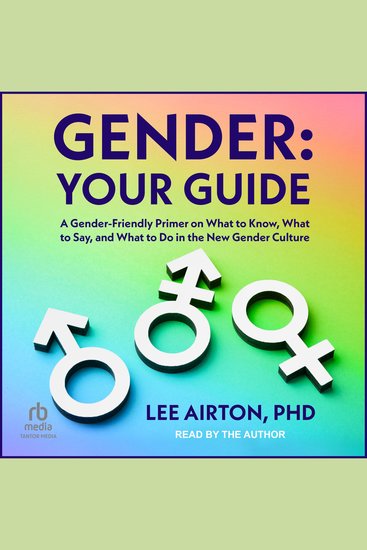
    The days of two genders—male, female; boy, girl; blue, pink—are over, if they ever existed at all. Gender is now a global conversation, and one that is constantly evolving. More people than ever before are openly living their lives as transgender men or women, and many transgender people are coming out as neither men nor women, instead living outside of the binary. Gender is changing, and this change is gaining momentum. 


    We all want to do and say the right things in relation to gender diversity—whether at a job interview, at parent/teacher night, and around the table at family dinners. But where do we begin? 


    From the differences among gender identity, gender expression, and sex, to the use of gender-neutral pronouns like singular they/them, to thinking about your own participation in gender, Gender: Your Guide serves as "a warm, inviting guide to a complicated area" (The Globe and Mail, Toronto). Professor and gender diversity advocate Lee Airton, PhD, explains how gender works in everyday life; how to use accurate terminology to refer to transgender, non-binary, and/or gender non-conforming individuals; and how to ask when you aren't sure what to do or say. It provides the information you need to talk confidently and compassionately about gender diversity, whether simply having a conversation or going to bat as an advocate.
    Show book
  • The Homestead Act of 1862 - cover

    The Homestead Act of 1862

    Various Various

    • 0
    • 0
    • 0
    This program is read by an AI-based synthesized voice.
    Show book
  • Composition as Conversation - Seven Virtues for Effective Writing - cover

    Composition as Conversation -...

    Heather M. Hoover

    • 0
    • 0
    • 0
    Teaching writing is not for the faint of heart, but it can be a tremendous gift to teachers and students.  Students often approach writing courses with trepidation because they think of writing as a mystical and opaque process. Teachers often approach these same courses with dread because of the enormous workload and the often-unpolished skills of new writers. This approachable composition textbook for beginning writers contends that writing can be a better experience for everyone when taught as an empathetic and respectful conversation. In a time in which discourse is not always civil and language is not always tended carefully, a conversation-based writing approach emphasizes intention and care. 
     
    Written by a teacher with more than fifteen years of experience in the college writing classroom, Composition as Conversation explores what happens when the art of conversation meets the art of writing. Heather Hoover shows how seven virtues--including curiosity, attentiveness, relatability, open-mindedness, and generosity--inform the writing process and can help students become more effective writers. She invites writers of all skill levels to make meaningful contributions with their writing. 
     
    This short, accessible, and instructive book offers a reflective method for college-level writing and will also work well in classical school, high school, and homeschool contexts. It demystifies the writing process and helps students understand why their writing matters. It will energize teachers of writing as they encourage their students to become careful readers and observers, intentional listeners, and empathetic arguers. The book also provides helpful sample assignments.
    Show book
  • The Audacity of Relevance - Critical Conversations on the Future of Arts and Culture - cover

    The Audacity of Relevance -...

    Alex Sarian

    • 0
    • 0
    • 0
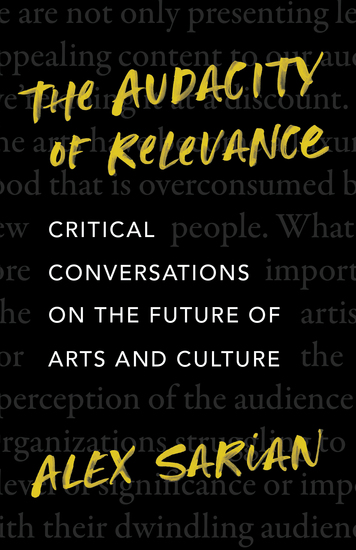
    A manifesto on the state of the non-profit arts sector and the once-in-a-lifetime opportunity leaders have to redefine the business as an investment in our shared social purpose.
    		 
    “The Audacity of Relevance isn’t just for arts leaders but for artists, philanthropists, and arts-loving audiences. It provides a modern look at our organizations and invites us to break the echo chambers we operate in. By forcing us to see the world differently, Alex Sarian asks us to rethink our purpose by leaning into our shared humanity.” — Sarah Arison, Trustee, MoMA
    		 
    The arts and culture sector is in crisis—a crisis of relevance. Whether it’s grappling with dwindling audience sizes, shifting trends in philanthropy, or addressing social challenges, experts have been documenting this slow decline for decades.
    		 
    At the core of Alex Sarian’s international career is the conviction that cultural organizations must embrace a greater civic purpose and build a new business model—one based on the social impact of the arts.
    		 
    Throughout The Audacity of Relevance, Sarian engages in conversations with leaders from across industries to paint a potential future for arts organizations—a future built on measuring our sector’s success by how positively we can influence the many local communities that surround us.
    		 
    It doesn’t matter if you’re a seasoned executive or are just beginning in your career—the principles and anecdotes in this book will inspire you to see the world of arts and culture for what it truly is: filled with endless possibilities for reinvention.
    Show book
  • The Radical Mind - The Origins of Right-Wing Catholic and Protestant Coalition Building - cover

    The Radical Mind - The Origins...

    Chelsea Ebin

    • 0
    • 0
    • 0
    The Radical Mind is a groundbreaking analysis of the origins of the Christian Right, whose political victories are radically reshaping the landscape of American society. Scholars and the public alike have traditionally regarded the New Right and the Christian Right as separate movements. Insofar as both are conservative efforts, most people view them as reactionary and driven by a culture-war backlash against liberal changes to society. 


    Chelsea Ebin's The Radical Mind aims to overturn this consensus. Through a close analysis of New Right architects Connaught Marshner and Paul Weyrich (who is often seen as secular but was a committed Catholic), this book explores the way conservative Catholics and Protestants overcame their long-standing antipathy to form a political coalition—what Ebin calls the New Christian Right. Drawing on extensive archival research, Ebin shows how the movement’s key architects infused right-wing activism with religion. 


    The radical aims of the New Christian Right have been obscured by the way they cultivated a shared identity of victimhood and manipulated the discourse about backlash to create a nostalgic idea of the past that they then leveraged to justify their right-wing policy goals. The Catholic-Protestant alliance constructed an imagined past that they projected into the future as their ideal vision of society. Ebin calls this strategy "prefigurative traditionalism"—a paradoxical prefiguring of a manufactured past. Using this tactic, the New Christian Right coalition disguised the radicality of its politics by framing their aims as reactionary and defensive rather than proactive and offensive.
    Show book
  • Stories on lord Shiva series 26 - From various sources of Shiva Purana - cover

    Stories on lord Shiva series 26...

    Anusha HS

    • 0
    • 0
    • 0
    Lord shiva is adi and he is only the anthya. He is the sole reason for the happenings in both the movable and immovable worlds. Therefore, it is said that not even a spring of grass will move without his permission. He is the one who has given life to all the creatures. He is also the one who takes away the lives of all the creatures. Sadhus sages and aghoraas practice severe penance without minding day and night on Lord Shiva. 
    He blesses his devotees with boons. He is called Bole Shankar. All recite his five syllabled mantra or panchakshari mantra " om Namah Shivaya" which is the most popular one among all the other mantras. Lord Shiva who is also called Parameswara is the one who has got no birth and death. He is only the beginning and he is the end. Nandi which happens to be the vehicle of Lord Shiva is a bull.
    Show book