Unisciti a noi in un viaggio nel mondo dei libri!
Aggiungi questo libro allo scaffale
Grey
Scrivi un nuovo commento Default profile 50px
Grey
Iscriviti per leggere l'intero libro o leggi le prime pagine gratuitamente!
All characters reduced
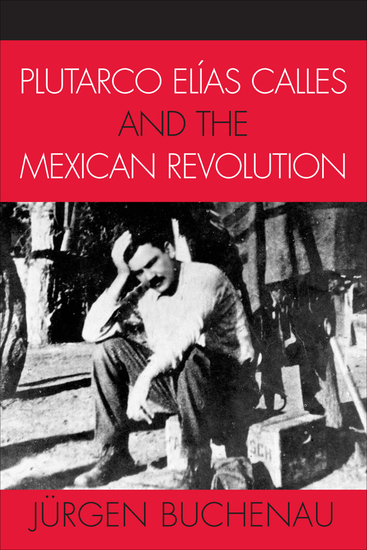
Plutarco Elías Calles and the Mexican Revolution - cover

Plutarco Elías Calles and the Mexican Revolution

Jürgen Buchenau

Casa editrice: Stackpole Books

  • 0
  • 0
  • 0

Sinossi

This biography of the Mexican revolutionary examines his rise from soldier to president to his continued influence as Jefe Maximo. Hailing from the border state of Sonora, Plutarco Elías Calles found his calling in the early years of the revolution, quickly rising to national prominence. As president from 1924 to 1928, Calles undertook an ambitious reform program, modernized the financial system, and defended national sovereignty against an interventionist U.S. government. Yet these reforms failed to eradicate underdevelopment, corruption, and social injustice. Moreover, his unyielding campaigns against political enemies and the Catholic Church earned him a reputation as a repressive strongman. After his term as president, Calles continued to exert broad influence as his country's foremost political figure while three weaker presidents succeeded each other in an atmosphere of constant political crisis. He played a significant role in founding a ruling party that reined in power-hungry military leaders and helped workers attain better living conditions. This dynastic party and its successors, including the present-day Partido Revolucionario Institucional (Party of the Institutional Revolution), remained in power until 2000. Through this comprehensive assessment of a quintessential Mexican politician, Buchenau opens an illuminating window into both the Mexican Revolution and contemporary Mexico.
Disponibile da: 14/06/2023.
Lunghezza di stampa: 312 pagine.

Altri libri che potrebbero interessarti

  • Economic and Social History of El Salvador - cover

    Economic and Social History of...

    Anya Solace

    • 0
    • 0
    • 0
    El Salvador, the smallest country in Central America, has a rich and complex history shaped by its geographic location, indigenous cultures, and colonial experiences. This chapter serves as an introduction to the key historical, economic, and social factors that have defined El Salvador’s development, providing essential context for understanding its contemporary challenges and achievements. 
    The country’s geographic features, including volcanic mountain ranges, fertile valleys, and extensive coastlines, have significantly influenced both its early human settlement and later economic development. El Salvador’s topography has led to a concentration of population in the central valley area, where the capital, San Salvador, is located. Over time, this concentration of population has resulted in social and economic disparities between urban and rural areas. Additionally, El Salvador’s location at the crossroads of ancient Mesoamerican civilizations played a key role in the cultural and economic foundations of its indigenous groups, such as the Pipil and Lenca, who developed sophisticated agricultural and trade systems long before Spanish colonization. 
    The indigenous peoples of El Salvador had complex social and political systems, with distinct languages, traditions, and economies. The arrival of Spanish conquistadors in the early 16th century brought dramatic changes. The conquest led to the decimation of indigenous populations through disease, warfare, and forced labor. Spanish colonization introduced European economic systems such as the encomienda system, which granted settlers control over indigenous labor in exchange for protecting and converting them to Christianity. This marked the beginning of a long history of exploitation and social stratification in El Salvador, which would have lasting effects on the country’s development.
    Mostra libro
  • Yin Chih Wen - The Tract Of The Quiet Way - cover

    Yin Chih Wen - The Tract Of The...

    Teitaro Suzuki

    • 0
    • 0
    • 0
    Teitaro Suzuki's 'Yin Chih Wen: The Tract of the Quiet Way' explores ancient Chinese wisdom. Delving into the philosophy of Yin and Yang, Suzuki unveils the path of harmony and balance. This insightful tract reflects on tranquillity, Taoist principles, and the art of living a serene, contemplative life, offering timeless guidance for those seeking inner peace and spiritual understanding. Read in English, unabridged.
    Mostra libro
  • Lenin Lives? - cover

    Lenin Lives?

    Christopher Read

    • 0
    • 0
    • 0
    Lenin's work and influence have often been written off as no longer relevant, and many today consider this to be so. Lenin has, they claim, had his day, even though he is still revered in China, the world's most populous country. However, Lenin, like his mentor Marx, has had a tendency to rise from apparent decline and oblivion to renewed force and influence. 


    This study examines the key elements of Lenin's life and career, the consolidation of his ideas into the doctrines of "Leninism," the influence of Leninism in promoting revolutionary movements around the globe, and the currently disputed issue of whether his ideas still have any relevance today. In particular, while considering his views on the role of the revolutionary party, often seen as the centerpiece of his theory and practice, this account identifies the root of Lenin's global influence in his opposition to capitalist imperialism and as a bedrock foundation for the opposition of many to fascism and associated ideologies. While recognizing that Lenin's reputation has reached its lowest point, not least in his home country where his legacy is reviled by Vladimir Putin and other contemporary leaders, the book concludes by weighing up the contemporary arguments of those who believe that Lenin still lives.
    Mostra libro
  • Dark Psychology - Mental Manipulation and Psychosocial Tricks to Influence Others - cover

    Dark Psychology - Mental...

    Wesley Felt

    • 0
    • 0
    • 0
    Why does understanding a psychological risk lead to physical reactions? The answer lies in human anatomy, specifically in the mechanisms behind real pain. Is mental pain comparable to physical pain? How does intense pain manifest? When it comes to physical pain, the process is straightforward. We rarely consider the basic motor reflexes controlled by the spine. 
      
    During physical sensation, a nervous impulse is transmitted through the nerves to the corresponding part of the brain, which then sends a response impulse to an organ. But how does mental pain occur? Our bodies possess a self-regulation function for all physiological processes. In essence, the brain responds to changes in the body's chemical processes. 
      
    It’s likely that emotions cause some form of change in the body, such as in the blood’s composition. This change is then transmitted to the brain, which sends a response impulse to an organ, resulting in real pain. This phenomenon is known as the psychological cause of real pain. 
      
    For example, if you’re afraid of the dark, you might experience discomfort or a choking sensation in your throat. It feels as if something is obstructing your breathing. The fear isn’t of the darkness itself but of what might be lurking within it. This fear is based on information you've gathered throughout your life. A child, for instance, doesn’t fear the dark until they’re told what might be in it. This is what we call conscious fear.
    Mostra libro
  • Finding Genius: Understanding Viruses - 30 Questions 25 Geniuses 100 Amazing Insights - cover

    Finding Genius: Understanding...

    Richard Jacobs

    • 0
    • 0
    • 0
    This book is the result of 30+ interviews of genius-level science professionals in various fields. They have all been asked the same set of questions, and have answered, to the best of their ability and knowledge. What you’re about to read is the answers to these questions, not from all the individuals, but from the most interesting 4 or 5 who answered each question. These interviews are for two kinds of audiences: 1) curious amateurs, and 2) science, engineering, or other professionals who have a general knowledge of and curiosity about science, but who are not experts in the field being covered.  
    At the start of my journey in science, I already had a B.S. in Chemical Engineering, but that was from 1998, certainly not 2016 when I started. Reading scientific papers was difficult at first – I understood about 10% of what I was reading. As I interviewed more scientists, researchers, clinicians and others, I started to pick up the vocabulary and thinking process needed to read scientific papers. After a year of reading, my comprehension increased, and now stands at around 70%, typically. In the areas of Physics or other sciences in which I’m not conversant, I understand about 30%. In advanced math, since it’s a language unto itself, especially at high levels, I am back to the 10% level.  
    Apply yourself, and you’ll be surprised at what you can learn in a year’s time.
    Mostra libro
  • Secession and State Creation - What Everyone Needs to Know - cover

    Secession and State Creation -...

    Mikulas Fabry, James Ker-Lindsay

    • 0
    • 0
    • 0
    What makes a state? This question has attracted more and more attention in recent years with Catalan's illegal vote for independence from Spain and Palestine's ongoing search for international recognition. And while Scotland chose to remain with the United Kingdom, discussions of independence have only continued as the ramifications of the Brexit vote begin to set in. Kosovo, South Sudan, and the situation in Ukraine—each in its way reveals the perils of creating a nation separate from neighbors who have dominated it. 


    As James Ker-Lindsay and Mikulas Fabry show in this new addition to the What Everyone Needs to Know® series, the road to statehood never did run smooth. Declaring independence is only the first step; gaining both local and global acceptance is necessary before a state can become truly independent. The prospect of losing territory is usually not welcomed by the parent state. Beyond this immediate conflict, the international community often refuses to accept new states without proof of defined territory, a settled population, and effective government, which frequently translates to a democratic one with demonstrated respect for human rights. Covering the legal, political, and practical issues of secession and state creation, Ker-Lindsay and Fabry provide a sure-footed guide to a complex topic.
    Mostra libro