Unisciti a noi in un viaggio nel mondo dei libri!
Aggiungi questo libro allo scaffale
Grey
Scrivi un nuovo commento Default profile 50px
Grey
Iscriviti per leggere l'intero libro o leggi le prime pagine gratuitamente!
All characters reduced
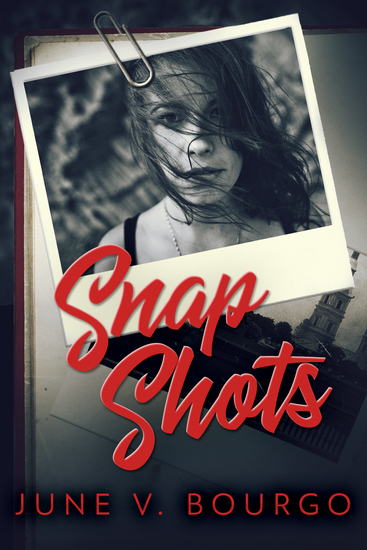
Snap Shots - cover

Snap Shots

June V. Bourgo

Casa editrice: Next Chapter

  • 0
  • 0
  • 0

Sinossi

These stories were created from writing exercises where a picture prompt is used to create a story with a beginning, a middle, and an end in only one hundred and fifty words.
 
Snap Shots are short stories about women who overcome emotional and physical challenges, and become empowered.
 
Although these quick reads are pure fiction, most of them were inspired by childhood memories, life experiences and people in the author's life.
Disponibile da: 15/02/2022.
Altri libri che potrebbero interessarti

  • People Who Talk to Stuffed Animals Are Nice - Stories - cover

    People Who Talk to Stuffed...

    Ao Omae

    • 0
    • 0
    • 0
    “A captivating exploration of gender dynamics, set against a background of the trying and confusing time of adolescence, when identity is in flux and everything in life is unstable and magical.” —Lydia Conklin, author of Rainbow Rainbow 
    A fresh, thoughtful, and always surprising short story collection from a rising young star in the world of Japanese literature. 
    Composed of the title novella and three short stories, People Who Talk to Stuffed Animals Are Nice sensitively explores gender, friendship, romance, love, human interaction and its absence, and how a misogynistic society limits women and men. 
    In the title story, Nanamori and Mugito, two university students appalled by society’s gendered roles, rebel. Refusing to interact with other people they use stuffed toys for emotional support. Unlike Nanamori and Mugito, their fellow plushie society member Shiraki does not talk to plushies. Pragmatic, she accepts the status quo that boys sometimes make nasty jokes; she believes their behavior resembles the real world. 
    In “Realizing Fun Things Through Water,” a young woman named Hatsuoka must contend with a mother-in-law who swears by cancer-preventing “hyper-organization” water, and a sister who writes fake news for a living. “Bath Towel Visuals” illuminates the mental cost of not just laughing along at mean humor, while “Hello, Thank You I’m Okay” follows a family’s response when their shut-in son announces he wants to throw himself a birthday party. 
    Written in brisk and gentle prose, Ao Omae’s stories capture the subtleties and complexities of his characters’ inner world, individuals struggling to conform in an inflexible society little tolerant of difference. These stories, sometimes comical, sometimes bittersweet, and always thought-provoking, speak to the pain and desires of all who embrace nuance, repudiate traditional sex roles, and long for a gentler and more tolerant world.
    Mostra libro
  • Heera and Sheeru Celebrate Diwali - cover

    Heera and Sheeru Celebrate Diwali

    Yogesh Dashrath

    • 0
    • 0
    • 0
    Once upon a time, there lived a small girl in the jungle called Heera. Her best friend was a fearsome tiger called Sheeru. Heera would love to celebrate Diwali, but will be really that simple?
    Mostra libro
  • The Affair At Coulter's Creek - From their pens to your ears genius in every story - cover

    The Affair At Coulter's Creek -...

    Ambrose Bierce

    • 0
    • 0
    • 0
    Ambrose Gwinnett Bierce was born on 24th June 1842 at Horse Cave Creek in Meigs County, Ohio. His parents were poor but they introduced him to literature at an early age, instilling in him a deep appreciation of books, the written word and the elegance of language.  
    Growing up in Koscuisko County, Indiana poverty and religion were defining features of his childhood, and he would later describe his parents as “unwashed savages” and fanatically religious, showing him little affection but always quick to punish. He came to resent religion, and his introduction to literature appears to be their only positive effect. 
    At age 15 Bierce left home to become a printer’s devil, mixing ink and fetching type at The Northern Indian, a small Ohio paper. Falsely accused of theft he returned to his farm and spent time sending out work in the hopes of being published. 
    His Uncle Lucius advised he be sent to the Kentucky Military Institute. A year later he was commissioned as an Officer.  As the Civil War started Bierce enlisted in the 9th Indiana Infantry Regiment.  
    In April 1862 Bierce fought at the Battle of Shiloh, an experience which, though terrifying, became the source of several short stories. Two years later he sustained a serious head wound and was off duty for several months. He was discharged in early 1865.  
    A later expedition to inspect military outposts across the Great Plains took him all the way to San Francisco. He remained there to become involved with publishing and editing and to marry, Mary Ellen on Christmas Day 1871.  They had a child, Day, the following year.  
    In 1872 the family moved to England for 3 years where he wrote for Fun magazine. His son, Leigh, was born, and first book, ‘The Fiend’s Delight’, was published.  
    They returned to San Francisco and to work for a number of papers where he gained admiration for his crime reporting. In 1887 he began a column at the William Randolph Hearst’s San Francisco Examiner.  
    Bierce’s marriage fell apart when he discovered compromising letters to his wife from a secret admirer. The following year, 1889 his son Day committed suicide, depressed by romantic rejection. 
    In 1891 Bierce wrote and published the collection of 26 short stories which included ‘An Occurrence at Owl Creek Bridge’.  Success and further works including poetry followed.  
    Bierce with Hearst’s resources helped uncover a financial plot by a railroad to turn 130 million dollars of loans into a handout. Confronted by the railroad and asked to name his price Bierce answered “my price is $130 million dollars. If, when you are ready to pay, I happen to be out of town, you may hand it over to my friend, the Treasurer of the United States”.  
    He now began his first foray as a fabulist, publishing ‘Fantastic Fables’ in 1899.  But tragedy again struck two years later when his second son Leigh died of pneumonia relating to his alcoholism.  
    He continued to write short stories and poetry and also published ‘The Devil’s Dictionary’.  
    At the age of 71, in 1913 Bierce departed from Washington, D.C., for a tour of the battlefields where he had fought during the civil war. At the city of Chihuahua he wrote his last known communication, a letter to a friend. It’s closing words were “as to me, I leave here tomorrow for an unknown destination,” Ambrose Bierce then vanished without trace.
    Mostra libro
  • Top 10 Short Stories The - Men 1890s - The top ten Short Stories of the 1890's written by male authors - cover

    Top 10 Short Stories The - Men...

    Joseph Conrad, Anton Chekhov,...

    • 0
    • 0
    • 0
    Short stories have always been a sort of instant access into an author’s brain, their soul and heart.  A few pages can lift our lives into locations, people and experiences with a sweep of landscape, narration, feelings and emotions that is difficult to achieve elsewhere. 
     
    In this series we try to offer up tried and trusted ‘Top Tens’ across many different themes and authors. But any anthology will immediately throw up the questions – Why that story? Why that author?  
     
    The theme itself will form the boundaries for our stories which range from well-known classics, newly told, to stories that modern times have overlooked but perfectly exemplify the theme.  Throughout the volume our authors whether of instant recognition or new to you are all leviathans of literature. 
     
    Some you may disagree with but they will get you thinking; about our choices and about those you would have made.  If this volume takes you on a path to discover more of these miniature masterpieces then we have all gained something. 
     
    As the Century staggers to a close under the burdens of its expansive history authors, freed from many constraints, are exploring new ideas on a more intimate scale but on a wider landscape.  Their now everyday names and reputations are forged in these stories.  
     
    1 - The Top 10 - The 1890's - The Men - An Introduction 
    2 - Youth - Part 1 by Joseph Conrad 
    3 - Youth - Part 1 by Joseph Conrad 
    4 - About Love by Anton Chekhov 
    5 - Twenty-Six Men and a Girl by Maxim Gorky 
    6 - B24 by Arthur Conan Doyle 
    7 - Lost Hearts by M R James 
    8 - The Burial of the Rats by Bram Stoker 
    9 - An Occurrence At Owl Creek Bridge by Ambrose Bierce 
    10 - The Inconsiderate Waiter by J M Barrie 
    11 - Hide And Seek or Pliatki by Fyodor Sologub 
    12 - The Repairer of Reputations - Part 1 by Robert W Chambers 
    13 - The Repairer of Reputations - Part 2 by Robert W Chambers
    Mostra libro
  • The Man Who Was - cover

    The Man Who Was

    Rudyard Kipling

    • 0
    • 0
    • 0
    The Man Who Was by Rudyard Kipling is a haunting short story of identity, honor, and the psychological scars of war. Set in British colonial India, the narrative follows a mysterious and disfigured man whose appearance at a military mess sparks curiosity and unease. As the truth of his identity slowly unravels, the story reveals a powerful meditation on the cost of duty and the resilience of the human spirit. With Kipling’s signature sharp prose and deep insight into imperial life, this tale blends suspense, tragedy, and moral reflection in unforgettable fashion.
    Mostra libro
  • Two Tales From Lord Dunsany - The Sword of Welleran Carcassone - cover

    Two Tales From Lord Dunsany -...

    Lord Dunsany

    • 0
    • 0
    • 0
    Edward John Moreton Drax Plunkett, 18th Baron of Dunsany, (July 24, 1878 - October 25, 1957), commonly known as Lord Dunsany, was an Anglo-Irish writer and dramatist who published more than 90 books during his lifetime, as well as hundreds of short stories, plays, and essays. He gained a name in the 1910s as a great writer in the English-speaking world. The following recording includes the short stories "The Sword of Welleran" and "Carcassone."
    Mostra libro