Unisciti a noi in un viaggio nel mondo dei libri!
Aggiungi questo libro allo scaffale
Grey
Scrivi un nuovo commento Default profile 50px
Grey
Iscriviti per leggere l'intero libro o leggi le prime pagine gratuitamente!
All characters reduced
Negative Dependency Signs - cover

Negative Dependency Signs

Julian Beaumont

Traduttore A AI

Casa editrice: Publifye

  • 0
  • 0
  • 0

Sinossi

Negative Dependency Signs explores the often subtle patterns of unhealthy dependency in relationships, highlighting how these dynamics can undermine personal autonomy and mental well-being. The book argues that recognizing these signs—such as excessive reassurance-seeking and fear of abandonment—is crucial for breaking free from their grip. It provides insights into how early attachment styles and cognitive distortions contribute to these patterns, offering a path toward healthier interdependence.

 
The book progresses from defining unhealthy attachments and exploring their psychological roots to identifying specific signs and symptoms with real-life examples. Drawing on attachment theory and cognitive behavioral therapy, it offers practical strategies for building self-esteem, fostering emotional regulation, and setting boundaries.

 
Ultimately, it provides readers with actionable steps to cultivate more balanced and fulfilling relationships, enhancing their self-reliance and overall quality of life.
Disponibile da: 27/02/2025.
Lunghezza di stampa: 116 pagine.

Altri libri che potrebbero interessarti

  • Heaven's Testimonies - NEAR- DEATH EXPERIENCES UNVEILING LIFE BEYOND DEATH AND THE POWER OF GOD AND HEAVEN - cover

    Heaven's Testimonies - NEAR-...

    Elizabeth E James

    • 0
    • 0
    • 0
    Have you ever wondered what truly happens when life ends… or if it really ends at all? 
     
    Heaven’s Testimonies: Near-Death Experiences invites you into a world that sits just beyond the edge of human understanding, where life, death, and something more seem to meet. 
     
    Through a carefully woven blend of ancient wisdom, modern research, and deeply moving personal accounts, this book explores one of humanity’s oldest and most profound questions: What lies beyond the veil of death? 
     
    Inside these pages, you’ll discover how beliefs about the afterlife have shaped cultures across time—from early civilizations to spiritual traditions that continue to influence us today. Alongside this historical lens are powerful firsthand testimonies from individuals who have crossed the threshold of death and returned, bringing back messages that speak of peace, presence, and something greater than themselves. 
     
    Balanced with thoughtful scientific perspectives on consciousness and the human experience, these stories invite you to reflect rather than persuade, to consider rather than conclude. 
     
    You’ll explore: 
    • The afterlife through ancient cultures, religious texts, and enduring spiritual traditions 
    • Real-life near-death experiences shared by those who have returned 
    • Scientific and psychological insights into consciousness and the nature of existence 
    • The deeper connections between belief, experience, and what it means to be human 
     
    This is not a book that tells you what to believe. 
    It is a book that gently opens the door… and invites you to look beyond it. 
     
    If you’ve ever felt curious about life after death, or quietly wondered what might exist beyond this world, this journey will stay with you long after the final page.
    Mostra libro
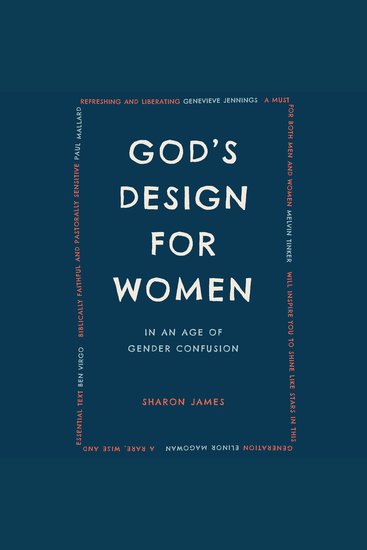
  • God's Design for Women - In an Age of Gender Confusion - cover

    God's Design for Women - In an...

    Sharon James

    • 0
    • 0
    • 0
    IS THERE ANYTHING UNIQUE ABOUT BEING A WOMAN? GOD'S WORD SAYS YES! Men and women are absolutely equal in dignity. They are also significantly different. Women are only honoured (and fulfilled) when both truths are celebrated. Read this revised edition of Sharon James' God's Design for Women if you want to find out about: - The positive impact Christianity has had on women throughout history - The various waves of feminism right up to the #MeToo movement - The Bible's teaching about equality and complementarity - A survey of views on women's ministry - An overview of biblical ministries of women - A biblical perspective on work, singleness, marriage and motherhood
    Mostra libro
  • Active Allyship - Embracing a practice of inclusion to transform workplaces - cover

    Active Allyship - Embracing a...

    PhD Jocelyn Peltier-Huntley

    • 0
    • 0
    • 0
    In today’s Canadian society, our expectations of work are changing and our workplaces need to adapt. This book will help you understand your role as a change agent and answer the question “How can I best contribute to transforming my workplace to work better for everyone?”    
     
    While we are all at different places on our journey to understand, support, and take action towards Truth and Reconciliation and advancing equity, diversity, and inclusion in our workplaces, we all have a role to play. This book will help you define your role in transforming workplace culture and, importantly, understand the nuances of culture change in the context of Canadian workplaces.   
     
    Active Allyship provides practical, evidence-based solutions to establish an allyship practice intended to advance positive change in workplaces and transform your workplace culture to attract and sustain a diverse workforce—one that is representative of Canadian society.   The practical strategies offered in Active Allyship are brought to life through the stories of eight active allies: Bai Bintou Kaira, Jessica Vandenberghe, Kim Hanson, Leanne Holtvogt, Philippe Lepage, Rob Jackson, and Susan Lomas.  Thank you for joining us on your journey to allyship!
    Mostra libro
  • Economic Recovery Program - cover

    Economic Recovery Program

    Ronald Reagan

    • 0
    • 0
    • 0
    On February 18, 1981, Reagan laid out his economic recovery program before a Joint Session of Congress. Reagan had previously outlined his recovery program in an Oval Office address on February 5, 1981, in which he displayed a dollar bill and 36 cents to show how inflation had reduced the value of a dollar since 1960.  
    Reagan made a further plea for enactment of his recovery program on April 28, 1981, following the assassination attempt on his life. Many economists credit this recovery program for reducing the inflation rate and igniting one of the longest and most robust economic expansions in U.S. history. 
    Reagan paints a grim picture of inflation, the national debt, and lagging productivity plaguing the economy. $41.4 billion of reduced spending is proposed with no reduction for “the poverty stricken, the disabled, the elderly, [and] all those with true need”. Subsidies of the synthetic fuel program, the Export-Import Bank, and the Economic Development Administration are targeted.  
    Block grants to states are proposed, along with changes to Medicaid, the space program, the Postal Service, and the Department of Energy. To counter the Soviet Union’s military build-up, defense is the one department with an increased budget. 
    A 10-percent tax cut for individual taxpayers is proposed for each of the next 3 years, along with increased depreciation allowances to allow business the capital needed to modernize.  
    We “must come to grips with inefficient and burdensome regulations, eliminate those we can and reform the others.”  
    To reduce inflation and interest rates, we need to slow the growth of our money supply. 
    This is our proposal for America’s new beginning. “I'm here tonight to ask you to join me in making it our plan.” Government “must not be used to regulate the economy or bring about social change.” 
    Audio recording courtesy of the Ronald Reagan Presidential Library. 
    AspenLeafMedia.com
    Mostra libro
  • Rare Recording of Ludwig von Mises A - Volume 2 - cover

    Rare Recording of Ludwig von...

    Ludwig Von Mises

    • 0
    • 0
    • 0
    Ludwig Heinrich Edler von Mises (September 29, 1881 - October 10, 1973) was an Austrian–American Austrian School economist, historian, logician, and sociologist. Mises wrote and lectured extensively on the societal contributions of classical liberalism and the power of consumers. He is best known for his work on human behavior studies comparing communism and capitalism.
    Mostra libro
  • Greatest Cities of Pre-Columbian America The: The Most Famous Cities in the Western Hemisphere Before the Arrival of the Spanish - cover

    Greatest Cities of Pre-Columbian...

    Charles River Editors

    • 0
    • 0
    • 0
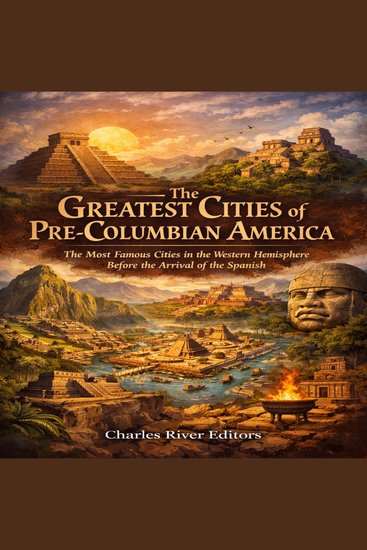
    Thriving from 100-750 A.D., Teotihuacan was one of the largest cities in the ancient world, with a population estimated at upwards of 150,000-250,000, over three times the size of contemporary Mayan capitals. Furthermore, Teotihuacan was a supremely well-planned and efficient city that was able to field massive armies and extend its power far beyond its home base to create a unified empire unlike anything in the region before it. In fact, the city’s residents seemed so sure of its power that there were apparently no walls or military fortifications around Teotihuacan. Thanks to that power, Teotihuacan not only served as a vital center for trade in Ancient Mesoamerica but also spread its architecture, art, religion, and culture, all of which subsequently influenced the famous Mesoamerican civilizations that followed, including the Aztec and Maya.  
    Chichen Itza was inhabited for hundreds of years and was a very influential center in the later years of Maya civilization. At its height, Chichen Itza may have had over 30,000 inhabitants, and with a spectacular pyramid, enormous ball court, observatory and several temples, the builders of this city exceeded even those at Uxmal in developing the use of columns and exterior relief decoration. Although Chichen Itza was around for hundreds of years, it had a relatively short period of dominance in the region, lasting from about 800-950 A.D.  
    Today, Machu Picchu is one of South America’s best tourist spots, and the ruins have even been voted one of the Seven New Wonders of the World. But even though Machu Picchu is now the best known of all Incan ruins, its function in Incan civilization is still not clear. Some have speculated that it was an outpost or a frontier citadel, while others believe it to be a sanctuary or a work center for women. Still others suggest that it was a ceremonial center or perhaps even the last refuge of the Incas after the Spanish conquest.
    Mostra libro