Unisciti a noi in un viaggio nel mondo dei libri!
Aggiungi questo libro allo scaffale
Grey
Scrivi un nuovo commento Default profile 50px
Grey
Iscriviti per leggere l'intero libro o leggi le prime pagine gratuitamente!
All characters reduced
La Sorcière: The Witch of the Middle Ages - cover

La Sorcière: The Witch of the Middle Ages

Jules Michelet

Traduttore Lionel J. Trotter

Casa editrice: DigiCat

  • 0
  • 0
  • 0

Sinossi

In "La Sorcière: The Witch of the Middle Ages," Jules Michelet presents a compelling exploration of the witch hunts that plagued Europe during the Middle Ages, meticulously weaving together historical facts with poetic narration. His literary style, marked by vivid imagery and passionate prose, transcends mere historical recounting to delve into the psychological and social underpinnings of witch hunts, revealing the fears and superstitions of a society in turmoil. Michelet situates his discussion within a broader cultural and philosophical context, highlighting the intersection of science, religion, and folklore that characterized this dark chapter of European history. Jules Michelet, a prominent 19th-century French historian, was deeply influenced by the Romantic movement, which emphasized emotion and individual experience. His progressive views on history and society, coupled with his own interest in the marginalized figures of the past, led him to write this poignant treatise. Michelet's dedication to shedding light on the neglected narratives of women, in particular, serves to amplify the voices of those unjustly accused and condemned. "La Sorcière" is a stimulating read for anyone interested in the interplay of gender, power, and societal fears throughout history. Michelet's unique blend of historical detail and lyrical writing not only enhances our understanding of the era but also resonates with contemporary discussions about the consequences of mass hysteria and scapegoating.
Disponibile da: 29/05/2022.
Lunghezza di stampa: 245 pagine.


Altri libri che potrebbero interessarti

  • Free to Obey - How the Nazis Invented Modern Management - cover

    Free to Obey - How the Nazis...

    Johann Chapoutot

    • 0
    • 0
    • 0
    What if the rules of modern capitalism were written during the Third Reich?
     
    Reinhard Höhn (1904-2000) was a commander of the SS, one of Nazi Germany’s most brilliant legal minds, and an archetype of the fervid technocrats and intellectuals that built the Third Reich. Following Germany’s defeat, after a few years in hiding, he emerged in the early 1950s as the founder and director of a renowned management school in Lower Saxony.
     
    Höhn’s story wouldn’t be very different from that of many other prominent Nazis if not for the fact that a vast number of Germany’s postwar business leaders—more than 600,000 executives—were educated at his management school.
     
    In this fascinating book, Johann Chapoutot, one of France’s most brilliant historians, traces the profound links between Nazism and the principles of modern corporate management, our definitions of success, and a concept of personal freedom that masks rigid hierarchical structures of power and control.
     
    “One of the most gifted European historians of his generation.”—Timothy Snyder, New York Times best-selling author of On Tyranny
    Mostra libro
  • The Song Dynasty - Economic and Technological Innovations - cover

    The Song Dynasty - Economic and...

    Jun Liu

    • 0
    • 0
    • 0
    The Song Dynasty (960–1279) emerged from the remnants of the fragmented Five Dynasties and Ten Kingdoms period, establishing a centralized government that would shape China for centuries. Unlike previous dynasties that relied heavily on military conquest, the Song prioritized administration, economic growth, and cultural development, laying the foundation for one of the most prosperous eras in Chinese history. 
    The dynasty is traditionally divided into two periods: the Northern Song (960–1127) and the Southern Song (1127–1279). The Northern Song was founded by Emperor Taizu, who implemented policies to weaken the power of military governors and strengthen civilian rule. This shift reduced the influence of warlords, allowing for a stable bureaucratic system. However, external threats, particularly from the Khitan Liao and later the Jurchen Jin, forced the court to focus on diplomacy and financial strategies rather than military expansion. Eventually, the Jin conquest of the north in 1127 led to the retreat of the Song court to the south, marking the beginning of the Southern Song period. Despite losing control over key northern territories, the Southern Song maintained a flourishing economy, driven by trade, technological advancements, and agricultural productivity. 
    The Song Dynasty’s political structure was characterized by a well-organized bureaucracy based on merit rather than aristocratic privilege. The expansion of the civil service examination system ensured that government officials were selected through rigorous academic testing rather than birthright. This system, rooted in Confucian ideals, emphasized knowledge of classical texts and governance principles, creating a scholar-official class that played a crucial role in state affairs. While this meritocratic system promoted stability, it also created a conservative bureaucracy resistant to radical reforms.
    Mostra libro
  • Nasty Politics - The Logic of Insults Threats and Incitement - cover

    Nasty Politics - The Logic of...

    Thomas Zeitzoff

    • 0
    • 0
    • 0
    A novel explanation for why politicians insult, accuse, and threaten their opponents, even though voters say they don't like it. 


    Why do politicians engage in nasty politics? Why do they use insult, accusations, intimidation, and in rare cases violence against their domestic political opponents? In Nasty Politics, Thomas Zeitzoff answers these questions by examining this global political trend in the US, Ukraine, and Israel and looking at how key leaders such as Trump, Zelensky, and Netanyahu use it. Drawing on surveys, case studies, in-depth interviews, databases of nasty politics, and large social media datasets, Zeitzoff shows that across all three countries, the public generally doesn't like nasty politics and it increases the threat of political violence. But it can also be a way to signal toughness to voters, which is especially important in threatening times. Featuring a powerful theory of why nastiness takes hold in democratic polities, Nasty Politics highlights how it influences the kinds of politicians who run for office and deepens our understanding for why so many politicians now rely on outsized 
    anger and withering insults for political gain.
    Mostra libro
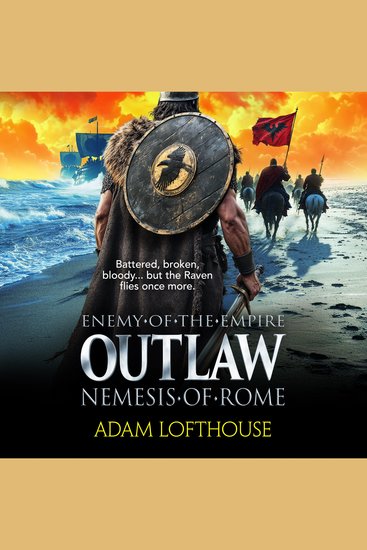
  • Outlaw: Nemesis of Rome - Discover the new action-packed thriller from Adam Lofthouse - cover

    Outlaw: Nemesis of Rome -...

    Adam Lofthouse

    • 0
    • 0
    • 0
    The next instalment in Adam Lofthouse's Enemy of the Empire series. An action-packed thriller set outside the boundaries of Ancient Rome. 
    'Highly recommended!' - M J Porter 
    It takes years to build a legend. 
    It takes mere heartbeats to shatter it to dust. 
    150 AD. Alaric, once lord of the Ravensworn is no longer feared nor revered. It has been six long years since his great defeat. He now lives life in the shadows. All hopes of glory and eternal rest in the Heroes Hall are gone. Alaric is alone. An outlaw to his land. 
    When a band of horsemen appear on the horizon, eager to recruit the man they still believe to be a lord of war. And so Alaric is pulled back to a life he thought had forsaken him. For in the far north of Germania lies a tribe in desperate need of aid. 
    In the far reaches of the land, for a cause not his own, Alaric will fly the Raven banner once more. In doing so, he will show both man and Gods that his story is not yet over. 
    *Title previously published as Ravensworn 
    Praise for Adam Lofthouse: 
    'Blood, guts and glory - the life of a German renegade and outlaw during the Roman occupation - fabulous!' Michael Jecks 
    'The characters are full of the life of the period, their flaws, their doubts, their abilities all on display; a feast for the readers' Hoover Book Review 
    'No holds barred, vivid Roman entertainment, probably the next best thing to actually being there' Speesh Reads 
    'A great mix of legion comradery with a personal plot you can get invested in, add in a couple of big twists along the way and you’ve got a smashing read' David's Book Blurg 
    'An absolute roller coaster.' ⭐⭐⭐⭐⭐ reader review 
    'It's a thoroughly un-put-down-able book!' ⭐⭐⭐⭐⭐ reader review 
    'A very, very good book from a very, very good new, young writer.' ⭐⭐⭐⭐⭐ reader review 
    'Brilliant!' ⭐⭐⭐⭐⭐Reader review
    Mostra libro
  • The French Famine of 1693-1694 - A Historical Overview - cover

    The French Famine of 1693-1694 -...

    Sarah Willards

    • 0
    • 0
    • 0
    The French Famine of 1693-1694, one of the most devastating in the nation's history, was deeply influenced by a confluence of environmental, social, and political factors that shaped its catastrophic outcome. To understand the severity of this famine, it is crucial to examine the conditions that preceded it, including the weather patterns, economic environment, and political climate of late 17th-century France. 
    At the heart of the famine was a series of harsh weather conditions that led to poor harvests in 1693. A combination of torrential rains, flooding, and unseasonably cold temperatures during the growing season caused widespread crop failure. The heavy rainfall ruined crops such as wheat, barley, and oats, essential staples for the population. In particular, the harsh winter of 1693–1694 exacerbated the problem by delaying planting and further destroying the few crops that had managed to survive. This extreme weather pattern, which was part of a broader climate event known as the "Little Ice Age," contributed to reduced food production and severe shortages across France. 
    In addition to the challenging weather, the economic and social conditions in France played a significant role in magnifying the effects of the famine. By the late 17th century, the French economy had been heavily strained by costly wars, including the Nine Years' War, and the lavish spending of Louis XIV. The country’s infrastructure was ill-equipped to handle such widespread agricultural distress. The peasants, who made up the majority of the population, were already burdened with heavy taxes and had limited resources to survive such a crisis. With most of the population living in rural areas, food shortages hit them hardest, leading to widespread hunger and suffering.
    Mostra libro
  • Sun Tzu on the Art of War - The Oldest Military Treatise in the World - cover

    Sun Tzu on the Art of War - The...

    Sun Tzu

    • 0
    • 0
    • 0
    “If you know others and you know yourself, even in one hundred battles you will not find yourself at risk; if you do not know others, but you know yourself, you will win some battles and lose others; if you do not know others and you do not know yourself, you are at risk in every battle.” 
    The Art of War is considered the oldest recorded treatise on military strategy. Written around the year 500 BC, this book uncovers the secrets of logic and armament, outlines the systems of authority, explains the keys to communication and discipline, differentiates the levels of military rank, and above all establishes absolutely innovative guidelines for strategy that are still used today. 
    Its teachings go beyond the literal concept of “war.” For Sun Tzu, the successful person achieves his goals without devastating or humiliating others. The triumphant person prepares a tactic to achieve his goals, takes advantage of his opportunities, accepts his weaknesses, and recognizes his strengths. Those ideas led to the practice of applying the philosophy of The Art of War to questions of business and personal betterment. 
    The words of Sun Tzu are read today as a manual for behaviors that help one defeat obstacles in various parts of life in order to achieve victory and exercise dominion over all who keep him from the path to success.
    Mostra libro