Unisciti a noi in un viaggio nel mondo dei libri!
Aggiungi questo libro allo scaffale
Grey
Scrivi un nuovo commento Default profile 50px
Grey
Iscriviti per leggere l'intero libro o leggi le prime pagine gratuitamente!
All characters reduced
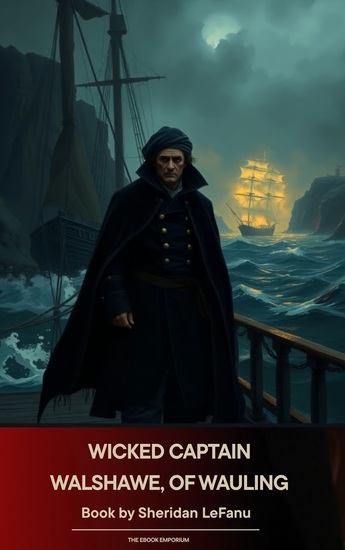
Wicked Captain Walshawe of Wauling - cover

Wicked Captain Walshawe of Wauling

Joseph Sheridan Le Fanu

Casa editrice: The Ebook Emporium

  • 0
  • 0
  • 0

Sinossi

"He was a man who feared neither God nor Devil, but he feared a life without gold even more."

Captain Walshawe is a man of legendary cruelty and even greater debt. Living in the decaying Wauling Manor, he views his pious and suffering wife not as a companion, but as a financial obstacle. When she dies, the Captain's avarice leads him to commit a chilling act of spiritual sacrilege involving a "soul candle"—a ritual intended to secure her fortune for himself, regardless of the cost to her eternal rest. But as the shadows lengthen in the drafty halls of Wauling, the Captain discovers that some bargains cannot be undone, and the spirit he thought he had extinguished is far from gone.

The Horror of Character: Unlike many Gothic tales that rely on external monsters, the primary horror here is Captain Walshawe himself. Le Fanu paints a portrait of a man so consumed by selfishness that he becomes more frightening than the specters that haunt him. His "wickedness" is a tangible force that stains the very walls of his home.

The Symbolic "Soul-Candle": Le Fanu utilizes a unique and terrifying supernatural device in this story—the candle that represents the life or soul of the deceased. This element introduces a tactile, ticking-clock tension to the haunting, as the Captain's fate becomes literally tied to a flickering flame in the dark.

A Masterclass in the Uncanny: The haunting of Wauling is subtle and psychological. It manifests in the sound of a silk dress brushing against a door, the smell of a guttering candle, and the oppressive feeling of a presence that refuses to leave. It is Le Fanu at his most focused, proving that the most terrifying ghosts are those created by our own transgressions.

The Inevitability of Justice: As with much of Le Fanu's work, the story serves as a grim reminder that one cannot cheat the afterlife. The Captain's attempt to manipulate the spiritual world for material gain results in a haunting that is both a punishment and a mirror of his own moral vacuum.

Face the darkness of Wauling. Purchase this classic of psychological horror today.
Disponibile da: 13/01/2026.
Lunghezza di stampa: 35 pagine.
Altri libri che potrebbero interessarti

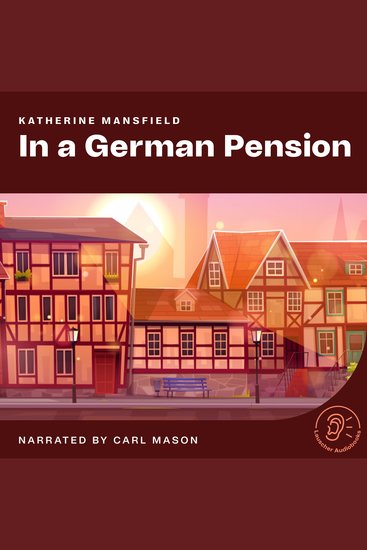
  • In a German Pension - cover

    In a German Pension

    Katherine Mansfield

    • 0
    • 0
    • 0
    In a German Pension is a 1911 collection of short stories by the writer Katherine Mansfield; her first published collection. All but three of the stories were originally published in The New Age edited by A. R. Orage; the first to appear was "The Child-Who-Was-Tired". The last three were first published in this collection, and her biographer Anthony Alpers thinks that two (The Swing of the Pendulum and The Blaze) were probably rejected by Orage for The New Age.
    
    Contents:
    Germans at Meat
    The Baron
    The Sister of the Baroness
    Frau Fischer
    Frau Brechenmacher Attends a Wedding
    The Modern Soul
    At "Lehmann's"
    The Luft Bad
    A Birthday
    The Child-Who-Was-Tired
    The Advanced Lady
    The Swing of the Pendulum
    A Blaze
    Mostra libro
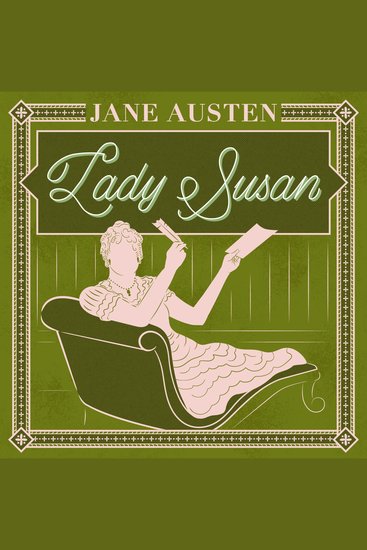
  • Lady Susan - cover

    Lady Susan

    Jane Austen

    • 0
    • 0
    • 0
    Beautiful, unflinching, and recently widowed, Lady Susan Vernon seeks an advantageous second marriage for herself, while attempting to engineer her daughter into a ill-advised match.
    
    A perfectly crafted piece of Austen's ouvere, Lady Susan is a satire of Regency manners that will delight Austen fans and those new to her work.
    Mostra libro
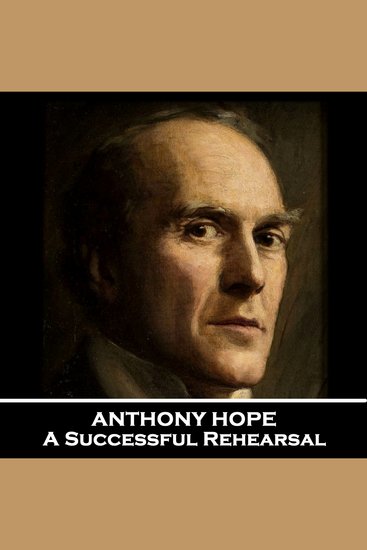
  • A Successful Rehearsal - From their pens to your ears genius in every story - cover

    A Successful Rehearsal - From...

    Anthony Hope

    • 0
    • 0
    • 0
    Sir Anthony Hope Hawkins was born on 9th February 1863 in Clapton, London.  
    He was educated at St John's School, Leatherhead, Marlborough College and Balliol College, Oxford.  Hope trained as a lawyer and barrister and was called to the Bar by the Middle Temple in 1887. Despite what was thought to be a promising legal career he had literary ambitions and wrote in his spare time. 
    His early works appeared in various periodicals of the day but for his first book ‘A Man of Mark’ (1890), with no publisher interested, he published with his own resources.  
    More novels and short stories followed, including the mildly successful ‘Mr Witt's Widow’ in 1892. Hope even found time to run as the Liberal candidate for Wycombe in the election that same year but was unsuccessful. 
    His first major literary success came with ‘The Dolly Dialogues’, a collection of previously published magazine pieces followed very quickly by his instant classic, ‘The Prisoner of Zenda’. He now gave up the vestiges of his legal career to pursue writing full-time. 
    Despite never again reaching the same pinnacle of success he was popular and wrote prolifically across novels, plays and of course, short stories though his writing output rapidly diminished after the war. 
    In 1918 he was knighted for his contribution to propaganda efforts during World War I.  
    His short stories are delicate, mannered and often surprising with their wit, humour and interplay of characters who say one thing and usually mean another.  He was very definitely a writer of escapist rather than serious fare but they are no less enjoyable for that. 
    Anthony Hope died of throat cancer on 8th July 1933 at his country home, Heath Farm at Walton-on-the-Hill in Surrey. He was 70.
    Mostra libro
  • Death In Venice - cover

    Death In Venice

    Thomas Mann

    • 0
    • 0
    • 0
    "The experience of death is bound up with the experience of beauty."
    
    First published in 1912, Thomas Mann's Death in Venice is a masterful meditation on art, desire, and the fatal allure of beauty.
    
    Gustav von Aschenbach, an ageing but successful writer renowned for the solemn dignity and asceticism of his work, travels to Venice seeking artistic inspiration – the first indulgence the fastidiously restrained author has allowed himself. Through the languid Venetian atmosphere and the peacefully rocking gondolas, Aschenbach is lured away from his rigid self-discipline as he falls into a deep and obsessive love with a beautiful young Polish boy named Tadzio, even though they never meet.
    
    As his infatuation deepens and the city wilts under the shadow of disease, Aschenbach's pursuit of the unattainable leads him into a tragic spiral of longing and loss.
    Thomas Mann (1875–1955) was a renowned German novelist, short story writer, and essayist, celebrated for his exploration of complex themes, his profound psychological insight, and critique of bourgeois society.
    
    Born into a wealthy trading family, he studied law and economics before turning to writing and had his major breakthrough with Buddenbrooks, which depicts the decline of a bourgeois family. International acclaim came with the publication of The Magic Mountain (1924), a philosophical novel set in a sanatorium that explores themes such as life, death, time and ideological conflict. His other notable works include Death in Venice (1912) and Doktor Faustus (1947). In 1929, he received the Nobel Prize for Literature in recognition of his significant contributions to German literature.
    
    Mann was politically active against fascism, leading him to leave Germany in 1933 due to the rise of the Nazi regime. He lived in Switzerland and later in the United States during World War II. Despite the challenges, he continued to write and became a prominent voice against totalitarianism.
    Mostra libro
  • A Psychological Experiment - From their pens to your ears genius in every story - cover

    A Psychological Experiment -...

    Richard Marsh

    • 0
    • 0
    • 0
    Richard Bernard Heldmann was born on 12th October 1857, in St Johns Wood, North London.  
    By his early 20’s Heldmann began publishing fiction for the myriad magazine publications that had sprung up and were eager for good well-written content.  
    In October 1882, Heldmann was promoted to co-editor of Union Jack, a popular magazine, but his association with the publication ended suddenly in June 1883. It appears Heldman was prone to issuing forged cheques to finance his lifestyle.  In April 1884 He was sentenced to 18 months hard labour.  
    In order to be well away from the scandal and damage this had caused to his reputation Heldmann adopted a pseudonym on his release from jail. Shortly thereafter the name ‘Richard Marsh’ began to appear in the literary periodicals. The use of his mother’s maiden name as part of it seems both a release and a lifeline. 
    A stroke of very good fortune arrived with his novel The Beetle published in 1897.  This would turn out to be his greatest commercial success and added some much-needed gravitas to his literary reputation.   
    Marsh was a prolific writer and wrote almost 80 volumes of fiction as well as many short stories, across many genres from horror and crime to romance and humour.
    Mostra libro
  • To the Lighthouse - cover

    To the Lighthouse

    Virginia Woolf

    • 0
    • 0
    • 0
    “What is the meaning of life? That was all — a simple question; one that tended to close in on one with years. The great revelation had never come. The great revelation perhaps never did come. Instead, there were little daily miracles, illuminations, matches struck unexpectedly in the dark; here was one.” 
      
    Mr. and Mrs. Ramsay and their eight children spend the summer holiday on Scotland’s Isle of Skye. When the family postpones their trip to a nearby lighthouse, the narrative evolves into a meditation on the subjectivity of art and the bittersweet impermanence of life. 
      
    This semi-autobiographical account invites fans of Virginia Woolf’s beloved classics Mrs. Dalloway and A Room of One’s Own to glimpse a more intimate exploration of the author’s own upbringing. Discover for yourself why To the Lighthouse was featured in the “ALL TIME 100 books list” of English-language novels published since the dawn of TIME magazine.
    Mostra libro