Unisciti a noi in un viaggio nel mondo dei libri!
Aggiungi questo libro allo scaffale
Grey
Scrivi un nuovo commento Default profile 50px
Grey
Iscriviti per leggere l'intero libro o leggi le prime pagine gratuitamente!
All characters reduced
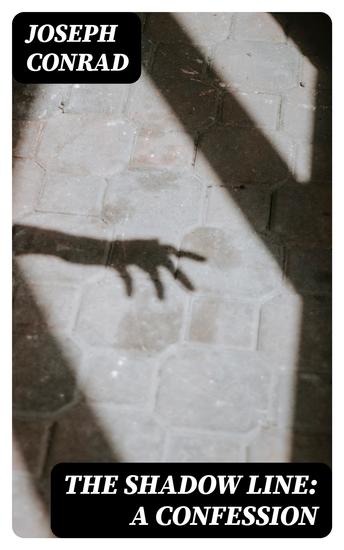
The Shadow Line: A Confession - cover

The Shadow Line: A Confession

Joseph Conrad

Casa editrice: DigiCat

  • 0
  • 0
  • 0

Sinossi

Joseph Conrad's "The Shadow Line: A Confession" masterfully chronicles the psychological and moral evolution of a young sea captain navigating the tumultuous waters between youth and maturity. Written in Conrad's signature style, which artfully combines rich symbolism and profound introspection, this novella delves into existential themes, exploring the complexities of leadership and the haunting specter of responsibility. Set against the backdrop of a mysterious and perilous voyage, the narrative intertwines the captain's inner turmoil with vivid depictions of life aboard a ship, creating a tense yet contemplative atmosphere. Conrad's profound experiences as a mariner deeply informed his literary output, and this work stands as a testament to his keen understanding of the maritime world. Originally published in 1916, during a time of great personal and global upheaval, Conrad's reflections on duty, the human condition, and the struggle against fate echo the broader disillusionment of the post-World War I era. His renowned ability to articulate the psyche of man grappling with external and internal crises resonates throughout this poignant narrative. Readers seeking a profound exploration of the human spirit's resilience will find "The Shadow Line" a compelling journey worth undertaking. This novella invites contemplation, urging readers to reflect upon the shadows that shape one's identity, making it essential for anyone invested in grappling with the intricacies of moral and psychological dilemmas.
Disponibile da: 16/09/2022.
Lunghezza di stampa: 95 pagine.


Altri libri che potrebbero interessarti

  • Ariel's Triumph - From their pens to your ears genius in every story - cover

    Ariel's Triumph - From their...

    Booth Tarkington

    • 0
    • 0
    • 0
    The bookshelves of American literature are incredible collections that have gathered together centuries of very talented authors.  From this continent their fame spread and whilst among their number many are now forgotten or neglected their talents endure.  Among them is Booth Tarkington.
    Mostra libro
  • A Fight with a Cannon - From their pens to your ears genius in every story - cover

    A Fight with a Cannon - From...

    Victor Hugo

    • 0
    • 0
    • 0
    Victor Marie Hugo was born on 26th February 1802 in Besançon, France.   
    There can be no doubt that Hugo is ranked as the greatest of French authors and poets. In addition to this he fought against social injustice throughout his life and from his frequent elections to the French Assembly. 
    Hugo published his first novel, Han d’Islande (1823), the year after his marriage and so began an immense canon of fiction and poetry not only for France but to World literature.  
    He was elected to the Académie Française in 1841 and the same year came a peerage and entrance to the Higher Chamber as a pair de France, where he spoke against the death penalty, social injustice and in favour of press freedom.  
    In the years leading up to the Revolution of 1848 Hugo began to lean towards Republicanism and greater freedoms.  With the formation of the Second Republic, he was again elected to the Assembly. 
    When Napoleon III seized power in 1851, and established an anti-parliamentary constitution, Hugo openly declared him a traitor to France. This, of course, meant exile where he remained until 1870.  In exile he published his greatest work ‘Les Misérables’, and further widely honoured collections of poetry. 
    Returning home he was again elected to the National Assembly and the Senate.  It was the time of the Franco-Prussian war and with Paris under siege and food ever more scarce, he wrote in his diary that he was now "eating the unknown". 
    Later he was instrumental in strengthening the rights of artists and copyright, steps which led to the international protections of the Berne Convention.  
    Victor Hugo died on 22nd May 1885, aged 83.
    Mostra libro
  • They Got Out 3 - A Sci-Fi and Horror Collection - cover

    They Got Out 3 - A Sci-Fi and...

    C.A. Gleason

    • 0
    • 0
    • 0
    The Hike: A hiking trail snakes through government secrets, passing by a classified military base where something deadly escapes. 
    The Torment: A filthy rich criminal bribes his way to freedom . . . but at greater cost than he could ever imagine. 
    Ember: The last man on Earth navigates a dangerous landscape, being hunted at every step, as he tries to find the last woman alive. 
    This collection includes five additional stories about an interview with dire consequences, a weakling who develops mysterious powers, an otherworldly animal fight, a legendary battle against giant spiders, and the return of Him.
    Mostra libro
  • A Fragment of Stained Glass - From their pens to your ears genius in every story - cover

    A Fragment of Stained Glass -...

    D H Lawrence

    • 0
    • 0
    • 0
    David Herbert Lawrence was born on the 11th September 1885 in Eastwood, Nottinghamshire, a coal mining town where the reality of a harsh life was only useful as experiences for future literary works. 
    He was educated at Beauvale Board School and became the first local boy to receive a scholarship to attend Nottingham High School. After 3 years he became a junior clerk in Haywood’s surgical appliances factory. He was also attempting a literary career which, in the short term, led to a teacher training position in Eastwood and later a teaching qualification from University College, Nottingham.  
    Lawrence’s first efforts were poems, short stories and a draft of ‘The White Peacock’. Moving to London and a teaching position in Croydon his writing attracted the attention of Ford Madox Ford, editor of The English Review, and he commissioned him to write ‘Odour of Chrysanthemums’.  
    Wanting to write full-time he now began work on what would become ‘Sons and Lovers.   
    In 1912 he met the older and married mother-of-three Frieda Weekley. They eloped to Germany and here Lawrence could see for himself the growing tensions with France.  So keen was his interest that he was arrested and accused of being a British spy.  
    In early 1914 Frieda obtained her divorce and they returned to Britain to be married just days before the outbreak of war. Owing to her German parentage, and his own public dislike of militarism and violence, the couple were treated with contempt and suspicion throughout the war years.  
    Despite this he continued to write but his reputation in England was so tarnished and, mirrored by his own disdain for the country, he and Frieda left England in November 1919, first for Europe and then America via Ceylon and Australia. 
    They bought a ranch in Taos, New Mexico and visited Mexico several times. The third visit in March 1925 caused a near fatal attack of malaria. To convalesce they moved to Florence. Here he continued work on ‘Lady Chatterley’s Lover’ which for many years would cause controversy. A renewed interest in oil painting resulted in an exhibition in 1929 which was raided by the police and several works were confiscated.  
    D H Lawrence died of complications arising from a bout of tuberculosis on the 2nd of March 1930 in Vence, France.  He was 44.
    Mostra libro
  • A Journey of Little Profit - From their pens to your ears genius in every story - cover

    A Journey of Little Profit -...

    John Buchan

    • 0
    • 0
    • 0
    The Scottish novelist John Buchan enjoyed a remarkable career as politician, historian and Governor General. He was born John Buchan on 26th August 1875 and later added 1st Baron Tweedsmuir PC GCMG GCVO CH to his name.  
    Buchan studied at Hutchesons’ Grammar School, Glasgow and at seventeen won a scholarship to the University of Glasgow to study classics. There he began to write poetry. In 1895 he transferred to Oxford to continue his study of Classics and in 1896 ‘Sir Quixote of the Moors’ was published followed by the non-fiction ‘Scholar-Gipsies’. His prolific literary output now hardly faltered. 
    He graduated in 1900 and became the private secretary to Alfred Milner, the High Commissioner for Southern Africa and other colonies. Buchan found the same inspiration in the African landscape as he had in the Scottish Borders, and would later set many works here. Returning to London he became a partner in a publishing house, and garnered an editorial role at The Spectator. He also completed his law studies. He was called to the bar in 1901 but never practiced.  
    On 15th July 1907 Buchan married Susan Charlotte Grosvenor, the cousin of the Duke of Westminster. In 1910 he wrote ‘Prester John’, the first of a series set in South Africa.  
    In 1911 Buchan entered politics as a Unionist candidate in the Scottish Borders advocating the support of free trade, women’s suffrage, national insurance, and reducing the power of the House of Lords.  
    The Great War saw Buchan writing for the War Propaganda Bureau and as Times correspondent in France. In 1915, he published ‘The Thirty-Nine Steps’, his most famous book and a follow-up Richard Hannay novel, ‘Greenmantle’, in 1916.  
    In 1916 Buchan enlisted in the Intelligence Corps which included writing speeches for Sir Douglas Haig. By 1917 he was Director of Information under Lord Beaverbrook. Buchan called it “the toughest job he ever took on”. He somehow found time to assist in a history of the war magazine. This was later published in 24 volumes: Nelson’s History of the War. 
    After the war his writing focused on historical studies. In 1927 Buchan became the Unionist Party Member of Parliament for the Combined Scottish Universities. In a speech to Parliament he said “I believe every Scotsman should be a Scottish nationalist. If it could be proved that a Scottish parliament were desirable… Scotsmen should support it.”  
    Over the next decade he continued to distinguish himself politically and in literature.  On the 1st June 1935 he became 1st Baron Tweedsmuir of Elsfield in the County of Oxford.  
    He was now also given the position of Governor General in Canada and resolved to travel all over Canada to gain a better insight of the country. Having crossed both length and breadth he saw the cultural shift between areas and their common ground and helped bring about a clear national Canadian identity. 
    On the 6th February 1940 he collapsed from a stroke and sustained a very serious head injury in falling. Two rounds of surgery to stabilise his condition were unsuccessful and Buchan died on the 11th February. After a state funeral in Ottawa his ashes were returned to his estate in Oxfordshire.
    Mostra libro
  • The Confessions - Companion to the Queen - cover

    The Confessions - Companion to...

    Tiffany Reisz

    • 0
    • 1
    • 0
    Three Sinners. Three confessions. And all the dirty little secrets you could possibly desire…Father Stuart Ballard has been Marcus Stearns’ confessor since the young Jesuit was only eighteen years old. He thought he’d heard every sin the boy had to confess until Marcus uttered those three fateful words: “I met Eleanor.”So begins the 40-page “The Confession of Marcus Stearns,” a moving coda to the RITA® Award-winning Original Sinners series. Originally published as a limited-edition paperback for the 2014 RT Booklovers' Convention, and available worldwide for the first time.This collection also includes “The Confession of Eleanor Schreiber,” a companion 36-page story written exclusively for this book.And, finally, all secrets are revealed in “The Confession of Tiffany Reisz,” an exclusive, in-depth interview.
    Mostra libro