Join us on a literary world trip!
Add this book to bookshelf
Grey
Write a new comment Default profile 50px
Grey
Subscribe to read the full book or read the first pages for free!
All characters reduced
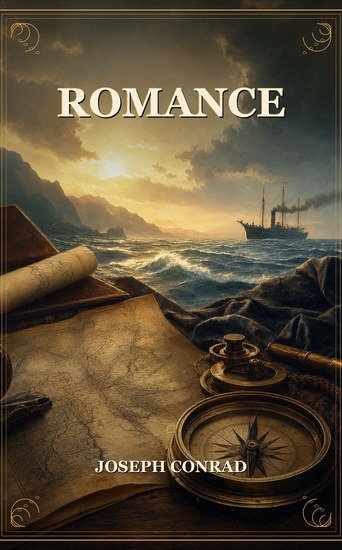
Romance - cover

Romance

Joseph Conrad

Publisher: Caelwick Press

  • 0
  • 0
  • 0

Summary

John Kemp is a young English lad who dreams of adventure (the titular "romance")—and, through his dealings with local smugglers, soon gets his wish as he's swept away to the Caribbean. There he meets admirals and pirates, nobles and rebels, merchants and seamen. Above all, he finds love—but first has to escape with his life. Romance , published in 1903, is the second of three collaborations between Joseph Conrad and Ford Madox Ford . As an adventure novel it enjoyed some commercial success and was adapted into a silent movie in 1927. Today, it's a mostly forgotten footnote among the authors' more critically acclaimed works. Joseph Conrad (died 1924) was a major literary figure of the early 20th century. Their work has endured across generations and continues to be read and studied worldwide. As a work of classic literary fiction, Romance exemplifies the narrative craft and social insight that defined great storytelling of its era. Literary fiction of this period was characterized by careful attention to character psychology, social milieu, and the moral questions that animated public discourse.
Available since: 05/19/2026.
Print length: 519 pages.
Other books that might interest you

  • The Schoolboy's Story - cover

    The Schoolboy's Story

    Charles Dickens

    • 0
    • 0
    • 0
    The Schoolboy's Story is a short stories by Charles Dickens. Charles John Huffam Dickens (7 February 1812 – 9 June 1870) was an English writer and social critic. He created some of the world's most memorable fictional characters and is generally regarded as the greatest novelist of the Victorian period. During his life, his works enjoyed unprecedented fame, and by the twentieth century his literary genius was broadly acknowledged by critics and scholars. His novels and short stories continue to be widely popular. Born in Portsmouth, England, Dickens was forced to leave school to work in a factory when his father was thrown into debtors' prison.
    Being rather young at present--I am getting on in years, but still I am rather young--I have no particular adventures of my own to fall back upon. It wouldn't much interest anybody here, I suppose, to know what a screw the Reverend is, or what a griffin SHE is, or how they do stick it into parents--particularly hair-cutting, and medical attendance. One of our fellows was charged in his half's account twelve and sixpence for two pills--tolerably profitable at six and threepence a-piece, I should think--and he never took them either, but put them up the sleeve of his jacket.
    Show book
  • Conscience - A Judith Lee Detective Story - cover

    Conscience - A Judith Lee...

    Richard Marsh

    • 0
    • 0
    • 0
    Richard Bernard Heldmann was born on 12th October 1857, in St Johns Wood, North London.  
     
    By his early 20’s Heldmann began publishing fiction for the myriad magazine publications that had sprung up and were eager for good well-written content.  
     
    In October 1882, Heldmann was promoted to co-editor of Union Jack, a popular magazine, but his association with the publication ended suddenly in June 1883.  It appears Heldman was prone to issuing forged cheques to finance his lifestyle.  In April 1884 he was sentenced to 18 months hard labour. 
      
    In order to be well away from the scandal and the damage that this had caused to his reputation Heldmann adopted a pseudonym on his release from jail.  Shortly thereafter the name ‘Richard Marsh’ began to appear in the literary periodicals.  The use of his mother’s maiden name as part of it seems both a release and a lifeline. 
     
    A stroke of very good fortune arrived with his novel ‘The Beetle’ published in 1897.  This would turn out to be his greatest commercial success and added some much-needed gravitas to his literary reputation.   
     
    Marsh was a prolific writer and wrote almost 80 volumes of fiction as well as many short stories, across many genres from horror and crime to romance and humour.   His unusual characters, plotting devices and other literary developments have identified his legacy as one of the best British writers of his time.   
     
    Richard Marsh died from heart disease in Haywards Heath in Sussex on 9th August 1915.  He was 57.
    Show book
  • A Portrait of the Artist as a Young Man - cover

    A Portrait of the Artist as a...

    James Joyce

    • 0
    • 0
    • 0
    A Dublin childhood, a Jesuit education, a sermon on hell that runs for pages, and a young man who decides that neither family, nor country, nor church will have him. Joyce spent ten years on it, burned an early draft, and published it only after Ezra Pound intervened; it ends with Stephen Dedalus leaving for the continent, as Joyce himself had done at twenty-two.
    Show book
  • A Study in Scarlet - cover

    A Study in Scarlet

    Arthur Conan Doyle

    • 0
    • 0
    • 0
    An army surgeon home from Afghanistan needs cheap lodgings and is introduced to a man conducting experiments in a hospital laboratory. Doyle wrote the first Holmes story in three weeks and sold it outright for twenty-five pounds — the worst bargain in publishing history. The method, the rooms in Baker Street and the friendship all arrive fully formed here.
    Show book
  • Luz - From their pens to your ears genius in every story - cover

    Luz - From their pens to your...

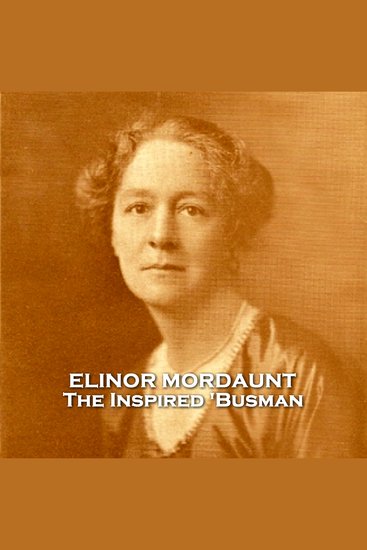
    Elinor Mordaunt

    • 0
    • 0
    • 0
    Evelyn May Clowes was born on 7th May 1872 in Cotgrave, Nottinghamshire.  
    Growing up in genteel circumstances, her early childhood was spent at Charlton Down House near Cheltenham, Gloucestershire, and her teenage years near Heythrop in the Cotswolds.  
    She was educated at home by governesses, excelling at German, Latin, Greek, shorthand, landscape painting, and fabric and wallpaper design. 
    In 1897 she went to Mauritius as companion to her cousin Caroline and in 1898 married Maurice Wilhemn Wiehe, the owner of a sugar plantation. She gave birth to two stillborn children. After a few years of marriage, she found life difficult and returned to England. Shortly afterwards she went by herself to Australia, arriving in June 1902 and gave birth to a son a few months later.   
    She lived in Melbourne for about eight years.  To earn a living she took on a wide and varied range of jobs; she edited a woman's fashion paper, wrote short stories and articles, made blouses, designed embroideries, tilled gardens, acted as a housekeeper, and did other artistic work. Her health was not strong, but she undertook any kind of work which would provide a living for herself and her infant son. This gained her an experience of life which was readily put to use in her literary works. 
    Her first book, ‘The Garden of Contentment’, was published in 1902 under her pen-name Elinor Mordaunt. It was the first of many works that covered fiction, short stories, travel and autobiography. 
    She changed her name by deed poll to Evelyn May Mordaunt on 1st July 1915 and gained a further reputation as a writer of short stories for magazines which display both her humour and sense of tragedy. Travel was always high on her priority and the experiences used not only for pleasure but in her writings and, as travel books, ideas in themselves.  
    On 27th January 1933 at Tenerife, in the Canary Islands, she married a retired barrister from Gloucestershire. In her own words, the marriage ‘ended in tragedy.’ 
    Elinor Mordaunt died on 25th June 1942 at the Radcliffe Infirmary, Oxford. She was 70.
    Show book
  • The Mystery Of The Blue Train - cover

    The Mystery Of The Blue Train

    Agatha Christie

    • 0
    • 0
    • 0
    We rely on your support to help us keep producing beautiful, free, and unrestricted editions of literature for the digital age. Will you support our efforts with a donation ? The Mystery of the Blue Train revolves around a set of fabulous rubies, said to have been worn by Catherine the Great, now purchased by an American millionaire as a gift to his daughter. When she takes them with her on a luxury train to the Riviera, she is unaware that among her fellow passengers are her unfaithful husband, his not-so-secret mistress, a quiet Englishwoman who believes that nothing exciting ever happens to her—and the famous retired detective Hercule Poirot. And, possibly, a murderer. Despite positive critical reception of this entry in the Poirot canon, Christie described this as the least favorite of her own novels. However, this is almost certainly due to the events in her personal life during that time: the death of her mother, followed closely by the discovery of her husband's affair and his request for divorce. Suffering from what appears to have been a nervous breakdown, Christie famously disappeared for over a week in December 1926, triggering a nationwide search before she was discovered to have checked into a hotel under an assumed name. This novel was written in part during a three-month convalescence following those events. The book is dedicated to Christie's secretary Charlotte Fisher and her pet terrier Peter, calling them "distinguished members of the O.F.D." The "Order of Faithful Dogs" was Christie's name for her circle of closest friends.
    Show book