Unisciti a noi in un viaggio nel mondo dei libri!
Aggiungi questo libro allo scaffale
Grey
Scrivi un nuovo commento Default profile 50px
Grey
Iscriviti per leggere l'intero libro o leggi le prime pagine gratuitamente!
All characters reduced
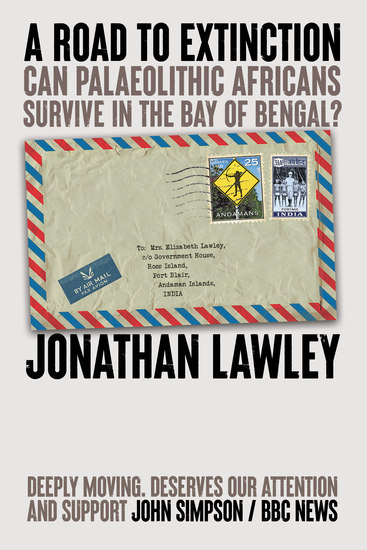
A Road to Extinction - Can Palaeolithic Africans survive in the Andaman Islands? - cover

A Road to Extinction - Can Palaeolithic Africans survive in the Andaman Islands?

Jonathan Lawley

Casa editrice: Envelope Books

  • 0
  • 0
  • 0

Sinossi

The Jarawa, one of the oldest tribes of human beings in the world, are at risk of extinction because of a road that now runs through their forests in the Indian-administered Andaman Islands, in the Bay of Bengal — and no one seems to care. 
Tourists take the road each day to try and get selfies with the tribespeople, who came from what is now Botswana over 60,000 years ago. 
Once proud of their independence, the Jarawa are now tempted with biscuits and trinkets, as if they were exotic animals in a human safari park. They cannot survive like this, and are already suffering from their loss of privacy. 
In this astonishing EnvelopeBooks publication, Jonathan Lawley returns to what was once a penal colony, built by the British to house mutineers from 1857 Indian Rebellion. 
He asks what responsibility colonial administrators like his own grandfather may have had for the sad plight of these palaeolithic hunter-gatherers, and what the Indian government should now be doing to protect them. 
Sumptuously illustrated with the author’s never-before-seen archive photographs and highly recommended by leading figures in the British media and government.
Disponibile da: 03/06/2024.
Lunghezza di stampa: 192 pagine.

Altri libri che potrebbero interessarti

  • Good God - Suffering faith reason and science - cover

    Good God - Suffering faith...

    Michael Brooks

    • 0
    • 0
    • 0
    How can Christians believe in an all-powerful, all-knowing and loving God whilst there is so much suffering in the world? Contemporary theology books refer to the problem of theodicy as a significant and unresolved problem. Engaging with theology, biblical study, physics and biology, and philosophy and producing a cohesive synthesis of these subjects, Good God offers an answer that has the potential to re-integrate Christian theology with science and philosophy for the first time since the Enlightenment.
    
     
    Michael Brooks writes with both academic rigour and pastoral sensitivity. As a science and medicine graduate who is also an ordained minister, he makes science and theology comprehensible to those not trained in either discipline.
    
     
    The book opens the reader to the notion of a wonderful creation that is so full of the miraculous that this is taken for granted. Good God provides an answer to a very important question in a way that edifies faith and offers eternal hope.
    Mostra libro
  • How to Lose a War - The Story of America's Intervention in Afghanistan - cover

    How to Lose a War - The Story of...

    Amin Saikal

    • 0
    • 0
    • 0
    An incisive, authoritative account of the West's failures in Afghanistan, from 9/11 to the fall of Kabul 


    In 1958, Richard Nixon described Afghanistan as "unconquerable." On August 15, 2021, he was proven right. After twenty years of intervention, US and NATO forces retreated, enabling the Taliban to return to power. Tens of thousands were killed in the long, unwinnable war, and millions more were displaced—leaving the future of Afghanistan hanging in the balance. 


    Leading expert Amin Saikal traces the full story of America's intervention, from 9/11 to the present crisis. After an initial swift military strike, the US became embroiled in a drawn-out struggle to change Afghanistan but failed to achieve its aims. Saikal shows how this failure was underlined by protracted attempts to capture Osama bin Laden, an inability to secure a viable government via "democracy promotion" efforts, and lack of wider strategy in the "war on terror." 


    How to Lose a War offers an insightful account of one of the US's most significant foreign policy failures—and considers its dire consequences for the people of Afghanistan.
    Mostra libro
  • Tuscany's Noble Treasures - Conceptualizing Female Religious Life in Medieval Italy - cover

    Tuscany's Noble Treasures -...

    Paula Clifford

    • 0
    • 0
    • 0
    In the Middle Ages, the region of Tuscany and its surrounding area was, for around 150 years, home to a surprising number of holy women, from the birth of Margaret of Cortona in 1247 to the death of Catherine of Siena in 1380, with the fourteenth century seeing the greatest of them. While Catherine of Siena has received worldwide recognition, women like Agnes of Montepulciano and Angela of Foligno have received little attention outside their homeland. Yet they and others are important figures in what is a largely unrecognised movement of Tuscan mystics. Their individual stories are enhanced by the efforts of artists and writers which all help to create a recognisable type of religious woman.


    This study looks first at the underlying influences on Tuscan mysticism, from the legend of St Katherine of Alexandria through to the celebration of women in the secular literature of the High Middle Ages and the effect of the emerging monastic orders. It examines the life and work of Tuscan holy women and focuses in particular on how they were perceived in their largely patriarchal contexts and by the artists, biographers and "men of God" who brought their own cultural assumptions to bear on the telling of their story. In consequence, the power that stemmed from their godly lives was to varying degrees undermined by some of the people closest to them and eroded by the church itself.
    
     
    This story of women alternately constrained and encouraged by their social contexts is one of individual struggles and collective achievement. Although the movement in Italy began to fade away after the death of Catherine of Siena, the mystic tradition would live on in other parts of Europe, where the experiences of holy women such as Margery Kempe or, later, Teresa of Ávila will have much in common with their Tuscan predecessors.
    Mostra libro
  • Self-esteem - Discover the power of self-esteem and start transforming your life today! - cover

    Self-esteem - Discover the power...

    Alexandre Miguel

    • 0
    • 0
    • 0
    This is a mini-book that explores the theme of self-esteem and offers a comprehensive approach on how to build and strengthen this crucial characteristic for personal and emotional development. Here, you will find valuable insights based on personal knowledge, detailed experiences, and several consultations in the field of self-esteem, providing practical tips to overcome insecurities and cultivate a positive self-image.
    
    No matter where you are in your journey of self-discovery, you will find valuable and practical insights here to help you become your own best version as a person. Discover the power of self-esteem and start transforming your life today!
    Mostra libro
  • The Itsy Bitsy Spider Itzi Bitzi Araña - cover

    The Itsy Bitsy Spider Itzi Bitzi...

    Iesha Wright

    • 0
    • 0
    • 0
    Rain or shine, this charming melody will captivate hearts and minds with its delightful tale. Watch in wonder as the Itsy Bitsy Spider defies the odds, climbing up the waterspout with determination. Down comes the rain, but fear not! Our spunky spider faces adversity head-on, showcasing resilience until the sun comes out. Witness the magic as the sun dries up the rain, paving the way for our heroic spider to climb up the waterspout with ease. Presented in both English and Spanish, this dual language story and song teaches the valuable lesson of perseverance and courage!
    Mostra libro
  • The Women Are Up to Something - How Elizabeth Anscombe Philippa Foot Mary Midgley and Iris Murdoch Revolutionized Ethics - cover

    The Women Are Up to Something -...

    Benjamin J. B. Lipscomb

    • 0
    • 0
    • 0
    On the cusp of the Second World War, four women went to Oxford to begin their studies: a fiercely brilliant Catholic convert; a daughter of privilege longing to escape her stifling upbringing; an ardent Communist and aspiring novelist with a list of would-be lovers as long as her arm; and a quiet, messy lover of newts and mice who would become a great public intellectual of our time. They became lifelong friends. At the time, only a handful of women had ever made lives in philosophy. But when Oxford's men were drafted in the war, everything changed. 


    As Elizabeth Anscombe, Philippa Foot, Mary Midgley, and Iris Murdoch labored to make a place for themselves in a male-dominated world, as they made friendships and families, and as they drifted toward and away from each other, they never stopped insisting that some lives are better than others. They argued that courage and discernment and justice—and love—are the heart of a good life. 


    This book presents the first sustained engagement with these women's contributions: with the critique and the alternative they framed. Drawing on a cluster of recently opened archives and extensive correspondence and interviews with those who knew them best, Benjamin Lipscomb traces the lives and ideas of four friends who gave us a better way to think about ethics, and ourselves.
    Mostra libro