Unisciti a noi in un viaggio nel mondo dei libri!
Aggiungi questo libro allo scaffale
Grey
Scrivi un nuovo commento Default profile 50px
Grey
Iscriviti per leggere l'intero libro o leggi le prime pagine gratuitamente!
All characters reduced
The Diary of Dr John William Polidori 1816 - Relating to Byron Shelley etc - cover

The Diary of Dr John William Polidori 1816 - Relating to Byron Shelley etc

John William Polidori

Casa editrice: Good Press

  • 0
  • 0
  • 0

Sinossi

In "The Diary of Dr. John William Polidori, 1816," the author offers a unique window into a pivotal moment in literary history, chronicling the summer of 1816 when the foundations of modern horror fiction were laid. Polidori's prose intertwines personal reflections with vivid descriptions of the mysterious gatherings at the Villa Diodati, where the legendary competition to write ghost stories amongst literary giants like Byron and Shelley took shape. Imbued with a Romantic sensibility, Polidori's writing reflects the tumultuous emotions and gothic elements that characterize early 19th-century literature, making this diary both a personal account and a backdrop to the emergence of the vampire genre, particularly foreshadowing his later work, "The Vampyre." John William Polidori was a physician and a member of the literary elite, having been Byron's personal doctor. His intimate knowledge of both medicine and literature informed his writing, as well as his relationships with some of the most influential figures of his time. The diary illuminates Polidori's struggle between duty and artistic aspiration, providing insight into his own psychological conflicts, which resonate throughout his literary contributions. This diary is a must-read for enthusiasts of Gothic literature and fans of Romantic poetry alike. It not only serves as a historical document but also as a keystone for understanding the interplay of friendship, ambition, and creativity. Readers will find themselves captivated by the atmosphere of intellectual fervor and the personal insights that paved the way for one of literature's most enduring archetypes.
Disponibile da: 01/11/2023.
Lunghezza di stampa: 133 pagine.
Altri libri che potrebbero interessarti

  • The Confidence Compass - Navigating the Road to Self-Belief - cover

    The Confidence Compass -...

    Caleb David

    • 0
    • 0
    • 0
    Discover the powerful guide to unlocking your inner confidence with "The Confidence Compass: Navigating the Road to Self-Belief". This comprehensive handbook provides a clear and actionable framework to help you develop unwavering self-belief, overcome self-doubt, and achieve your goals. With expert advice, real-life case studies, and practical exercises, you'll learn how to reframe negative thoughts, build a positive mindset, and cultivate a growth mindset. Get ready to unlock your full potential, overcome obstacles, and navigate the road to self-belief.
    Mostra libro
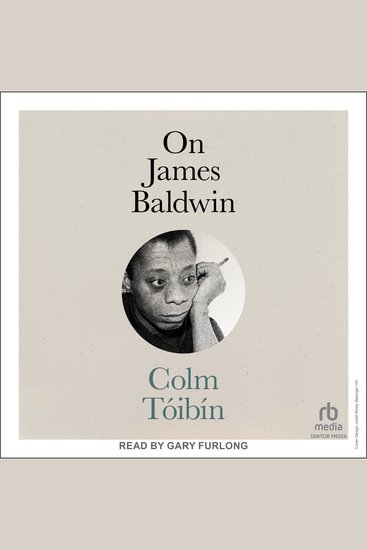
  • On James Baldwin - cover

    On James Baldwin

    Colm Tóibín

    • 0
    • 0
    • 0
    Acclaimed Irish novelist Colm Tóibín first read James Baldwin just after turning eighteen. He had completed his first year at an Irish university and was struggling to free himself from a religious upbringing. Inspired by the novel Go Tell It on the Mountain, Tóibín found a writer who would be a lifelong companion and exemplar. 


    From On James Baldwin: 


    Baldwin was interested in the hidden and dramatic areas in his own being, and was prepared as a writer to explore difficult truths about his own private life. In his fiction, he had to battle for the right of his protagonists to choose or influence their destinies. He knew about guilt and rage and bitter privacies in a way that few of his White novelist contemporaries did. And this was not simply because he was Black and homosexual; the difference arose from the very nature of his talent, from the texture of his sensibility. "All art," he wrote, "is a kind of confession, more or less oblique. All artists, if they are to survive, are forced, at last, to tell the whole story, to vomit the anguish up." 


    On James Baldwin is a magnificent contemporary author's tribute to one of his most consequential literary progenitors.
    Mostra libro
  • Julian - Rome's Last Pagan Emperor - cover

    Julian - Rome's Last Pagan Emperor

    Phillip Freeman

    • 0
    • 0
    • 0
    "When we think of ancient Rome, it's impossible not to think of Christianity, one of its most notable exports—but what if it hadn't been? This is the question provoked by classicist Philip Freeman in Julian, an appealing new entry in Yale's Ancient Lives series, which tells the story of the old faith's last imperial torchbearer."—Anna Heyward, New York Times Book Review 


    Flavius Claudius Julianus, or Julian the Apostate, ruled Rome as sole emperor for just a year and a half, from 361 to 363, but during that time he turned the world upside down. Although a nephew of Constantine the Great, the first Christian emperor of Rome, Julian fought to return Rome to the old gods who had led his ancestors to build their vast empire. 


    As emperor, Julian set about reforming the administration, conquering new territories, and reviving ancient religions. He was scorned in his time for repudiating Christianity and demonized as an apostate for willfully rejecting Christ. Through the centuries, Julian has been viewed by many as a tragic figure who sought to save Rome from its enemies and the corrupting influence of Christianity. Christian writers and historians have seen Julian much differently: as a traitor to God and violent oppressor of Christians. Had Julian not been killed by a random Persian spear, he might well have changed all of history.
    Mostra libro
  • Blockchain technology explained: a simple guide for investors - cover

    Blockchain technology explained:...

    AHMED MUSA

    • 0
    • 0
    • 0
    Blockchain Technology Explained: A Simple Guide for Investors 
    Unlock the potential of blockchain technology with this comprehensive yet accessible guide designed specifically for investors. "Blockchain Technology Explained: A Simple Guide for Investors" demystifies one of the most transformative innovations of our time. Whether you're new to blockchain or looking to deepen your understanding, this book offers a clear and concise exploration of blockchain's core concepts, its evolution, and its far-reaching impact across industries. 
    From its foundational features like decentralization, transparency, and security, to its groundbreaking applications in sectors like finance, healthcare, supply chain, and real estate, this book covers it all. With easy-to-understand explanations, real-world examples, and practical insights, it provides investors with the knowledge they need to navigate the blockchain space confidently. 
    Whether you're interested in cryptocurrency, looking for innovative investment opportunities, or seeking to understand how blockchain can disrupt traditional industries, this guide will equip you with the essential knowledge to make informed decisions in an ever-evolving digital landscape
    Mostra libro
  • The Pyramids of Giza - Architecture and Engineering Secrets - cover

    The Pyramids of Giza -...

    Omar Khalil

    • 0
    • 0
    • 0
    The story of the Pyramids of Giza begins long before the massive limestone structures rose on the western edge of the Nile. To understand their origins, one must look back to the early burial traditions of ancient Egypt, where the desire to honor and protect the dead laid the foundation for increasingly complex funerary architecture. In the earliest periods, Egypt's elite were buried in simple rectangular tombs called mastabas, built from mudbrick and later stone. These low, flat structures served as a prototype for more ambitious designs that would come to define ancient Egypt’s monumental legacy. 
    As the Egyptian state grew more centralized during the Early Dynastic Period and into the Old Kingdom, the architectural evolution of tombs became a symbol of royal power and divine authority. The concept of the king as a god on earth demanded a burial structure that reflected his eternal status. This shift led to the experimentation with stepped designs, culminating in the Step Pyramid of Djoser at Saqqara, designed by the architect Imhotep during the Third Dynasty. This innovation marked the beginning of the pyramid as a distinct architectural form and demonstrated a newfound mastery of stone construction. 
    With each successive generation, the ambition behind royal tombs expanded. The transition from stepped to smooth-sided pyramids represented not just an aesthetic shift but a symbolic one, intended to reflect the pharaoh's journey to the heavens. By the time the Fourth Dynasty began, kings such as Sneferu pioneered structural advancements, including multiple attempts at pyramid design that culminated in the Bent Pyramid and the Red Pyramid. These efforts set the stage for the apex of pyramid construction: the Pyramids of Giza.
    Mostra libro
  • On Our Way Home from the Revolution - Reflections on Ukraine - cover

    On Our Way Home from the...

    Sonya Bilocerkowycz

    • 0
    • 0
    • 0
    In 2014 Sonya Bilocerkowycz is a tourist at a deadly revolution. At first she is enamored with the Ukrainians' idealism, which reminds her of her own patriotic family. But when the romantic revolution melts into a war with Russia, she becomes disillusioned, prompting a return home to the US and the diaspora community that raised her. As the daughter of a man who studies Ukrainian dissidents for a living, the granddaughter of war refugees, and the great-granddaughter of a gulag victim, Bilocerkowycz has inherited a legacy of political oppression. But what does it mean when she discovers a missing page from her family's survival story—one that raises questions about her own guilt? 


    In these linked essays, Bilocerkowycz invites listeners to meet a swirling cast of post-Soviet characters, including a Russian intelligence officer who finds Osama bin Laden a few weeks after 9/11; a Ukrainian poet whose nose gets broken by Russian separatists; and a long-lost relative who drives a bus into the heart of Chernobyl. On Our Way Home from the Revolution muddles our easy distinctions between innocence and culpability, agency and fate.
    Mostra libro