Unisciti a noi in un viaggio nel mondo dei libri!
Aggiungi questo libro allo scaffale
Grey
Scrivi un nuovo commento Default profile 50px
Grey
Iscriviti per leggere l'intero libro o leggi le prime pagine gratuitamente!
All characters reduced
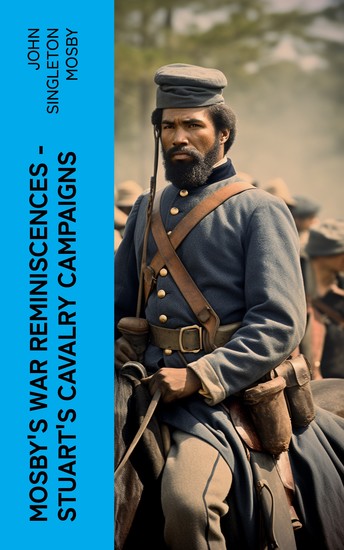
Mosby's War Reminiscences - Stuart's Cavalry Campaigns - Civil War Memories Series - cover

Mosby's War Reminiscences - Stuart's Cavalry Campaigns - Civil War Memories Series

John Singleton Mosby

Casa editrice: e-artnow

  • 0
  • 0
  • 0

Sinossi

e-artnow presents the Civil War Memories Series. This meticulous selection of the firsthand accounts, memoirs and diaries is specially comprised for Civil War enthusiasts and all people curious about the personal accounts and true life stories of the unknown soldiers, the well known commanders, politicians, nurses and civilians amidst the war.   "Mosby's War Reminiscences" is an account of wartime exploits, written by a Confederate army cavalry commander, John S. Mosby. While describing his war experiences, Mosby at the same time wanted to defend the reputation of his commander J.E.B. Stuart, who some partisans of the "Lost Cause" blamed for the Confederacy's defeat at the Battle of Gettysburg.
Disponibile da: 22/11/2023.
Lunghezza di stampa: 158 pagine.

Altri libri che potrebbero interessarti

  • Alcohol Stole My Mum - cover

    Alcohol Stole My Mum

    John Taylor, Paolo Hewitt

    • 0
    • 0
    • 0
    Number 1 Best Selling book; Alcohol Stole My Mum... 
    In 1978 John Taylor is eight years old and is in love with life. At school he is top of his class and adored by all the teachers. On the football pitch, he exhibits skills way beyond his years and, better still, his beloved Arsenal have just reached the FA Cup Final. Everything is great for John until the day he comes home from school and sees his alcoholic mother lying in bed after being beaten to a pulp by his violent father. From then on, his world changes terribly. To escape his painful and turbulent childhood, John finds solace in sports, especially football. He becomes a huge Arsenal and Celtic fan and amongst those supporters, he experiences a 'real' family, a togetherness as he travels with them to stadiums up and down the country. When John reaches adulthood, he is able to build a good life for himself with his loving partner and two beautiful young daughters. However, like so many who carry unresolved childhood trauma in their hearts, John falls prey to his own addictions. With the demons worsening in his head, and in the midst of a mental breakdown, he begrudgingly checks himself into rehab. Whilst there, he was given a choice: does he want to see his girls grow up, or does he want to be just like his mother? Faced with a 'life or death' situation, John opens up about his childhood for the first time ever in his life. Alcohol Stole My Mum is a hugely brave examination of a man's life to date. It is a story of great redemption told with a depth and candour that seeks to inspire and to help others. It is a compelling tale of how alcoholism destroys the family unit, but, worse still, creates devastating consequences that endure for years. Yet it is also laced with great humour.
    Mostra libro
  • Overcoming Procrastination & Stop Self-Sabotage - Overcome Your Laziness Bad Habits and Self-Defeating Behavior Increase Your Productivity Manage Your Time and Achieve Your Goals to Get Things Done - cover

    Overcoming Procrastination &...

    Sebastian Mills

    • 0
    • 0
    • 0
    TRANSFORM PROCRASTINATION INTO PRODUCTIVITY, PURSUE YOUR GOALS, AND NEVER LOOK BACK WITH THIS COMPREHENSIVE 2-AUDIOBOOKS-IN-1 BUNDLE! 
    Are you tired of battling procrastination, poor time management, and wavering focus? 
    Do you struggle with self-defeating behaviors, lack of motivation, and bad habits that hold you back? 
    Are you ready to break free from these cycles and unleash your true potential? 
    If you’re ready to become more productive, achieve your goals, and live up to your full potential, then "Overcoming Procrastination & Stop Self-Sabotage: Overcome Your Laziness, Bad Habits and Self-Defeating Behavior, Increase Your Productivity, Manage Your Time and Achieve Your Goals to Get Things Done” is for you! 
    This powerful audiobook guides you through understanding procrastination, identifying triggers, developing self-awareness, time management techniques, building willpower, developing a positive mindset, building better habits, and sustaining productivity. 
    It also delves into the realm of self-sabotage with chapters on understanding self-sabotage, identifying self-defeating behavior, cultivating self-awareness, nurturing motivation, breaking bad habits, overcoming limiting beliefs, building resilience, goal setting, and embracing your true potential. 
    With this audiobook, you will: Gain insights into the root causes of procrastinationIdentify your personal triggersCultivate self-awarenessLearn effective time management techniquesBuild willpower and develop a positive mindsetAcquire practical tools 
    And so much more!  
    Start your journey towards productivity, self-mastery, and goal achievement by grabbing this audiobook today!
    Mostra libro
  • Venetian Empire - The Grand History of the Venetians - cover

    Venetian Empire - The Grand...

    Kelly Mass

    • 0
    • 0
    • 0
    When we think of Venice, we think of masks, canals, murals and frescoes, and little “gondoliers” with picturesque boats. Venice, indeed, has an impressive artistic history. But did you know that Venice was also, for a while, a considerably-sized empire? 
    Although no enduring historic records associate with the creation of Venice, the Republic of Venice's history is typically said to start at 12 a.m. on Friday, March 25th, AD 421, when authorities from Padua established the city to develop a trading center in that area of northern Italy. 
    The creation of the Venetian republic is said to have accompanied the starting of the church of St. James at the exact same time. Still, the church (which is believed to be that of Saint Giacomo di Rialto) dates no earlier than the l lth century, and no after the mid-twelfth century. 
    According to legend, the area's first residents were Hun and Germanic refugees escaping succeeding waves of Hun and Germanic intrusions from the mid-second to mid-fifth centuries, who originated from near Roman cities like Padua, Aquileia, Treviso, Altino, and Concordia (contemporary Concordia Sagittaria), and the undefended countryside. 
    Let’s dive deeper into the history of the Venetian Empire. Let’s find out what made them so unique and successful at what they did.
    Mostra libro
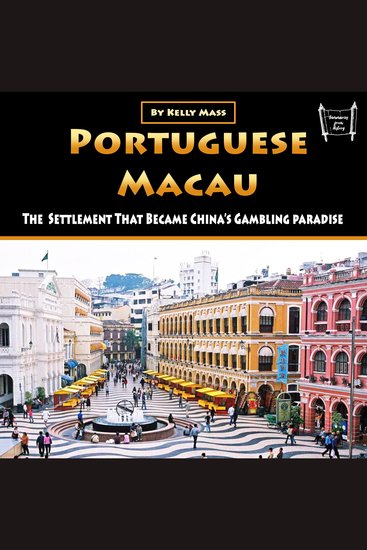
  • Portuguese Macau - The Settlement That Became China’s Gambling Paradise - cover

    Portuguese Macau - The...

    Kelly Mass

    • 0
    • 0
    • 0
    Macau is known as the Las Vegas of China. It attracts many tourists every year, and it has a unique set of laws and history behind it. How did it become this way? Well, one of the reasons is that it used to be part of the Portuguese Empire. We have probably all heard about the British in China, the Opium Wars, and the tea export, but you might not have heard about the Portuguese settlers who went there. Macau still shows signs of Portuguese influence, even when you go there to visit. So, let’s take a look at what happened and how the area evolved into what it is today.
    Mostra libro
  • The Shocking Truth about Media Bias - cover

    The Shocking Truth about Media Bias

    Zoey Fraisers

    • 0
    • 0
    • 0
    The media plays an essential role in shaping public perception, influencing opinions, and determining which issues receive attention. Every day, millions of people rely on news outlets to stay informed, trusting that journalists will present facts objectively. However, the reality is far more complex. Media bias is an undeniable force that affects how stories are reported, which facts are emphasized, and how narratives are framed. This bias can be subtle or overt, intentional or unintentional, but its consequences are profound.  
      
    Throughout history, media bias has been used as a tool for persuasion, propaganda, and agenda-setting. Governments, corporations, and interest groups have long recognized the power of controlling information. Whether through selective reporting, misleading headlines, or emotional language, media outlets can manipulate public sentiment. The question is not whether bias exists, but how it manifests and how it influences society.  
      
    One of the biggest challenges in recognizing bias is its ability to blend seamlessly into seemingly objective reporting. The way a journalist chooses to present a story—what details they include, the sources they cite, and even the language they use—can subtly push readers or viewers toward a particular perspective. Some media organizations openly align with political ideologies, while others claim impartiality but still reflect the interests of their ownership or advertisers. In a time when trust in journalism is declining, it is crucial to understand how bias operates and how to separate fact from opinion. 
    Mostra libro
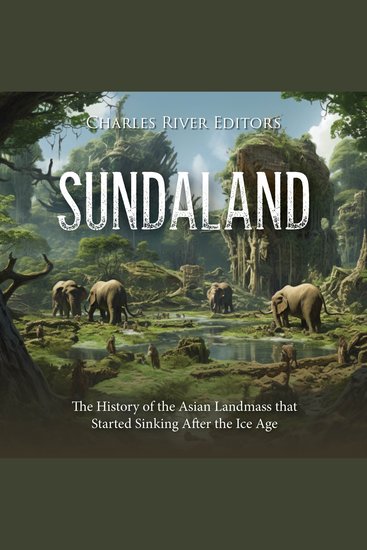
  • Sundaland: The History of the Asian Landmass that Started Sinking After the Ice Age - cover

    Sundaland: The History of the...

    Editors Charles River

    • 0
    • 0
    • 0
    By the time the Pleistocene Epoch ended around 12,000 years ago, Homo sapiens had become one of the most significant species on the planet. 	It was also near the end of that period of time that modern humans began to gradually populate what would become Europe, Asia, and the Americas, eventually becoming the inheritors of the Paleolithic era and the only human species to make it into the Neolithic era. The process was long and difficult, and the survival of the species only happened through a combination of human tenacity and a fair amount of luck. As much as humans evolved during the Pleistocene, the topography, geography, and environment changed even more. 
    The cold Pleistocene temperatures lowered water levels across the planet, exposing land that was not there before or after the period. At the same time, significant regions of the planet were very different during the Pleistocene, including Southeast Asia, particularly the modern islands of Bali, Borneo, Sumatra, and the Malay Peninsula, roughly equivalent to parts of Indonesia, Malaysia, Myanmar, and Thailand. This region, which modern scholars refer to as Sunda or Sundaland, was unique because all of it was connected by land, meaning today’s islands were once part of a contiguous subcontinent, and in terms of the people, flora, and fauna, it was very different than it is today. If a modern traveler could somehow transport back to the Pleistocene, Sundaland would look nothing like modern Southeast Asia and would resemble as much of a lost world as something out of a science fiction novel.  
    Although much is still unknown about Sundaland, researchers have uncovered plenty of evidence bringing this lost world to life. As anthropologists and archaeologists developed new models and discovered ancient material culture, they learned that Sundaland played a significant role in the development of Neolithic Southeast Asia in many ways. 
    Mostra libro