Join us on a literary world trip!
Add this book to bookshelf
Grey
Write a new comment Default profile 50px
Grey
Subscribe to read the full book or read the first pages for free!
All characters reduced
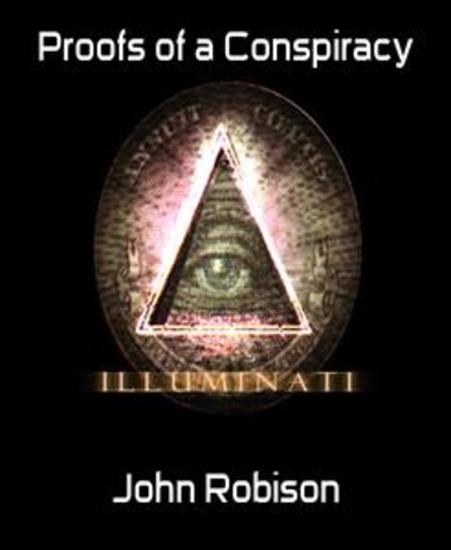
Proofs of a Conspiracy - cover

Proofs of a Conspiracy

John Robison

Publisher: BookRix

  • 0
  • 0
  • 0

Summary

In this work, Proofs of a Conspiracy, Robison laid the groundwork for modern conspiracy theorists by implicating the Bavarian Illuminati as responsible for the excesses of the French Revolution. The Bavarian Illuminati, a rationalist secret society, was founded by Adam Weishaupt in 1776 in what is today Germany. They had an inner core of true believers, who secretly held radical atheist, anti-monarchist and possibly proto-feminist views, at that time considered beyond the pale. They recruited by infiltrating the numerous (and otherwise benign) Freemasonic groups which were active at the time on the continent. Necessarily they had a clandestine, compartmentalized, hierarchical organizational form.
Available since: 12/19/2023.
Print length: 463 pages.

Other books that might interest you

  • Stories on lord Shiva series - 20 - From various sources of Shiva Purana - cover

    Stories on lord Shiva series -...

    Anusha HS

    • 0
    • 0
    • 0
    Lord shiva is adi and he is only the anthya. He is the sole reason for the happenings in both the movable and immovable worlds. Therefore, it is said that not even a spring of grass will move without his permission. He is the one who has given life to all the creatures. He is also the one who takes away the lives of all the creatures. Sadhus sages and aghoraas practice severe penance without minding day and night on Lord Shiva.He blesses his devotees with boons.
    Show book
  • History of France: An Enthralling Overview of Major Events and Figures - cover

    History of France: An...

    Billy Wellman

    • 0
    • 0
    • 0
    France is a land absolutely steeped in history. It has always been a leading nation of Western Europe, and in many ways, one could say France is Western Europe.  
    One could confidently say such a thing because of the long history of French polities taking charge in world history. Before France proper even existed, the tribes there, such as the Franks, played a central role in regional affairs. For example, as the Roman Empire was falling apart, the Franks were increasingly relied upon for the security of the ailing Roman state. 
    And when Rome toppled, the Franks took it upon themselves to pick up the pieces. It was from their efforts that the so-called “Holy Roman Empire” was forged. This massive conglomerate once contained much of France and a large chunk of the rest of western and central Europe.  
    France then became a nation in its own right and would become one of the most powerful powers of Europe, with colonies all over the world. France would then undergo much internal upheaval and a revolution that would rock the whole world. It would take France generations to recover, but recover it did. Before arriving where it is today, the country would go through two world wars and a cold one. 
    In this audiobook, you will discover the following:France’s origins and its prehistoryFrance’s relations with the Roman EmpireHow the French survived the Middle AgesThe French Revolution and the impact it had on societyThe Napoleonic Wars and the changes Napoleon made in France and its coloniesFrench colonialism and a look at some of the major French coloniesFrance during the world warsPostwar and Cold War FranceModern France and what its future might holdAnd much more! 
    Scroll up and click the “add to cart” button to begin learning about France today!
    Show book
  • Freedom's Battle - cover

    Freedom's Battle

    Mahatma Gandhi

    • 0
    • 0
    • 0
    "Freedom's Battle" by Mahatma Gandhi compiles powerful writings and speeches from Gandhi's relentless campaign for India's independence. Through eloquent reflections on nonviolent resistance, civil disobedience, and the ethical foundations of a free society, Gandhi articulates his vision for justice and equity. This compelling work provides profound insights into the principles that fueled the fight against colonial oppression and offers timeless lessons on courage, integrity, and the quest for human dignity.
    Show book
  • Don't Let Bad Luck Follow You - cover

    Don't Let Bad Luck Follow You

    Pastor Philip

    • 0
    • 0
    • 0
    When God created the world, he considered everything to be good, and when God created man, everything was very good. With the fall into sin, evil entered our world. That was the beginning of mankind's misfortune.  The song, 'Wonderful Grace' sung by Chey at the end of the sermon, gives the listener an opportunity to reflect on the sermon.
    Show book
  • Home Is Where the Truth Is - Why You Can and Should Homeschool Your Child - cover

    Home Is Where the Truth Is - Why...

    Maeve Jemison

    • 0
    • 0
    • 0
    Today’s youth have a lot going against them as they trudge onto their school campuses. Sitting in cold, hard desks, they’re force-fed facts that quickly zap the joy of discovery right out of them. Next, they’re indoctrinated with progressive ideologies meant to sexualize them and incite hatred for America. The fear of a gunman kicking in their classroom door constantly looms in the back of their mind. This is the loneliest, most anxious, and depressed young generation our world has possibly ever seen. Oh, and on top of all that...they might not really be a boy or a girl. 
    You can keep subjecting your kids to the poison, or you can bring them home to flourish. This book gives you the pro tips and encouragement to discover what millions of other parents already have: the best thing for their families is to take back control of their lives and their children’s education. 
    So what’s stopping you? 
    • You fear that your children won’t be adequately socialized? 
    • You don’t have the patience, organizational skills, or time? 
    • Homeschoolers are just weird! 
    This book dispels those lies and fifteen others that society erroneously believes. Ahead of you awaits a family bond you never imagined possible, and the role of primary guide for your child down the path God created them for. Even though it starts in your living room, this mission will be far-reaching. At the very least, your impact will be felt down to your grandchildren’s generation. At most, to all of eternity.
    Show book
  • Race for Nuclear Weapons during World War II The: The History and Legacy of Both Sides’ Efforts to Build an Atomic Bomb - cover

    Race for Nuclear Weapons during...

    Editors Charles River

    • 0
    • 0
    • 0
    Before the Second World War, military conflicts were fought under orthodox conditions, usually termed “conventional warfare,” but several innovations had significantly changed combat, leading inextricably to the race for a nuclear weapon in the 1930s and 1940s. Conflicts had been fought by armies on horseback with guns of varying sophistication since the 16th century, but mechanized warfare and machine guns changed this calculus and set the stage for future combat by the end of World War I. Other sinister changes entered the fray during this conflict, such as chemical weapons like chlorine and mustard gas. The total warfare brought about by World War I and ensuing wars like the Spanish Civil War made the quest for the most powerful weapons somewhat necessary. 
    The Manhattan Project would ultimately yield the “Little Boy” and “Fat Man” bombs that released more than 100 Terajoules of energy at Hiroshima and Nagasaki, but as it turned out, the Axis were not far behind with their own nuclear weapons program. When the Nazis’ quest for a nuclear weapon began in earnest in 1939, no one really had a handle on how important nuclear weapons would prove to war and geopolitics. The attacks on Hiroshima and Nagasaki in August 1945, along with the Cold War-era tests and their accompanying mushroom clouds, would demonstrate the true power and terror of nuclear weapons, but in the late 1930s these bombs were only vaguely being thought through, particularly after the successful first experiment to split the atom by a German scientist. The nuclear age itself was in its infancy, barely 35 years old, but within a few short years the advent of nuclear war loomed over the world and the prospect of the enemy winning the nuclear race kept Allied leaders awake at night.
    Show book