Unisciti a noi in un viaggio nel mondo dei libri!
Aggiungi questo libro allo scaffale
Grey
Scrivi un nuovo commento Default profile 50px
Grey
Iscriviti per leggere l'intero libro o leggi le prime pagine gratuitamente!
All characters reduced
Quirky History - Maritime Moments Most History Books Don't Mention - cover

Quirky History - Maritime Moments Most History Books Don't Mention

John Quirk

Casa editrice: Fernhurst Books Limited

  • 0
  • 0
  • 0

Sinossi

John Quirk loves history, drawing and boats and these three elements come together in this attractive and entertaining book. He has sought out obscure episodes or familiar events from the past and written engagingly about them, illustrated with his excellent colour cartoons. Where possible he relates the historical happenings and maritime moments to the present day, be it when tracing the history of the screw, misinformation (fake news) during the Second World War, plague ships in the fourteenth century, or Russia's ill-fated war with Japan in 1904. The events covered range from Henry V's invasion of France in 1415, consisting mainly of chartered French ships and paid for partially by Dick Whittington, to episodes in the Second World War, like the Somali Camel Corps capturing a German U-boat. Other historic figures involved include Horatio Nelson, Napoleon, Rudolf Diesel and Lawrence of Arabia. The 25 stories and over 100 cartoons are a treasure-trove of compelling, salt-infused, tales told with imagination and humour, with an eye on the present day, which will be enjoyed by anyone with an interest in maritime history (or even just history).
Disponibile da: 04/10/2022.
Lunghezza di stampa: 128 pagine.


Altri libri che potrebbero interessarti

  • Internet for the People - The Fight for Our Digital Future - cover

    Internet for the People - The...

    Ben Tarnoff

    • 0
    • 0
    • 0
    Why is the internet so broken, and what could ever possibly fix it? 


    In Internet for the People, leading tech writer Ben Tarnoff offers an answer. The internet is broken, he argues, because it is owned by private firms and run for profit. Google annihilates your privacy and Facebook amplifies right-wing propaganda because it is profitable to do so. But the internet wasn't always like this. Tarnoff tells the story of the privatization that made the modern internet, and which set in motion the crises that consume it today. 


    The solution to those crises is straightforward: deprivatize the internet. Deprivatization aims at creating an internet where people, and not profit, rule. It calls for shrinking the space of the market and diminishing the power of the profit motive. It calls for abolishing the walled gardens of Google, Facebook, and the other giants that dominate our digital lives and developing publicly and cooperatively owned alternatives that encode real democratic control. To build a better internet, we need to change how it is owned and organized. Otherwise, a small number of executives and investors will continue to make choices on everyone's behalf, and these choices will remain tightly bound by the demands of the market. It's time to demand an internet by, and for, the people now.
    Mostra libro
  • Learn Urdu: Must-Know Urdu Slang Words & Phrases - Extended Version - cover

    Learn Urdu: Must-Know Urdu Slang...

    Innovative Language Learning, ...

    • 0
    • 0
    • 0
    ***Important: This Audiobook comes with 3 bonus Urdu “slang” and “curse words” conversation cheat sheets***


    Want to speak Urdu like a native, understand daily conversations...


    ...and graduate from “knowing just a few basic textbook phrases”?


    Then this the Audiobook is for you.


    You’re about to learn 100+ Urdu slang words and phrases used in daily life. With the “Learn Urdu: Must-Know Urdu Slang Words & Phrases (Extended Version) by UrduPod101” Audiobook, our teachers explain and break down each word and phrase across 25 lessons!


    And all YOU have to do is listen and repeat.


    What you get with this Audiobook:
     
    • 25+ Audio-based Lessons & Review Tracks
     
    • 150 Minutes (2+ Hours) in Total 
     
    • Includes a 120+ Page eBook
     
    • BONUS! 3 Urdu Slang Conversation Cheat Sheets


    Results you can expect:
     
    • Master 100+ New Words & Phrases
     
    • Improve Your Speaking & Listening Skills
     
    • Become a Better Urdu Speaker


    Download the PDF and read along
    Mostra libro
  • Embracing (Rather Than Fixing) Our Authentic Selves - cover

    Embracing (Rather Than Fixing)...

    JD David Bedrick

    • 0
    • 0
    • 0
    We are a society of armchair psychologists, who are constantly self-diagnosing. There are scores of books and television programs that suggest ways for us to reprogram and rid ourselves of disturbing feelings and behavior patterns. Bedrick is deepening the dialogue about the role and practice of psychology in today’s society. Much of mainstream or “pop” psychology give us plenty of labels, but does it go deep enough to motivate us to truly change destructive patterns? David Bedrick gives us a new vision of psychology where people are seen not as either functional or dysfunctional. It’s a psychology where awareness and dialogue are more important than labels. 
    Mainstream psychology often misses the range of diversity in people and tries to “normalize” them into a sea of sameness. In Process Oriented Psychology, for example, there are no 7 steps to a cure. This branch of psychology acknowledges that everyone is different. Bedrick is an awareness follower and says, “I’m using my awareness in watching all the communication a person gives me, much of which is not verbal.” He follows what they are showing him until the client reveals their own cure or medicine. He gives many exciting examples in this dynamic dialogue. (hosted by Justine Willis Toms)
    Mostra libro
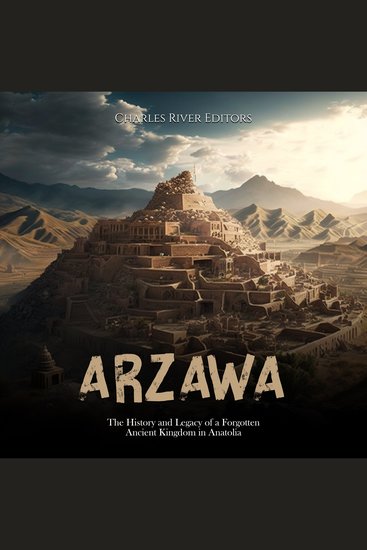
  • Arzawa: The History and Legacy of a Forgotten Ancient Kingdom in Anatolia - cover

    Arzawa: The History and Legacy...

    Editors Charles River

    • 0
    • 0
    • 0
    The Late Bronze Age Near East (c. 1550-1200 BCE) was a time and place of unprecedented wealth and stability. The major kingdoms of Egypt, Babylonia, Hatti, Mitanni, Assyria, and other regional powers established trade networks and diplomatic ties with each other, creating one of the world’s first global geopolitical systems in the process. There was war and conflict during this era, but most of the wars were border skirmishes that involved proxies, rarely changing the borders very much in the process. Modern scholars have divided the countries in this system into two groups: the major powers, which included those listed above along with a few others, and those who were usually ruled over or colonized by the major powers. But things were not always so black and white. 
    	The mysterious land of Arzawa is another Late Bronze Age kingdom whose Great Power status has been questioned by some archaeologists and historians. Arzawa was a state or a collection of states in western Anatolia that challenged the Hittites for supremacy in the region. Although Arzawa never extended its borders beyond Anatolia, even at the apex of its military, diplomatic, and economic power, it did draw the attention of the Egyptians and is mentioned in in two of the famous Amarna Letters. For that reason, many scholars have labeled Arzawa a Late Bronze Age Great Power, but the designation has done little to flesh out the details of their enigmatic culture. Historians, archaeologists, and philologists still argue over many elements of Arzawa and its people, including who they were, how powerful the kingdom was, and even where it was located. It is likely that not all of these questions will ever be answered, but an examination of Arzawa's culture and history, especially its relation with the Hittites, does help bring this Bronze Age culture into better focus.  
    Mostra libro
  • The Sacred Way - cover

    The Sacred Way

    Stephen L. Robertson

    • 0
    • 0
    • 0
    The Sacred Way is not a map. It is not a method. It is a transmission. 
      
    In this companion to The Sacred Choice, Stephen L. Robertson offers a luminous reflection for the soul ready to embody what it has already remembered. Drawing from mystical insight, spiritual awakening, and the quiet wisdom of stillness, The Sacred Way invites readers beyond the threshold of realization—into a life of integration, gentleness, and divine simplicity. 
      
    This masterwork does not teach—it mirrors. Through poetic clarity and sacred resonance, it unveils the quiet radiance of what happens after the spark: when ego dissolves, when becoming ends, and when the flame no longer flickers but simply burns. 
      
    You are not searching anymore. 
    You are becoming the field. 
      
    This is not the beginning of your journey. 
    This is the return.
    Mostra libro
  • Rhythm of Resistance - The Soulful Echoes of Black Musicians in the Era of Martin Luther King Jr (1957-1968) - cover

    Rhythm of Resistance - The...

    Eroms Ehiagwina

    • 0
    • 0
    • 0
    "Rhythm of Resistance: The Soulful Echoes of Black Musicians in the Era of Martin Luther King Jr. (1957-1968)" is a must-read book that sheds light on the pivotal role of music in the Civil Rights Movement. It provides a comprehensive overview of the social, political, and cultural context of the era, highlighting how music served as a powerful tool for expressing the aspirations and frustrations of African Americans. Through songs such as "We Shall Overcome" and "A Change Is Gonna Come," music became an anthem of the movement, inspiring activists and mobilizing communities across America and beyond, it also highlights the struggles of people of color in the United Kingdom at this time. This book is a testament to the enduring spirit of resistance and resilience that drives us towards a more just and equitable society. It serves as a reminder that the struggle for racial justice is ongoing, and the power of music to inspire social change remains as relevant today as it was during the Civil Rights era. Get ready to be inspired and motivated by the transformative power of music in the fight for civil rights. 
     
    Mostra libro