Unisciti a noi in un viaggio nel mondo dei libri!
Aggiungi questo libro allo scaffale
Grey
Scrivi un nuovo commento Default profile 50px
Grey
Iscriviti per leggere l'intero libro o leggi le prime pagine gratuitamente!
All characters reduced
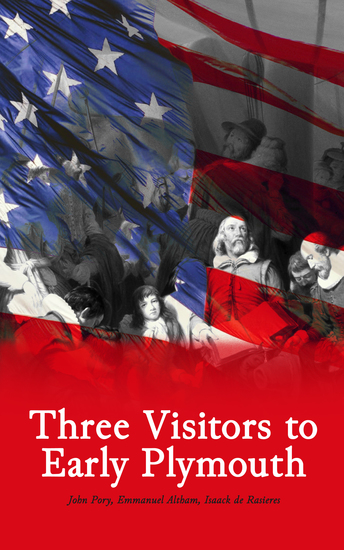
Three Visitors to Early Plymouth - Account of the Pilgrim Settlement in New England During its First Seven Years - cover

Three Visitors to Early Plymouth - Account of the Pilgrim Settlement in New England During its First Seven Years

John Pory, Emmanuel Altham, Isaack de Rasieres

Casa editrice: e-artnow

  • 0
  • 0
  • 0

Sinossi

Three Visitors to Early Plymouth contains letters of early British settlers and travelers John Pory, Emmanuel Altham and Isaack de Rasieres which provide details of the pilgrim settlement in New England during the first several years. Pory's account is valuable for the colorful description of the bounties of nature at Plymouth and along the Maine shore. The Altham letters offer the first new information about the Plymouth Colony. Captain Emmanuel Altham of the Little James, which arrived at Plymouth in 1623, gives us description of the settlement, its insufficient resources in livestock, and its plentiful store of fish and timber. De Rasieres' letters open with a portrayal of Manhattan Island only three years after the settlement of New Amsterdam, and of the shores of Long Island Sound. They describe Algonkian Indian customs and methods of dealing with unfaithful wives and roaming husbands.
Disponibile da: 08/04/2022.
Lunghezza di stampa: 85 pagine.
Altri libri che potrebbero interessarti

  • The Science of Reading Body Language - Read Between the Lines: Understanding Physical Communication - cover

    The Science of Reading Body...

    Nathaniel Hart

    • 0
    • 0
    • 0
    We communicate constantly, not just through words but through a rich tapestry of unspoken cues. From the subtle flicker of an eyebrow to the unconscious shift in posture, our bodies are constantly broadcasting messages, often revealing more than consciously intended. 
    This book serves as a guide to understanding this complex and fascinating world of nonverbal communication. We will embark on a journey to unlock the secrets hidden within human interaction.  
    We will explore the evolutionary basis of nonverbal communication, tracing its origins back to our primal ancestors and examining how these innate cues continue to shape our interactions today. 
    We will delve into the significant role of culture in shaping body language, understanding how societal norms and individual experiences influence our expression and interpretation of nonverbal signals. We will examine the anatomy of nonverbal cues in detail, providing a comprehensive overview of facial expressions, posture, gestures, proxemics (the use of space), and paralanguage (vocal cues), each with their own nuanced meanings and power to reveal emotions, intentions, and social dynamics. We'll investigate the art of integrating verbal and nonverbal cues to achieve a deeper understanding of communication, and learn to detect those inconsistencies that might signal deception or underlying emotions. Through practical exercises and real-world examples, you will hone your observational skills, and ability to spot subtle clues others miss. 
    The book goes beyond simply identifying individual cues, guiding you to integrate these observations into a holistic understanding of behavior, fostering enhanced empathy and providing insights into the motivations and feelings behind nonverbal expressions. 
    Ultimately, the knowledge within this book equips you to navigate the intricacies of human interaction with newfound confidence and understanding, enriching your life by fostering stronger and more meaningful relationships.
    Mostra libro
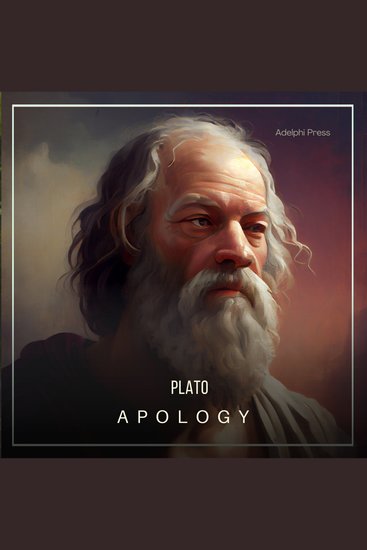
  • Apology - cover

    Apology

    Plato

    • 0
    • 0
    • 0
    Apology by Plato is a crucial Socratic dialogue that provides an understanding of the philosopher's own views on the trial and execution of Socrates. The work serves as a defence speech given by Socrates as he attempts to persuade the court of his innocence. By providing an insight into his philosophical beliefs, Plato uses the Apology to articulate his teacher's thoughts on justice, virtue, piety and moral responsibility. Read in English, unabridged.
    Mostra libro
  • To Siri with Love - A Mother her Autistic Son and the Kindness of Machines - cover

    To Siri with Love - A Mother her...

    Anonimo

    • 0
    • 0
    • 0
    From the author of the viral New York Times op-ed column ""To Siri with Love"" comes a collection of touching, hilarious, and illuminating stories about life with a thirteen-year-old boy with autism that hold insights and revelations for us all. 
    When Judith Newman shared the story of how Apple’s electronic personal assistant, Siri, helped Gus, her son who has autism, she received widespread media attention and an outpouring of affection from readers around the world. Basking in the afterglow of media attention, Gus told anyone who would listen, ""I’m a movie star."" 
    Judith’s story of her son and his bond with Siri was an unusual tribute to technology. While many worry that our electronic gadgets are dumbing us down, she revealed how they can give voice to others, including children with autism like Gus—a boy who has trouble looking people in the eye, hops when he’s happy, and connects with inanimate objects on an empathetic level. 
    To Siri with Love is a collection of funny, poignant, and uplifting stories about living with an extraordinary child who has helped a parent see and experience the world differently. From the charming (Gus weeping with sympathy over the buses that would lie unused while the bus drivers were on strike) to the painful (paying $22,000 for a behaviorist in Manhattan to teach Gus to use a urinal) to the humorous (Gus’s insistence on getting naked during all meals, whether at home or not, because he does not want to get his clothes dirty) to the profound (how an automated ""assistant"" helped a boy learn how to communicate with the rest of the world), the stories in To Siri with Love open our eyes to the magic and challenges of a life beyond the ordinary.
    Mostra libro
  • Zeno - Greek Philosophy and the Paradoxes of Motion - cover

    Zeno - Greek Philosophy and the...

    Hector Davidson

    • 0
    • 0
    • 0
    Zeno of Elea, a philosopher from ancient Greece, is best known for his paradoxes, which have intrigued thinkers for over two millennia. These paradoxes, particularly those dealing with motion, challenge fundamental concepts of space, time, and the nature of infinity. While Zeno's ideas emerged within the context of ancient philosophical debates, their relevance persists today in various fields of study, from physics to mathematics and philosophy. 
    One of the most striking aspects of Zeno's paradoxes is their ability to question assumptions that many take for granted. The Paradox of Achilles and the Tortoise, for example, suggests that a faster runner (Achilles) could never overtake a slower one (the tortoise) if the tortoise has a head start. At first glance, this seems absurd, as we know that Achilles would inevitably pass the tortoise in a real race. However, Zeno’s argument raises deeper questions about how we understand infinite divisions in space and time. Today, this paradox invites reflection on the nature of infinity, a concept that remains central in modern mathematics and the study of calculus. 
    Zeno’s paradoxes also raise critical questions about the nature of motion itself. His Arrow Paradox, for instance, claims that an arrow in flight is always at rest at any given moment in time, suggesting that motion is an illusion. While this may seem like a mere abstract thought experiment, it has significant implications for how we perceive the passage of time and the continuum of motion. In modern physics, the concept of time and motion is constantly reexamined, especially in the context of relativity theory, where time can bend and stretch depending on an object's velocity and position in space. Zeno’s paradoxes, thus, offer an early philosophical precursor to these scientific discussions.
    Mostra libro
  • العراق بلد العجائب الذي لا يموت - العراق - cover

    العراق بلد العجائب الذي لا يموت...

    مو مثال

    • 0
    • 0
    • 0
    العراق… وطن لا يشبه سواه. 
    من مهد الحضارات إلى قلب الصراعات، من بين دجلة والفرات، وبين ركام المدن ونهضتها، يولد هذا الكتاب ليحمل المستمع في رحلة تأملية فكرية وإنسانية داخل روح هذا البلد الاستثنائي. 
    في هذا العمل، لا يُكتفى بسرد التاريخ، بل يُروى بطريقة تعيد للحروف وزنها، وللصوت دلالته. 
    يتنقل بك بين الجغرافيا والسياسة، بين الاقتصاد والهوية، بين الإعلام والصراع، وبين أحلام الشباب وشهادة الوطن. 
    العراق... بلد العجائب الذي لا يموت" هو أكثر من كتاب صوتي، 
    إنه رسالة حب وصدق ووعي لوطن لا ينكسر، رغم كل ما مرّ 
    به.
    Mostra libro
  • Popular Works Volume 2 - The Characteristics of the Present Age The Doctrine of Religion and Other Works - cover

    Popular Works Volume 2 - The...

    Johann Gottleib Fitche

    • 0
    • 0
    • 0
    Though born to a poor but pious family of ribbon weavers in in Saxony in 1762, Johann Gottlieb’s exceptional intelligence was apparent from an early age. Remarkably, from this humble background, he earned himself a respected place in the pantheon of late 18th and early 19th century German philosophers. That fact that he is placed between Kant and Hegel, yet still retains a significant and individual presence, says much about his work and personality. He became known, especially, for initiating the concept of ‘German idealism’ (linked with Romanticism and the revolutionary politics which emerged after the Enlightenment). In the 20th and 21st century, his importance and contribution to Western philosophy has been increasingly acknowledged.  
     
    There are two substantial lecture series and one essay stemming from his time in Berlin in Popular Works Volume 2: much of Fichte’s important work appeared initially in lectures. 
     
     The Characteristics of the Present Age, (1806) consists of 17 lectures in which Fichte presents his ‘speculative philosophy of history’. The series opens with ‘The Idea of Universal History’ in which he ‘divides earthly life into 5 Principal Epochs.’ Against this overview of history and culture, (including the state, civil and political freedom, science and religion) he develops his thesis with particular reference to his ‘present age’ – the time of Voltaire, Rousseau on the one hand and Lessing, Kant and Goethe on the other.  
     
    In The Way Towards The Blessed Life or The Doctrine Of Religion (1806) (11 lectures) Fichte considers the relationship between established religion and his particular view on ‘transcendental’ philosophy. His opening statement is ‘Life is Love; and hence Life and Blessedness are in themselves one and the same.’  He continues by examine metaphysics, ontology, mysticism, actual and apparent life, Christianity, and his Doctrine of Being.  
     
    The final work in this anthology is Outlines of the Doctrine of Knowledge (1810). It is a concise exposition of Fichte’s Wissenschaftslehre’ but in its strictly scientific form. It had an unusual provenance in that it was printed by Fichte at the conclusion of lectures as a form of a memorandum with 14 short sections. It opens with the question: ‘How this Knowledge can come into being, and what it is in its inward and essential Nature?’
    Mostra libro