Unisciti a noi in un viaggio nel mondo dei libri!
Aggiungi questo libro allo scaffale
Grey
Scrivi un nuovo commento Default profile 50px
Grey
Iscriviti per leggere l'intero libro o leggi le prime pagine gratuitamente!
All characters reduced
Paradise Lost: Embark on Milton's Epic of Sin and Redemption - eBook Edition - cover

Paradise Lost: Embark on Milton's Epic of Sin and Redemption - eBook Edition

John Milton, Bluefire Books

Casa editrice: Bluefire Books

  • 0
  • 0
  • 0

Sinossi

Engage with the grandeur of John Milton's epic masterpiece with "Paradise Lost: Milton's Epic of Sin and Redemption - eBook Edition." This celebrated epic poem has enchanted millions of readers worldwide with its poetic brilliance and poignant narrative.
Unravel the layers of allegory and symbolism as you journey through the narrative of humanity's first sin, and the profound consequences that ensue. Experience the heights of Heaven and the depths of Hell, arousing emotions of awe, empathy, and introspection. Our brief synopsis offers only a glimpse into the magnificence that awaits you in Paradise Lost.
Our eBook version is meticulously designed to offer a seamless reading experience, ensuring that the rhythm and grandeur of Milton's blank verse remain untouched. Esteemed by critics and embraced by readers, our eBook edition boasts an impressive array of 5-star ratings.
Don't miss out on this journey of epic proportions! Download your copy of 'Paradise Lost' now and embark on Milton's magnificent exploration of sin, redemption, and human nature.
Disponibile da: 09/07/2023.
Lunghezza di stampa: 146 pagine.

Altri libri che potrebbero interessarti

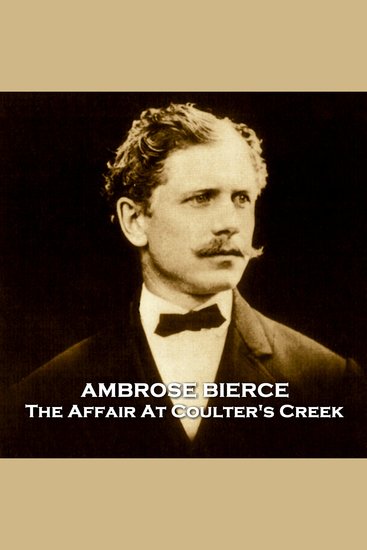
  • The Affair At Coulter's Creek - From their pens to your ears genius in every story - cover

    The Affair At Coulter's Creek -...

    Ambrose Bierce

    • 0
    • 0
    • 0
    Ambrose Gwinnett Bierce was born on 24th June 1842 at Horse Cave Creek in Meigs County, Ohio. His parents were poor but they introduced him to literature at an early age, instilling in him a deep appreciation of books, the written word and the elegance of language.  
    Growing up in Koscuisko County, Indiana poverty and religion were defining features of his childhood, and he would later describe his parents as “unwashed savages” and fanatically religious, showing him little affection but always quick to punish. He came to resent religion, and his introduction to literature appears to be their only positive effect. 
    At age 15 Bierce left home to become a printer’s devil, mixing ink and fetching type at The Northern Indian, a small Ohio paper. Falsely accused of theft he returned to his farm and spent time sending out work in the hopes of being published. 
    His Uncle Lucius advised he be sent to the Kentucky Military Institute. A year later he was commissioned as an Officer.  As the Civil War started Bierce enlisted in the 9th Indiana Infantry Regiment.  
    In April 1862 Bierce fought at the Battle of Shiloh, an experience which, though terrifying, became the source of several short stories. Two years later he sustained a serious head wound and was off duty for several months. He was discharged in early 1865.  
    A later expedition to inspect military outposts across the Great Plains took him all the way to San Francisco. He remained there to become involved with publishing and editing and to marry, Mary Ellen on Christmas Day 1871.  They had a child, Day, the following year.  
    In 1872 the family moved to England for 3 years where he wrote for Fun magazine. His son, Leigh, was born, and first book, ‘The Fiend’s Delight’, was published.  
    They returned to San Francisco and to work for a number of papers where he gained admiration for his crime reporting. In 1887 he began a column at the William Randolph Hearst’s San Francisco Examiner.  
    Bierce’s marriage fell apart when he discovered compromising letters to his wife from a secret admirer. The following year, 1889 his son Day committed suicide, depressed by romantic rejection. 
    In 1891 Bierce wrote and published the collection of 26 short stories which included ‘An Occurrence at Owl Creek Bridge’.  Success and further works including poetry followed.  
    Bierce with Hearst’s resources helped uncover a financial plot by a railroad to turn 130 million dollars of loans into a handout. Confronted by the railroad and asked to name his price Bierce answered “my price is $130 million dollars. If, when you are ready to pay, I happen to be out of town, you may hand it over to my friend, the Treasurer of the United States”.  
    He now began his first foray as a fabulist, publishing ‘Fantastic Fables’ in 1899.  But tragedy again struck two years later when his second son Leigh died of pneumonia relating to his alcoholism.  
    He continued to write short stories and poetry and also published ‘The Devil’s Dictionary’.  
    At the age of 71, in 1913 Bierce departed from Washington, D.C., for a tour of the battlefields where he had fought during the civil war. At the city of Chihuahua he wrote his last known communication, a letter to a friend. It’s closing words were “as to me, I leave here tomorrow for an unknown destination,” Ambrose Bierce then vanished without trace.
    Mostra libro

  • The Model Millionaire - cover

    The Model Millionaire

    Oscar Wilde

    • 0
    • 0
    • 0
    "The Model Millionaire" is a short story by the Irish author Oscar Wilde. It first appeared in print in the newspaper The World in June 1887. It was published again in 1891 as part of the anthology Lord Arthur Savile's Crime and Other Stories.
    The story concerns a young man who, although he does not have much money himself, is moved to pity by the sight of an elderly beggar who is posing as a model for his artist friend. Although he can barely afford to do so, the young man gives the beggar the largest denomination coin that he has in his pocket. The young man's act of kindness has unexpected positive consequences for him.
    Mostra libro
  • Of Conversation and the Anatomy of Fashion (Unabridged) - cover

    Of Conversation and the Anatomy...

    H. G. Wells

    • 0
    • 0
    • 0
    Herbert George "H. G." Wells (1866 - 1946) was an English writer.
    He was prolific in many genres, including the novel, history, politics, social commentary, and textbooks and rules for war games. Wells is now best remembered for his science fiction novels and is called a "father of science fiction"
    OF CONVERSATION AND THE ANATOMY OF FASHION: This uncle of mine, you must understand, having attained by the purest accident some trifles of distinction and a certain affluence in South Africa, came over at the earliest opportunity to London to be photographed and lionised.
    Mostra libro
  • Horror - cover

    Horror

    Alexander Kuprin

    • 0
    • 0
    • 0
    A reminder from the master storyteller Alexander Kuprin - sometimes, there are but a few steps between your own front door and unimaginable horror.
    Mostra libro
  • London Models (Unabridged) - cover

    London Models (Unabridged)

    Oscar Wilde

    • 0
    • 0
    • 0
    Oscar Wilde (16 October 1854 - 30 November 1900) was an Irish poet and playwright. After writing in different forms throughout the 1880s, he became one of the most popular playwrights in London in the early 1890s.
    LONDON MODELS: Professional models are a purely modern invention. To the Greeks, for instance, they were quite unknown. Mr. Mahaffy, it is true, tells us that Pericles used to present peacocks to the great ladies of Athenian society in order to induce them to sit to his friend Phidias, and we know that Polygnotus introduced into his picture of the Trojan women the face of Elpinice, the celebrated sister of the great Conservative leader of the day.
    Mostra libro
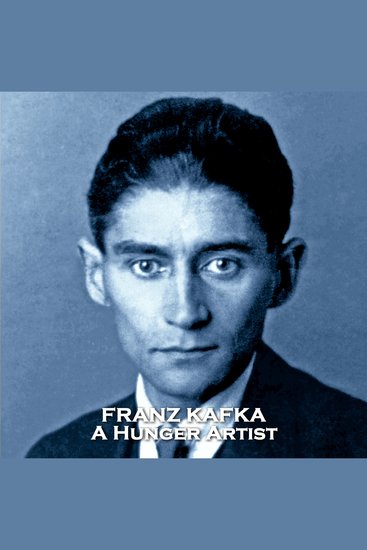
  • A Hunger Artist - A study in artistic pursuit and the sacrifices one must make - cover

    A Hunger Artist - A study in...

    Franz Kafka

    • 0
    • 0
    • 0
    Franz Kafka was born on 3rd July 1883 in Prague, then in Bohemia, the eldest of 6, into a middle-class Jewish family. 
     
    Life for the young Kafka and his passion for literature was often made an ordeal by his over-bearing and domineering entrepreneur of a father.   
     
    In 1889 Kafka was sent to the Deutsche Knabenschule, an elementary school in Prague. His father would only allow him to be educated in German-speaking schools and even went so far as to limit visits to the synagogue to four a year. 
     
    In 1901 he graduated from the classics-oriented Altstädter Gymnasium. Kafka did well there and across a large range of subjects.  He now enrolled at the Charles Ferdinand University, to study chemistry, but quickly switched to law for which he obtained his degree in June 1906 and then performed the mandatory year of unpaid service as clerk at the civil and criminal courts. 
     
    A job at an Italian insurance company left him little time to write and after a year he took another job with the Worker's Accident Insurance Institute for the Kingdom of Bohemia where he stayed until ill health led to his resignation in 1922. 
     
    Although he saw work as a means to pay the bills and to allow him time to write, he received several promotions and was noted as a good employee. 
     
    By 1917 Kafka was suffering from tuberculosis, which required frequent periods of convalescence. Interspersed with this, were several intense affairs before he settled in Berlin with Dora Diamant, a 25-year-old kindergarten teacher who herself having left the ghetto now influenced Kafka's interest in the book of Jewish law, the Talmud. 
     
    Kafka’s on-going health was littered with problems. Apart from TB there were several other ailments, including migraines, insomnia, boils, depression, all usually brought on by excessive stresses and strains. He attempted to counteract all of this by naturopathic treatments, a vegetarian diet and consuming large quantities of unpasteurized milk. 
     
    His tuberculosis still worsened. He returned to Prague, where he died on 3rd June 1924. He was 40. 
     
    His literary works are few in number but towering in influence.  His masterpieces include ‘The Trial’, ‘The Metamorphosis’ as well as a number of short stories which reveal facets of humankind that truthfully could only be born from Kafka’s brain and pen.
    Mostra libro