Unisciti a noi in un viaggio nel mondo dei libri!
Aggiungi questo libro allo scaffale
Grey
Scrivi un nuovo commento Default profile 50px
Grey
Iscriviti per leggere l'intero libro o leggi le prime pagine gratuitamente!
All characters reduced
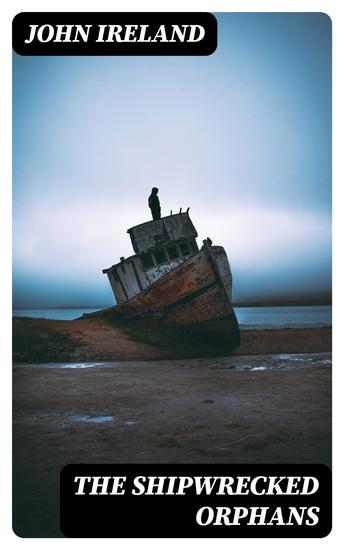
The Shipwrecked Orphans - cover

The Shipwrecked Orphans

John Ireland

Casa editrice: DigiCat

  • 0
  • 0
  • 0

Sinossi

In "The Shipwrecked Orphans," John Ireland crafts a poignant tale of survival, resilience, and the search for belonging amidst the chaos of maritime disaster. Set against the backdrop of an unforgiving sea and remote islands, Ireland employs a lyrical narrative style that intertwines vivid descriptions with emotional depth, illustrating the plight of the young protagonists. The novel navigates themes of isolation, adversity, and the indomitable spirit of youth, all while exploring the social and cultural currents of the time, making it a significant contribution to the genre of children's literature that reflects societal concerns and human values. John Ireland, a noted figure in 19th-century literature, drew upon his own experiences and observations of the sea and its perils, influencing his representation of adventure and hardship in this work. His background as both a traveler and a keen observer of human nature lends authenticity to his characters' journeys, inviting readers to empathize with their struggles and triumphs. Ireland's writings often reflect a deep concern for the welfare of children, likely stemming from his own childhood experiences and the societal conditions of his era. "The Shipwrecked Orphans" is recommended for readers who appreciate rich storytelling infused with moral lessons. Ireland's ability to evoke both the beauty and terror of nature will resonate with those who cherish classic adventure narratives. This book is an essential read for anyone interested in the complexities of childhood and the enduring power of hope, making it a timeless treasure for both young and adult audiences.
Disponibile da: 04/09/2022.
Lunghezza di stampa: 32 pagine.

Altri libri che potrebbero interessarti

  • Broken by the Pizza Delivery Boy (Gay Weight Gain Feeder Erotica) - cover

    Broken by the Pizza Delivery Boy...

    Archer Vale

    • 0
    • 0
    • 0
    “Eat it! Eat it all!” 
    I ordered the meat lover’s special with extra sausage—just the way I like it. 
    What I didn’t realize is that the college jock delivering it would change my life forever. He entered my home and showed me the truth about myself. He branded his authority into my brain. 
    Now he regularly feeds me his “special” pizza recipe. It’s making me morbidly obese. It’s making me obedient and docile. I love it. I want more. 
    My wife and sons have found out about this perverse arrangement. They found out I’m funneling him ungodly amounts of money. My entire life is unraveling before my eyes. 
    But I can’t stop. 
    I need to obey the pizza delivery boy. 
    --- 
    CONTAINS EXPLICIT GAY SEXUAL CONTENT. 
    For exclusive stories, visit www.ArcherVale.com.
    Mostra libro
  • The Rights of Man - cover

    The Rights of Man

    Thomas Paine

    • 0
    • 0
    • 0
    "The Rights of Man" by Thomas Paine is a passionate defence of individual liberty and equality, written in response to Burke’s criticism of the French Revolution. Paine eloquently argues for natural rights, the sovereignty of the people, and social justice. With incisive logic, he advocates for democratic governance and economic inclusivity. This seminal work remains a cornerstone in the discourse on human rights and political reform, resonating across generations.
    Mostra libro
  • Underground and Underwater in World War I: The History and Legacy of the Hidden Fighting during the Great War - cover

    Underground and Underwater in...

    Editors Charles River

    • 0
    • 0
    • 0
    Most books and documentaries about the war focus on the carnage of the trenches, depicting the ceaseless bombardment and sniping, and the assaults and counterattacks that took millions of lives. This was the experience of most frontline soldiers during that great conflict, but it was not the only experience. There was another war going on beneath the trenches, a war of tunnels and mines fought by men who didn’t see sunlight for days at a time and who lived in constant fear of cave-ins and enemy detection. These men, who had mostly been miners in civilian life, lived a twilight existence, working long hours in silence and near darkness while great battles raged overhead. They suffered from fatigue, stress, and the knowledge that they could be killed at any time by an unseen enemy. Despite this, they persevered, and the mines they laid under enemy trench systems turned the tide of at least one major battle.  
    	The sleek hunter-killers lurking beneath the waves, using periscopes to close in unnoticed on their prey, added a new, nerve-wracking element to naval warfare. The mere threat of submarine attack immediately altered naval tactics and strategies employed by both the Western Allies and the Central Powers, shifting them towards a more cautious approach, especially at the war’s start when the submarine threat remained untested. 	During World War I, German U-boats operated solo except on one occasion. Initially, the British and nations supplying England with food and materiel scattered vessels singly across the ocean, making them vulnerable to the lone submarines. However, widespread late war re-adoption of the convoy system tipped the odds in the surface ships' favor.
    Mostra libro
  • What Is Property? - An Inquiry into the Principle of Right and of Government - cover

    What Is Property? - An Inquiry...

    Pierre-Joseph Proudhon

    • 0
    • 0
    • 0
    ‘Property is Theft’, a phrase which has passed into common parlance, was the rallying call of Pierre-Joseph Proudhon’s political treatise What Is Property? Proudhon (1809-1865) was both admired and excoriated. A political theorist of the first order, he was vilified in his native France by the Communists and the Monarchists alike, though admired by Karl Marx as well as many in the nation’s academia and judiciary who valued the clarity of his thought and analytical method.  
     
    He criticised both Right and Left (the very definition of French political thinking), describing them as two sides of the same coin. Their solutions to society’s ills, he said, were like Thesis and Antithesis, based on a common error and both inadequate to the task of healing society. He offered, instead, a third way, which he called his Synthesis. Regarded as the founder of modern Anarchism, his aim was not to engender chaos, as the word anarchy often connotes, but to suggest a workable, political, and economic foundation for society which would promote order and equity for all under the most unfettered conditions of individual liberty.  
     
    Proudhon grew up in poverty, and was home schooled as a child, but received a bursary in his youth sufficient to allow him to attend the City College in his home town (though not sufficient, it seems, to buy him shoes). There, he discovered the library which introduced him to a world, classical and contemporary, previously denied him. Lacking wealth or contacts, he worked variously as a printer, a compositor and proof-reader by day and an essayist by night, learning Latin along the way to assist in his work. In 1830, a friend, a scholar, invited Proudhon to join him in Paris to pursue his philosophical writings full time. When a cholera outbreak forced his return home, Proudhon spent the next few years juggling his two careers. In 1839, he applied for a pension (bursary) at the Academy of Besançon which obliged him to write works on its behalf.  
     
    What Is Property?, published in France in 1840, was his first. It was so controversial that little else followed. However, it established his reputation, and he was eventually able to pursue his philosophical work full time. What Is Property? (First Memoir) attempts to uncover the roots of poverty and associated social ills and examines different attitudes to poverty and wealth from the Greeks to the present day. Proudhon quickly identifies a common thread, property, which he distinguishes from possession, and argues that only a fundamental, though gradual, abandonment of property (as an asset) and all that flows from it, can rescue society from its current conflicts. The memoir seeks to illuminate the underlying causes of war, poverty, slavery, and oppression and points the way to a solution. In effect, it is a practical manual for the survival of mankind. The Second Memoir (1841), included on this recording, is Proudhon’s response to the criticisms of the First Memoir, initially uncomprehending and then self-assured by turns. What Is Property? is Proudhon’s masterwork. It divides opinion, but no one who hears it can come away with their view of their own world unchanged.  
     
    Translation: Benjamin R. Tucker.
    Mostra libro
  • The Lady and The Unicorn - cover

    The Lady and The Unicorn

    Sutherland Lyall

    • 0
    • 0
    • 0
    The legendary medieval tapestry The Lady and the Unicorn is Sutherland Lyall’s starting point for this journey into the world of mythology and mystery which has been woven around the myth of the unicorn and the lady. We learn that the unicorn is the symbol for power and the lady may be mother, mistress or virgin. With an abundant collection of documents form a number of international museums, Lyall’s writing is an exciting exploration, a lively new examination, of old subjects. Who knows - perhaps he has finally sloved the mystery of The Lady and the Unicorn!
    Mostra libro
  • Rock - cover

    Rock

    Kendall Grey

    • 0
    • 0
    • 0
    Book 4 in the Hard Rock Harlots series  
    WARNING: ROCK is a no-holds- (or holes-) barred bisexual, polyamorous lust-fest for the senses. It contains GRAPHIC LANGUAGE and EXTREMELY EXPLICIT SEX. This book is not suitable for readers under the age of 18 or anyone expecting a realistic story. A strong stomach, an open mind, and appreciation for over-the-top, egotistical characters are a must. Best read after STRINGS, BEATS, and NOCTURNES. 
    If you'd asked me to describe myself a couple weeks ago, I'd have told you I'm Letty F*cking Dillinger--The Rock in your cock, the cream in your wet dream, the spunk in your junk. 
    I had everything a girl could want: A hot rocker boyfriend, fame, a nuclear cooter, a smart phone ... The whole damn world at my feet. I worked my ass off to get where I am, and I have no regrets. 
    But everything changed when *she* exploded on the scene with the mother of atomic bombs strapped across her chest. She's beautiful, talented, and holds the key to my future--my life as I know it--in her hands. 
    I hate her. I f*cking hate her. Because she and her merry band of bitches made me do something I've never done before. They made me doubt myself. 
    Who am I? 
    I'm not sure anymore.
    Mostra libro