Begleiten Sie uns auf eine literarische Weltreise!
Buch zum Bücherregal hinzufügen
Grey
Einen neuen Kommentar schreiben Default profile 50px
Grey
Jetzt das ganze Buch im Abo oder die ersten Seiten gratis lesen!
All characters reduced
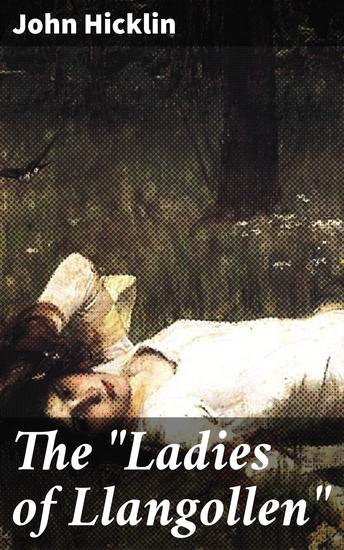
The "Ladies of Llangollen" - Love and Friendship in 18th-Century Wales: A Tale of Unconventional Women - cover

The "Ladies of Llangollen" - Love and Friendship in 18th-Century Wales: A Tale of Unconventional Women

John Hicklin

Verlag: Good Press

  • 0
  • 0
  • 0

Beschreibung

In "The Ladies of Llangollen," John Hicklin delves into the rich tapestry of the lives of Eleanor Butler and Sarah Ponsonby, two remarkable women who defied societal norms in 18th-century Wales. Hicklin's narrative is characterized by a blend of meticulous biographical detail and evocative literary style, capturing the essence of their unconventional companionship. He situates their story within the broader context of Romantic-era ideals and the burgeoning discourse around female autonomy, illuminating how their relationship challenged contemporary gender roles and emphasized emotional intimacy. The text is interspersed with poignant reflections on love, friendship, and the quest for identity. John Hicklin, a noted scholar with a keen interest in the intersections of gender, culture, and history, draws upon extensive research to portray the socio-political constraints faced by Butler and Ponsonby. Inspired by his own advocacy for LGBTQ+ rights and an appreciation for the complexities of human relationships, Hicklin'Äôs exploration of these two pioneering women serves as both a historical account and a commentary on the evolution of societal norms regarding love and partnership. Readers interested in feminist literature, LGBTQ+ history, or the Romantic period will find "The Ladies of Llangollen" an enlightening and engaging read. Hicklin invites us into a world where love transcends boundaries, making this book not only a significant scholarly contribution but also an inspiring narrative that resonates with contemporary discussions on identity and freedom.
Verfügbar seit: 22.08.2023.
Drucklänge: 41 Seiten.

Weitere Bücher, die Sie mögen werden

  • A Taste of Joy and Liberty - A Philosopher Encounters the Gospel of Jesus - cover

    A Taste of Joy and Liberty - A...

    Jeffrey Wattles

    • 0
    • 0
    • 0
    “The magnum opus of one of today's most important Christian philosophers.”  —Stephen Post, PhD, author, Dignity for Deeply Forgetful People and Pure, Unlimited Love “A compelling exploration that brings out the joy and spiritual growth central to the gospel.”—Stephen Finlan, PhD, United Church of Christ pastor; noted biblical scholar “Seekers of all backgrounds—and especially independent thinkers—will find Jesus living on these pages as we’ve never seen him before.”—Angie Thurston, Harvard Fellow in Spirituality and Leadership Discover anew the living Jesus—our world’s greatest teacher—in this riveting work of short, lucid chapters that explore his life and legacy. And learn why Jesus was the supreme example of his own teaching: the gospel of love in the kingdom of God, and the joy of serving in God's universal family. Authored by a retired university professor and gospel evangelist, this unique depiction shows us how to live like Jesus: fresh, alive, original, spontaneous—and as a wellspring of love, mercy, and service. You’ll also discover a Jesus who was a scientist, philosopher, healer, friend, and humorist, a divine son who shows us how to move beyond the present chaos into the dawn of a worldwide spiritual renaissance. Walk with Jesus as he shows the way to a new era of unity among his followers and the path to worldwide cooperation among equals in the family of religions. “A rare work of grace and love that embodies the virtues it seeks to communicate.”—Matthew T. Lee, PhD, Professor of the Social Sciences and Humanities, Baylor University   “This book is saturated with hope. Jesus's promise of joy, love, and freedom is palpable on every page." —Rev. Paul McKenna, golden rule educator; interfaith pioneer
    Zum Buch
  • Fight for North America The: The History of the European Rivalries and Conflicts Before the American Revolution - cover

    Fight for North America The: The...

    Charles River Editors

    • 0
    • 0
    • 0
    Jamestown is remembered today because the settlement did survive through the hardships and go on to serve as the capital of the English colony for much of the 17th century. Likewise, the English would forge a settlement in Massachusetts Bay that also maintained tenuous relations with nearby natives. But while conflicts between settlers and natives remain well known, some of the European conflicts in North America have been overlooked, including England’s competitions with Spain and the Netherlands. When the West India Company, which presided over Dutch trade in the Americas, was created in 1621, a little settlement at the tip of Manhattan began to both grow and falter. When Willem Kieft arrived as director in 1638, it was already a sort of den of iniquity, full of “mischief and perversity,” where residents were given over to smoking and drinking grog and beer. Under Kieft’s reign, more land was acquired mostly through bloody, all-but-exterminating wars with the Native American population, whose numbers also dwindled at the hands of European-borne diseases.  
    	On September 13, 1759, a battle was fought on the Plains of Abraham outside the old city of Quebec that was one of the turning point battles in world history. Thanks to the British victory and the events that followed, Canada went from being a colony of France (New France) to being a colony of Great Britain, which permanently changed Canadian history. In many ways, the outcome of the battle brought about several American attempts to seize Canada during the Revolutionary War and War of 1812, and ultimately it ensured that when Canada became an independent country, it was part of the British Commonwealth with an Anglophone majority and a Francophone minority. Frictions over cultural and political issues between the English Canadians and the Québécois, dating back to the battle, continue to impact the state of affairs in Canada today.  
    Zum Buch
  • Apostasy: Part IV - Eat (Gay Vore Yaoi Bara) - cover

    Apostasy: Part IV - Eat (Gay...

    Kai Aubrey

    • 0
    • 1
    • 0
    They say the monster inhabits the highlands, calling out to unsuspecting male travelers. Its lust is insatiable. Its pull is irresistible. 
    Seduced and pacified, men are dragged into the deepest depths of its body. It’s here that copulation occurs. 
    Wrapped in a sea of tentacles, Kier and Finn succumb to the limitless euphoria pulsing through their veins. They’re being given a gift. 
    They’re being blessed by an ancient being. 
    --- 
    CONTAINS EXPLICIT GAY SEXUAL CONTENT. 
    For more stories, visit www.KaiAubrey.com.
    Zum Buch
  • The Soviet Army's High Commands in War and Peace 1941–1992 - cover

    The Soviet Army's High Commands...

    Richard W. Harrison

    • 0
    • 0
    • 0
    The first full history of the Soviet Army’s High Commands during World War II and the Cold War—“Provides valuable and original research that reveals a great deal about the Soviet Union’s military command structure during World War II, with a few important insights into the almost fifty years that followed” (Journal of Military History).The war on the Eastern Front during 1941–45 was an immense struggle, running from the Barents Sea to the Caucasus Mountains. The vast distances involved forced the Soviet political-military leadership to resort to new organizational expedients in order to control operations along the extended front. These were the high commands of the directions, which were responsible for two or more fronts (army groups) and, along maritime axes, one or more fleets.In all, five high commands were created along the northwestern, western, southwestern, and North Caucasus strategic directions during 1941–42. However, the highly unfavorable strategic situation during the first year of the war, as well as interference in day-to-day operations by Stalin, severely limited the high commands' effectiveness. As a consequence, the high commands were abolished in mid-1942 and replaced by the more flexible system of supreme command representatives at the front. A High Command of Soviet Forces in the Far East was established in 1945 and oversaw the Red Army's highly effective campaign against Japanese forces in Manchuria.The Far Eastern High Command was briefly resurrected in 1947 as a response to the tense situation along the Korean peninsula and the ongoing civil war in China, but was abolished in 1953, soon after Stalin's death. Growing tensions with China brought about the recreation of the Far Eastern High Command in 1979, followed a few years later by the appearance of new high commands in Europe and South Asia. However, these new high commands did not long survive the collapse of the Soviet Union in 1991 and were abolished a year later.The book relies almost exclusively on Soviet and post-communist archival and other sources and is the first unclassified treatment of this subject in any country, East or West.
    Zum Buch
  • We Philogists - cover

    We Philogists

    Friedrich Nietzsche

    • 0
    • 0
    • 0
    “We Philologists” is an early text written by Friedrich Nietzsche around 1874, but it was only published after his death in 1900. The title refers to philology - the study of ancient languages - which was Nietzsche’s academic specialty prior to venturing into philosophy full-time. In this intriguing early paper, Nietzsche describes his fellow philologists’ physical and mental proclivities with the barbed frankness which soon became his signature style. This book is considered by scholars to be a series of drafted notes sketching out the principles of a book rather than a standalone treatise in their own right.
    Zum Buch
  • Scottish Literature - An Introduction - cover

    Scottish Literature - An...

    Alan Riach

    • 0
    • 0
    • 0
    What do we mean by 'Scottish literature'?
    Why does it matter?
    How do we engage with it?
    Bringing infectious enthusiasm and a lifetime's experience to bear on this multi-faceted literary nation, Alan Riach, Professor of Scottish Literature at the University of Glasgow, sets out to guide you through the varied and ever-evolving landscape of Scottish literature.
    A comprehensive and extensive work designed not only for scholars but also for the generally curious, Scottish Literature: an introduction tells the tale of Scotland's many voices across the ages, from Celtic pre-history to modern mass media. Forsaking critical jargon, Riach journeys chronologically through individual works and writers, both the famed and the forgotten, alongside broad overviews of cultural contexts which connect texts to their own times. Expanding the restrictive canon of days gone by, Riach also sets down a new core body of 'Scottish Literature': key writers and works in English, Scots, and Gaelic.
    Ranging across time and genre, Scottish Literature: an introduction invites you to hear Scotland through her own words.
    Zum Buch