Unisciti a noi in un viaggio nel mondo dei libri!
Aggiungi questo libro allo scaffale
Grey
Scrivi un nuovo commento Default profile 50px
Grey
Iscriviti per leggere l'intero libro o leggi le prime pagine gratuitamente!
All characters reduced
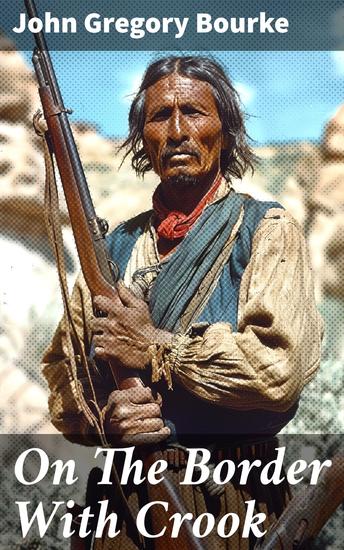
On The Border With Crook - Frontier Chronicles: The American Southwest Through Military Eyes - cover

On The Border With Crook - Frontier Chronicles: The American Southwest Through Military Eyes

John Gregory Bourke

Casa editrice: Good Press

  • 0
  • 0
  • 0

Sinossi

In "On The Border With Crook," John Gregory Bourke offers a compelling and vivid account of the American West during the late 19th century. Bourke, who served as an aide to General George Crook, employs a diary-style narrative that blends personal observation with historical detail, drawing readers into the complexities of military campaigns against Native American tribes. His prose is characterized by a rich, descriptive style that captures the harsh realities of frontier life, while also revealing the intricate dynamics of cultural encounters and conflicts that shaped this turbulent era. This work not only serves as a military chronicle but also as a poignant reflection on the human experience in the face of war and expansionism. An insightful figure in American history, Bourke was not only a soldier but also an accomplished ethnographer, which informs his nuanced portrayal of Indigenous peoples and their perspectives. His firsthand experiences provide a rare lens through which to examine the interactions between the U.S. Army and Native American tribes. Bourke's commitment to documenting these encounters demonstrates his belief in the importance of understanding history from multiple viewpoints. I highly recommend "On The Border With Crook" to scholars and general readers alike who wish to explore the complexities of American expansionism and Indigenous realities. Bourke's vivid storytelling and insightful analysis make this work an indispensable contribution to the historical literature of the American West.
Disponibile da: 15/12/2023.
Lunghezza di stampa: 504 pagine.

Altri libri che potrebbero interessarti

  • The Rosetta Stone - Key to Unlocking Ancient Egyptian Writing - cover

    The Rosetta Stone - Key to...

    Omar Khalil

    • 0
    • 0
    • 0
    The discovery of the Rosetta Stone in 1799 was a momentous event in the history of archaeology and linguistics. The stone, a large slab of granodiorite, was found by a French soldier named Pierre-François Bouchard during Napoleon Bonaparte’s military campaign in Egypt. While working near the town of Rashid (or Rosetta), Bouchard uncovered the stone, which contained an inscription in three different scripts: Ancient Greek, Egyptian hieroglyphs, and Demotic. At the time, Egypt was under French control, and the discovery was initially made by a team of French engineers working on fortifications. 
    The significance of the stone would not be immediately apparent, as the study of hieroglyphs had long been a mystery to scholars. Despite attempts by earlier scholars, no one had yet succeeded in translating the ancient Egyptian script, leaving a vast portion of Egypt’s history locked away. The discovery of the Rosetta Stone, however, offered a potential breakthrough due to its trilingual inscription, which allowed for comparison between the known Greek text and the two unknown Egyptian scripts. 
    The stone’s inscription itself was a royal decree issued in 196 BCE by the Egyptian priests in honor of King Ptolemy V Epiphanes. It celebrated his reign and the various accomplishments he had achieved, including his efforts to maintain peace and the prosperity of Egypt. The decree was written in three scripts to ensure it would be understood by various segments of society—the Greek script for the Greek-speaking rulers and officials, the Demotic script for the common Egyptian people, and the hieroglyphic script for the priests and religious authorities.
    Mostra libro
  • From Where Do Attachment And Detachment Come? - Gstaad 1965 - Small Group Discussion 4 - cover

    From Where Do Attachment And...

    Jiddu Krishnamurti

    • 0
    • 0
    • 0
    From where do attachment and detachment come? - 24 August 1965  
    • What is the relationship of the brain to the totality of the mind? 
    • Fear of not being, fear of isolation, fear of not having pleasure, fear of having 
    no relationship, is the soil from which the stem of contradiction grows. 
    • I want to be free of this stem to see what happens if there is no attachment, no 
    detachment, because I am not afraid. 
    • Is there a peace with no entity saying, ‘I am peaceful’?
    Mostra libro
  • Bradley - cover

    Bradley

    Charles Whiting

    • 0
    • 0
    • 0
    At the age of fifty Bradley was a career officer who had never seen a day of action on the battlefield. Yet, by the end of the war, he had led American soldiers through some of the bloodiest fighting of World War Two—the final defeat of the Germans' Afrika Korps, the invasion of Sicily, and the historic Normandy invasion, before leading the advance across the Rhine. 


    Despite being such an instrumental leader of World War Two he was a modest man, professing only to do the best he could for his calling and his country. 


    How did this quiet and unassuming teacher from West Point rise to become the commander of the Twelfth United States Army Group, which ultimately comprised forty-three divisions and over one million troops, the largest American force ever united under one man's command? And how did he come to be known as 'the G.I.'s General'? 


    Charles Whiting's enthralling overview of Bradley and his career uncovers what he was like as a person, providing insight into his actions and leadership during the course of World War Two, before discussing his post-war career as Chairman of the Joint Chiefs of Staff through the course of the Korean War.
    Mostra libro
  • Colonialism - A Global History - cover

    Colonialism - A Global History

    Lorenzo Veracini

    • 0
    • 0
    • 0
    Colonialism: A Global History interprets colonialism as an unequal relationship characterized by displacement and domination and reveals the ways in which this relationship has been constitutive of global modernity. 


    The volume focuses on colonialism's dynamism, adaptability, and resilience. It appraises a number of successive global colonial 'waves', each constituting a specific form of colonial domination, each different from the previous ones, each affecting different locales at different times, and each characterized by a particular method of exploiting colonized populations and territories. Outlining a succession of distinct colonizing conjunctures, and the ways in which they 'washed over' what is today understood as the 'Global South', shaping and reshaping institutions and prompting diverse responses from colonized communities, Colonialism: A Global History also outlines the contemporary relevance of this unequal relation. Overall, it provides an original definition of colonialism and tells the global history of this mode of domination’s evolution and reach. 


    The broad chronological and geographical scope makes this volume the ideal resource for all students and scholars interested in globalization, colonialism, and empire.
    Mostra libro
  • The Cycling City - Bicycles and Urban America in the 1890s - cover

    The Cycling City - Bicycles and...

    Evan Friss

    • 0
    • 0
    • 0
    Cycling has experienced a renaissance in the United States, as cities around the country promote the bicycle as an alternative means of transportation. In the process, debates about the nature of bicycles—where they belong, how they should be ridden, how cities should or should not accommodate them—have played out in the media, on city streets, and in city halls. Very few people recognize, however, that these questions are more than a century old. 
     
    The Cycling City is a sharp history of the bicycle’s rise and fall in the late nineteenth century. In the 1890s, American cities were home to more cyclists, more cycling infrastructure, more bicycle friendly legislation, and a richer cycling culture than anywhere else in the world. Evan Friss unearths the hidden history of the cycling city, demonstrating that diverse groups of cyclists managed to remap cities with new roads, paths, and laws, challenge social conventions, and even dream up a new urban ideal inspired by the bicycle. When cities were chaotic and filthy, bicycle advocates imagined an improved landscape in which pollution was negligible, transportation was silent and rapid, leisure spaces were democratic, and the divisions between city and country were blurred. Friss argues that when the utopian vision of a cycling city faded by the turn of the century, its death paved the way for today’s car-centric cities—and ended the prospect of a true American cycling city ever being built.
    Mostra libro
  • Capturing News Capturing Democracy - Trump and the Voice of America - cover

    Capturing News Capturing...

    Mel Bunce, Kate Wright, Martin...

    • 0
    • 0
    • 0
    The Voice of America (VOA) is the oldest and largest US government-funded international media organization. In 2020, Donald Trump nominated Michael Pack, a right-wing documentarian and close friend of Steve Bannon, to lead the US Agency for Global Media—the independent federal agency overseeing US-funded international media. During Pack's seven month tenure, more than thirty whistleblowers filed complaints against him, and a judge ruled that he had infringed journalists' constitutional right to freedom of speech. 


    How did such a major international public service media network become intensely politicized by government allies in such a short time, despite having its editorial independence protected by law? 


    Capturing News, Capturing Democracy puts these events in historical and international context—and develops a new analytical framework for understanding government capture and its connection to broader processes of democratic backsliding. Drawing from in-depth interviews with network managers and journalists, and analysis of private correspondence and internal documents, Kate Wright, Martin Scott, and Mel Bunce analyze how political appointees, White House officials, and right-wing media influenced VOA—changing its reporting of the Black Lives Matter movement, and the 2020 presidential election.
    Mostra libro