Unisciti a noi in un viaggio nel mondo dei libri!
Aggiungi questo libro allo scaffale
Grey
Scrivi un nuovo commento Default profile 50px
Grey
Iscriviti per leggere l'intero libro o leggi le prime pagine gratuitamente!
All characters reduced
Canada - cover

Canada

John George Bourinot

Casa editrice: DigiCat

  • 0
  • 0
  • 0

Sinossi

In his profound work, "Canada," John George Bourinot explores the intricate tapestry of Canadian identity, culture, and governance during the late 19th century. With a dispassionate yet engaging literary style, Bourinot navigates political developments, historical events, and social constructs in a rapidly evolving nation. His meticulous attention to detail and vivid descriptions not only illuminate the Canadian experience but also resonate with the broader themes of nationalism and unity that were paramount at the time. Set against the backdrop of Confederation, this book provides a comprehensive understanding of the factors shaping modern Canada while enriching the reader's perception of its historical context. John George Bourinot, a prominent public servant and historian, was deeply invested in the political landscape of Canada. His extensive involvement in government and his passion for historical scholarship uniquely positioned him to write this seminal work. Bourinot's first-hand experiences, coupled with his scholarly pursuits, allowed him to present a nuanced view of Canada's development, reflecting both the aspirations and challenges faced by its citizens. "Canada" is an essential read for anyone interested in understanding the foundations of Canadian identity and governance. Bourinot's insightful analysis and eloquent prose not only captivate the reader but also provoke critical thought about the nation's trajectory. This book serves as a vital resource for historians, students, and anyone seeking to appreciate the depth of Canada's rich heritage.
Disponibile da: 31/07/2022.
Lunghezza di stampa: 331 pagine.

Altri libri che potrebbero interessarti

  • Polygamy - A Very Short Introduction - cover

    Polygamy - A Very Short...

    Sarah M.S. Pearsall

    • 0
    • 0
    • 0
    Marriage has not always meant just one man and one woman. For much of human history, the most common alternative was polygamy: marriage involving more than one spouse. However, polygamy has come to symbolize a problematic, even "barbaric," form of marriage that is often labeled as "backwards," embodying the oppression of women by men. 


    In Polygamy: A Very Short Introduction, Sarah M. S. Pearsall explores what plural marriages reveal about the inner workings of marriage and describes the controversies surrounding it. The book emphasizes the diversity of historical polygamist societies, from the Shi'ite Muslims and Wendat men who practiced short-term marriages to the Mixteca, Maori, Inca, Algonquin, and Marta indigenous people of North America and the Pacific Islands. Pearsall also explains the divides within Christianity that led to Joseph Smith's establishment of the Church of Jesus Christ of Latter-day Saints (Mormonism). 


    Polygamy: A Very Short Introduction looks at how polygamous domestic and sexual relationships have influenced larger dynamics of power, gender, rank, race, and religion in societies all over the world, while also attempting to untangle the paradox of female constraint and liberty for women who advocated for polygamy, arguing that plural marriage offered security and stability rather than restraint for women.
    Mostra libro
  • How to Travel - An Ancient Guide for the Modern Tourist - cover

    How to Travel - An Ancient Guide...

    Herodotus, M. D. Usher

    • 0
    • 0
    • 0
    A transporting anthology of ancient Greek and Roman travel writings that capture the thrill of exploration and discovery—from Europe to the Holy Land and Egypt to IndiaAt long last, a travel guide to the ancient world for the modern tourist—written by the ancients themselves. How to Travel gathers classic texts from Greek and Roman writers to explore what today’s readers can learn from ancient encounters with unfamiliar peoples, places, and customs.The Greek historian Herodotus (ca. 484–425 BCE) is one of the most famous travelers of antiquity. His Histories, which chronicle his and others’ encounters with foreign peoples and places, have fascinated readers for millennia, and have much to teach about the secrets of good travel. In How to Travel, Herodotus and Tacitus take us on tours of Central Asia, Egypt, and Germania, while pilgrims like Pausanias and the Christian nun Egeria guide us through Greece and the Holy Land. Readers are whisked away to India to experience the ways of forest-dwelling sages and to the far reaches of Africa. And as if Earth weren’t enough, the satirist Lucian takes us to the Moon. But this whirlwind tour of antiquity is more than a pleasure cruise. Seneca cautions travelers that, go as far as we may, we can never escape ourselves. Gratitude, Egeria says, is the traveler’s proper response for the privilege. And Homer reminds us that, ultimately, there’s no place like home.Featuring vivid new translations, an inviting introduction, and the original Greek and Latin texts on facing pages, How to Travel captures the thrill of exploration and discovery—and how new experiences, fresh vistas, and foreign cultures can change the traveler.
    Mostra libro
  • The Middle Kingdom of Egypt - A Period of Restoration and Growth - cover

    The Middle Kingdom of Egypt - A...

    Omar Khalil

    • 0
    • 0
    • 0
    The Middle Kingdom of Egypt marked a transformative period following the turmoil of the First Intermediate Period. This era, spanning roughly from 2050 to 1710 BCE, saw the reunification of Egypt under the leadership of Mentuhotep II, the pharaoh who established stability after years of political fragmentation. As the nation emerged from chaos, the Middle Kingdom laid the foundations for a revitalized state, fostering political, cultural, and economic growth. 
    The collapse of the Old Kingdom had left Egypt divided, with rival factions vying for control. This power vacuum led to the rise of regional rulers known as nomarchs, whose increasing autonomy weakened central authority. The struggle for dominance between these local leaders marked the First Intermediate Period, characterized by instability and fragmented governance. However, the emergence of Mentuhotep II, a ruler from Thebes, marked a turning point. Determined to restore order, he led a series of military campaigns to reunite Upper and Lower Egypt. His victory over the Herakleopolitan kings signified the dawn of a new era. 
    Reunification under Mentuhotep II not only consolidated political power but also reestablished the role of the pharaoh as a central figure of authority. As the unifier of Egypt, Mentuhotep II portrayed himself as the restorer of ma'at—harmony and justice. His reign marked the beginning of the 11th Dynasty and set a precedent for strong, centralized rule. The restoration of internal stability allowed for significant cultural and artistic developments, reflecting a renewed sense of national identity.
    Mostra libro
  • Passion for Compasses - Medieval Master Builders and their Cathedral Building Plans - cover

    Passion for Compasses - Medieval...

    Klug Sonja Ulrike

    • 0
    • 0
    • 0
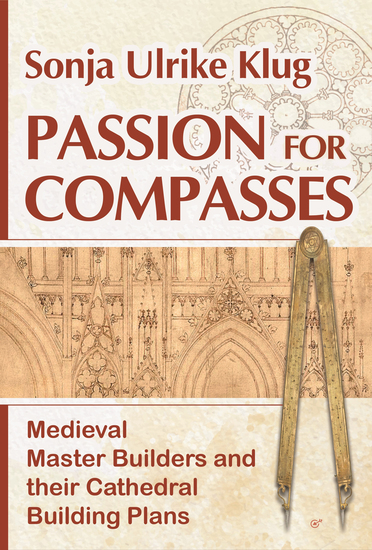
    How medieval architects drew cathedral building plans
    The architectural history of the Middle Ages is full of surprises. It is difficult for us to imagine today that relatively few construction plans have been found for the impressive churches and cathedrals of the Romanesque and Gothic periods. Where did most of the drawings go? Have the plans been destroyed in Europe or lost over time? Or were they not made at all? 
    Although hardly any architectural drawings exist, there were numerous compasses. What were they used for and how? Was it possible to design complex buildings such as churches and cathedrals without blueprints? 
    The author takes her readers on an exciting cultural and historical journey through time. 
    She looks at the spread of papyrus, parchment and paper and traces the ability to write and calculate in Europe. She also looks at the construction process in historical illustrations and draws comparisons with Arabic architecture. Last but not least, she shows what types of compasses existed and how the drawing skills of master builders developed up to the Renaissance. 
    The insights into the history of architecture lead to surprising findings: The architects of the Middle Ages thought and planned very differently than we imagine today.
    Mostra libro
  • The Dialogue of the Savior - Mystical Conversations on Divine Truth and Enlightenment - cover

    The Dialogue of the Savior -...

    2nd Century CE) Anonymous ...

    • 0
    • 0
    • 0
    What does it mean to seek truth? How does divine wisdom guide the soul to enlightenment? 
    The Dialogue of the Savior is one of the most profound and symbolic texts of the Gnostic tradition.  
    This ancient work presents a spiritual conversation between the Savior and his disciples, exploring the mysteries of the cosmos, the soul’s journey, and the path to divine truth and liberation. 
    Now available in a clear, modern translation, this edition brings the poetic beauty and deep insight of this sacred dialogue to today’s listener. 
    What you'll discover inside: 
    •	Conversations with the Divine – Teachings from the Savior on truth, wisdom, and spiritual enlightenment 
    •	The Journey of the Soul – The soul’s ascent from the material world to the divine light 
    •	Spiritual Self-Discovery – Gnostic insights on awakening to one’s true nature and inner freedom 
    •	A Window into Gnostic Mysticism – Explore the unique spiritual vision of early Christian Gnosticism 
    Whether you’re a seeker of ancient wisdom, a student of early Christianity, or someone exploring the deeper meaning of life, The Dialogue of the Savior offers timeless guidance and inspiration. 
    Start your journey today—and uncover the transformative wisdom of this mystical conversation.
    Mostra libro
  • Recent History - Understanding Current Events and Modern Developments (18 Titles) - cover

    Recent History - Understanding...

    Fredrich Hazelton

    • 0
    • 0
    • 0
    This book contains these 18 titles: 
    Brexit - The United Kingdom’s Historic Exit from the European Union 
    The 2023 Inflation Surge - Economic Impacts, Policy Responses, and the Cost of Living 
    The 2024 Israeli-Palestinian Conflict - Escalations and Peace Efforts in a Longstanding Struggle 
    The Arab Spring - Escalations and Peace Efforts in a Longstanding Struggle 
    The Collapse of the Soviet Union - How the Superpower Disintegrated and the New World Order Emerged 
    The Dakota Access Pipeline Protests - Indigenous Rights and Environmental Concerns in Modern America 
    The Expansion of the European Union - New Member States, Challenges, and the Future of European Integration 
    The Fall of the Berlin Wall - The End of the Cold War and the Reunification of Germany 
    The Hong Kong Protests - The Fight for Democracy and Autonomy in a Changing China 
    The Iran Nuclear Deal - Negotiations, Sanctions, and the Quest for Regional Stability 
    The Metoo Movement - Fighting Sexual Harassment and Empowering Women Worldwide 
    The Refugee Crisis - Displacement, Migration, and the Humanitarian Response 
    The Rise of China as a Global Power - Economic Growth, Trade Wars, and the Shift in Global Influence 
    The Rise of Isis - The Formation and Impact of the Islamic State in the 21st Century 
    The Rise of Remote Work - How the Pandemic Shifted Work Culture and Its Long-Term Effects 
    The Rise of Social Media - How Digital Platforms Transformed Communication and Society 
    The Russian Annexation of Crimea - The 2014 Crisis and Its Geopolitical Consequences 
    The Syrian Civil War - Conflict, Humanitarian Crisis, and the Struggle for Power
    Mostra libro