Unisciti a noi in un viaggio nel mondo dei libri!
Aggiungi questo libro allo scaffale
Grey
Scrivi un nuovo commento Default profile 50px
Grey
Iscriviti per leggere l'intero libro o leggi le prime pagine gratuitamente!
All characters reduced
Manhattan Transfer - cover

Manhattan Transfer

John Dos Passos

Casa editrice: Good Press

  • 0
  • 0
  • 0

Sinossi

John Dos Passos's 'Manhattan Transfer' presents a vivid, kaleidoscopic portrayal of early 20th-century New York City, capturing its frenetic energy and diverse inhabitants. Utilizing a modernist narrative style that intertwines stream-of-consciousness techniques with cinematic montage, Dos Passos masterfully evokes the complex socio-political climate of the time. Through a series of interconnected stories and characters, ranging from ambitious immigrants to disillusioned artists, the novel examines themes of urban alienation, the American Dream, and the relentless pace of modern life, positioning itself within the literary canon as a precursor to later works of American realism and social critique. John Dos Passos, an American novelist and artist, was profoundly influenced by his experiences in a rapidly changing society, particularly during his time serving in World War I and witnessing the aftermath of the war. His keen social awareness and interest in radical politics are reflected in 'Manhattan Transfer,' which critiques capitalism and celebrates the diversity of the American metropolis. Dos Passos's early exposure to the contrasting lifestyles of wealth and poverty in New York City informed the vivid characterization and thematic depth found in this seminal work. 'Manhattan Transfer' remains a vital read for those seeking to understand the intricate layers of urban identity and American history. Its innovative structure and compelling narratives invite readers to reflect on their own experiences of contemporary society while resonating with the universal struggle for belonging in an ever-changing world.
Disponibile da: 02/03/2025.
Lunghezza di stampa: 110 pagine.

Altri libri che potrebbero interessarti

  • The Possessed - cover

    The Possessed

    Arthur C. Clarke

    • 0
    • 0
    • 0
    "The Possessed" is a science fiction short story by British writer Arthur C. Clarke, first published in 1953.An alien race is forced to leave their planet in search of a new home. The alien explorers do not travel in a ship but, interestingly enough, they travel as a swarm through space. When they arrive on our planet, they divide into two swarms, one pursuing a search in outer space for another suitable planet while the swarm remaining here searches for intelligent life. This of course was eons ago. They eventually find what they believe is a suitable species, with an interesting outcome.
    Mostra libro
  • White Fang - cover

    White Fang

    Jack London

    • 0
    • 0
    • 0
    It was the she-wolf who had first caught the sound of men's voices and the whining of the sled-dogs; and it was the she-wolf who was first to spring away from the cornered man in his circle of dying flame. The pack had been loath to forego the kill it had hunted down, and it lingered for several minutes, making sure of the sounds, and then it, too, sprang away on the trail made by the she-wolf. Running at the forefront of the pack was a large grey wolf—one of its several leaders.    It was he who directed the pack's course on the heels of the she-wolf. It was he who snarled warningly at the younger members of the pack or slashed at them with his fangs when they ambitiously tried to pass him. And it was he who increased the pace when he sighted the she-wolf, now trotting slowly across the snow. She dropped in alongside by him, as though it were her appointed position, and took the pace of the pack. He did not snarl at her, nor show his teeth, when any leap of hers chanced to put her in advance of him.    On the contrary, he seemed kindly disposed toward her—too kindly to suit her, for he was prone to run near to her, and when he ran too near it was she who snarled and showed her teeth. Nor was she above slashing his shoulder sharply on occasion. At such times he betrayed no anger. He merely sprang to the side and ran stiffly ahead for several awkward leaps, in carriage and conduct resembling an abashed country swain. This was his one trouble in the running of the pack; but she had other troubles.    On her other side ran a gaunt old wolf, grizzled and marked with the scars of many battles. He ran always on her right side. The fact that he had but one eye, and that the left eye, might account for this. He, also, was addicted to crowding her, to veering toward her till his scarred muzzle touched her body, or shoulder, or neck. As with the running mate on the left, she repelled these attentions with her teeth; but when both bestowed their attentions at the same time she was roughly jostled, being compelled, with quick snaps to either side, to drive both lovers away and at the same time to maintain her forward leap with the pack and see the way of her feet before her.    At such times her running mates flashed their teeth and growled threateningly across at each other. They might have fought, but even wooing and its rivalry waited upon the more pressing hunger-need of the pack. After each repulse, when the old wolf sheered abruptly away from the sharp-toothed object of his desire, he shouldered against a young three-year-old that ran on his blind right side. This young wolf had attained his full size; and, considering the weak and famished condition of the pack, he possessed more than the average vigour and spirit. Nevertheless, he ran with his head even with the shoulder of his one-eyed elder. When he ventured to run abreast of the older wolf (which was seldom), a snarl and a snap sent him back even with the shoulder again.    Sometimes, however, he dropped cautiously and slowly behind and edged in between the old leader and the she-wolf. This was doubly resented, even triply resented. When she snarled her displeasure, the old leader would whirl on the three-year-old. Sometimes she whirled with him. And sometimes the young leader on the left whirled, too. At such times, confronted by three sets of savage teeth, the young wolf stopped precipitately, throwing himself back on his haunches, with fore-legs stiff, mouth menacing, and mane bristling. This confusion in the front of the moving pack always caused confusion in the rear. The wolves behind collided with the young wolf and expressed their displeasure by administering sharp nips on his hind-legs and flanks. He was laying up trouble for himself, for lack of food and short tempers went together; but with the boundless faith of youth he persisted in repeating the manoeuvre every little while, though it never succeeded in gaining anything for him but discomfiture.
    Mostra libro

  • As Good as a Lord - cover

    As Good as a Lord

    P. O. Dixon

    • 0
    • 0
    • 0
    Elizabeth had intended to tell no one about Mr. Darcy's proposal. At length, she confided in her dearest sister, Jane. It was meant to be their secret, but secrets have a way of getting found out. 
    What happens when Mrs. Bennet learns that her headstrong daughter has refused the hand of a second respectable man in less than six months? Darcy is determined to put his disastrous proposal to Miss Elizabeth Bennet behind him by filling the empty space in his life that can only be occupied by a wife. A chance meeting with Elizabeth at Pemberley gives him pause. Elizabeth may be the only woman in his heart, but she is not the only woman in his life. Will Darcy adhere to his original plan to find another, or will he follow his heart?
    Mostra libro
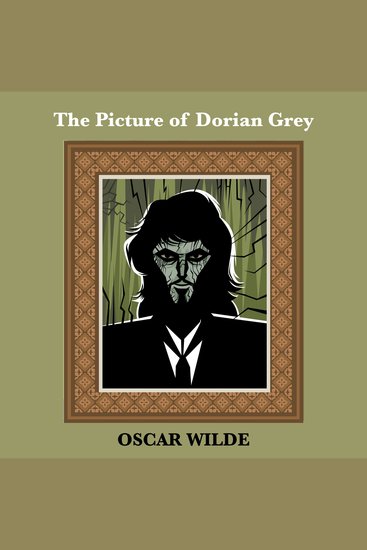
  • The Picture OF Dorian Grey - cover

    The Picture OF Dorian Grey

    Oscar Wilde

    • 0
    • 0
    • 0
    "The Picture of Dorian Gray" is a philosophical novel written by Oscar Wilde and first published as a serial in 1890. The story revolves around a young man named Dorian Gray who has his portrait painted by the talented Basil Hallward. Influenced by the hedonistic Lord Henry Wotton, Dorian wishes that he could always remain as young and beautiful as he appears in the portrait while the painting ages and bears the marks of his sins instead. As time passes, Dorian indulges in every form of vice and decadence, but his appearance remains unchanged, while his portrait becomes progressively grotesque. The novel delves into themes of aestheticism, moral duplicity, and the nature of beauty.
    Mostra libro
  • Grim Tales - cover

    Grim Tales

    E. Nesbit

    • 0
    • 0
    • 0
    "Grim Tales" by E. Nesbit is a collection of short stories written in the late 19th century. The book explores various themes related to the supernatural, blending elements of romance, mystery, and the macabre, often through the lens of ordinary life interspersed with extraordinary occurrences. Each tale features character-driven narratives, introducing readers to personal dilemmas and eerie encounters set against a Victorian backdrop. 
    The collection opens with “The Ebony Frame,” where the protagonist inherits a house and a legacy following the death of his Aunt Dorcas. As he settles into his new life, he discovers an enchanting yet unsettling portrait of a woman in a beautiful ebony frame that he cannot resist. The story unfolds as he becomes captivated by the painting and the mysterious connection it holds, leading to an unexpected and haunting encounter that blurs the line between reality and the supernatural. This introduction sets the tone for a collection that promises intriguing tales filled with emotion, mystery, and a touch of the uncanny.
    Mostra libro
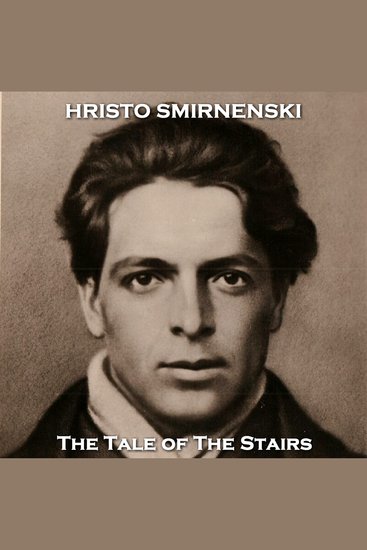
  • The Tale of The Stairs - From their pens to your ears genius in every story - cover

    The Tale of The Stairs - From...

    Hristo Smirnenski

    • 0
    • 0
    • 0
    The bookshelves of European literature are incredible collections that have gathered together centuries of very talented authors.  From this continent their fame spread and whilst among their number many are now forgotten or neglected their talents endure.  Among them is Hristo Smirnenski.
    Mostra libro