Unisciti a noi in un viaggio nel mondo dei libri!
Aggiungi questo libro allo scaffale
Grey
Scrivi un nuovo commento Default profile 50px
Grey
Iscriviti per leggere l'intero libro o leggi le prime pagine gratuitamente!
All characters reduced
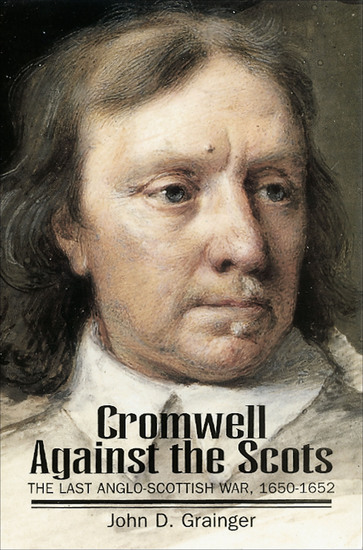
Cromwell Against the Scots - Last Anglo-Scottish War 1650-52 - cover

Cromwell Against the Scots - Last Anglo-Scottish War 1650-52

John D. Grainger

Casa editrice: John Donald

  • 0
  • 0
  • 0

Sinossi

After an introduction establishing Cromwell's war against the Scots from July 1650 to May 1652, this book discusses Charles' landing and Fairfax's resignation as commander-in-chief of the English Republican Army, both events occurred on the same day. It then addresses the causes of the war, Charles II's landing in Northern Scotland from the Continent. The story continues chronologically, from Cromwell's invasion of Scotland, through the Battle of Dunbar, and the slow establishment of the king's power over the Scottish government. The end came with the fall of the last of the Scottish castles, Dunnottar, to English conquest. The Scots enjoyed a distinct military recovery after the Dunbar defeat, but their aims and those of the king were always at cross purposes: the king was intent on the invasion of England, the Scots on resistance to English conquest. Finally, Cromwell's manoeuvres in the summer of 1651, and the English victory at Inverkeithing, allowed the king to invade England. This ended in another Scots defeat at Worcester. The removal of the Scots Army to England meanwhile allowed the English under Monck to complete their conquest of Scotland. Throughout, the political dimension, particularly in Scotland, is kept in view. At the end, the author comments on the relevance of these events to the present Scottish situation.
Disponibile da: 07/09/2022.
Lunghezza di stampa: 220 pagine.

Altri libri che potrebbero interessarti

  • Defeating Jihadist Terrorism - cover

    Defeating Jihadist Terrorism

    Jacques Baud

    • 0
    • 0
    • 0
    Since the early 1990s, terrorism and its victims have increased exponentially. Without any action strategy or exit solution, through political and military incompetence, stupidity and ideological blindness, Western interventions have only contributed to its development. We eliminate terrorists, but not terrorism. The solution lies in a more holistic, more subtle, more intelligent and less dogmatic approach. Terrorism is not an ideology. It is a method that takes many forms, including jihadist terrorism. Each form of terrorism is fought with a specific strategy. Based on the original texts of jihadist strategists as well as on their own analyses of attacks in France, Belgium, Great Britain and the United States, Jacques Baud explains the reasons for Western failure. He uses the analyses of Western intelligence services to decipher the mechanisms of jihadist terrorism, in order to extract strategies of action likely to avoid it or to fight it effectively and durably. The author is a former head of Swiss strategic intelligence and former head of UN peace operations doctrine. In the course of his missions in Africa and Central Asia, the author has had several encounters with jihadists in the field. 
    This audiobook is read by a synthesized voice.
    Mostra libro
  • Khalsa Raj De Usraia - Shere Punjab - cover

    Khalsa Raj De Usraia - Shere Punjab

    Baba Prem Singh Hoti Mardaan

    • 0
    • 0
    • 0
    Khalsa Raj De Usraia by Baba Prem Singh Hoti Mardan 
    Khalsa Raj De Usraia is a book written by the prominent Sikh historian Baba Prem Singh Hoti Mardan. This book chronicles the lives of great warriors, philanthropists, and selfless supporters who dedicated their lives to the establishment and growth of the Khalsa Raj. 
    Khalsa Raj De Usraia can be ordered worldwide through Sikh political books.
    Mostra libro
  • 15+ Political Science Classics Collection - The Art of War Tao Te Ching The Republic Meditations The Prince Utopia Utilitarianism Anarchism and others - cover

    15+ Political Science Classics...

    Sun Tzu, Lao Tzu, Plato, Marcus...

    • 0
    • 0
    • 0
    What is Political Science?
    Within human society, it is customary to distinguish between the following spheres: economic, political, social, and spiritual.
    The political sphere is important in that it involves and determines the interactions of different political powers.  This understanding lies at the foundation of any political analysis of public life.
    Politics as a specific sector within human society is as old as it is modern. Many famous statesmen and scientists are credited as the authors of laws and political systems. 
    In today's global community, facing growing pressures of political extremism and radicalism, knowledge of basic political science principles should help students develop a democratic ethos and foster qualities, such as political tolerance, compromise, and cooperation, while learning to express and defend their interests in a civilized manner.
    The foundation of political science lies in the accumulated knowledge of mankind.
    Each included piece o this collection is required reading at some of the best universities on the planet including: Harvard, Princeton, Yale, and Columbia Universities, the Massachusetts Institute of Technology (MIT), and the Universities of Oxford and Cambridge, among others.
     
    Sun Tzu: The Art of War
    Lao Tzu: Tao Te Ching
    Plato: The Republic
    Marcus Aurelius: Meditations
    Niccolo Machiavelli: The Prince
    Thomas More: Utopia
    Tommaso Campanella: The City of the Sun
    Francis Bacon: The New Atlantis
    Thomas Paine: Common Sense
    John Stuart Mill: Utilitarianism
    Karl Marx and Friedrich Engels: The Communist Manifesto
    Vladimir Lenin: The State and Revolution
    Rosa Luxemburg: Reform or Revolution
    Peter Kropotkin: The Conquest of Bread
    Emma Goldman: Anarchism: What It Really Stands For
    Leon Trotsky: Fascism: What It Is and How to Fight It
    Mostra libro
  • Edo Period - Tokugawa Rule Isolation and the Samurai Code - cover

    Edo Period - Tokugawa Rule...

    Rolf Hedger

    • 0
    • 0
    • 0
    The Edo period in Japan began with the dramatic rise of Tokugawa Ieyasu and the establishment of the Tokugawa Shogunate, which would bring over two centuries of relative peace and stability to the country. This transformation was not immediate but was set into motion by the pivotal Battle of Sekigahara in 1600. Ieyasu, a powerful daimyo and skilled strategist, emerged victorious in this decisive conflict, defeating rival factions and securing his dominance over the fractured Japanese landscape. This battle marked the end of the Warring States period, a time of nearly constant civil war, and laid the foundation for a new era of centralized feudal rule. 
    In 1603, Ieyasu was granted the title of shogun by the emperor, officially establishing the Tokugawa Shogunate. Although the emperor remained a symbolic figurehead, true political power rested with the shogun. Ieyasu’s government was based in Edo, a small fishing village that quickly developed into a sprawling political and economic center—modern-day Tokyo. From here, the Tokugawa clan implemented a system of governance that emphasized strict control, social hierarchy, and regional oversight. The shogunate devised a complex administrative structure that allowed it to maintain authority over hundreds of semi-autonomous domains ruled by daimyo, while ensuring loyalty through a combination of military strength, economic policy, and social regulation. 
    One of the key strategies used by Tokugawa Ieyasu to solidify his power was the creation of the han system. Under this arrangement, each daimyo governed a specific territory but was subject to strict oversight from the shogunate. The policy of sankin-kotai, or alternate attendance, required daimyo to spend alternating years in Edo, effectively draining their resources and keeping them under close surveillance. Their families were often kept in Edo as virtual hostages, ensuring obedience and discouraging rebellion.
    Mostra libro
  • White Lies - Critical Race Theory and Racism as a Problem of not Being White Rejecting Responsibility for the State of Race Relations and Seldom Admitting White Privilege - cover

    White Lies - Critical Race...

    Jim Colajuta

    • 0
    • 0
    • 0
    It's past time for us to break down obstacles to success and education for people of color, speak out against global social injustices, and stop hiding behind the cliché, "I'm white, I can't speak out on the race." In our thoughts, acts, and words, we must be deliberately anti-racist. Someone who claims to be anti-racist may not laugh at a racist joke or remain silent when they hear a racist remark, but this does not make them anti-racist. One of the numerous issues with racism is that it manifests itself in various ways. It has institutional and structural roots, is based on colonial history, and has been passed down through the generations like an unsightly relic. It's outspoken, red-faced, and enraged, willing to assault you on the street. In the absence of representation, in the 'banter' and 'harmless' comments, in the twitching fingers of white people who can't stop themselves from stroking Black people's hair. Racism is multi-faceted and nuanced, and many people aren't even aware that they have racist attitudes. In this book, you will read about critical race theory and racism as a problem of not being white, rejecting responsibility, and seldom admitting white privilege
    Mostra libro
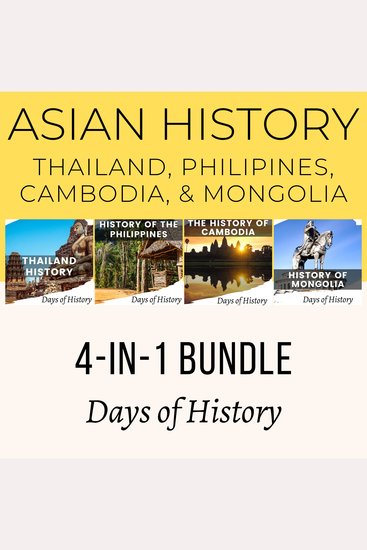
  • Asian History 4-in-1 Bundle - Thailand Philipines Cambodia & Mongolia - cover

    Asian History 4-in-1 Bundle -...

    Days of History

    • 0
    • 0
    • 0
    Introducing the Asian History 4-in-1 Bundle: Thailand, Philippines, Cambodia, & Mongolia. 
    Unlock the rich tapestry of Asian history with this captivating 4-in-1 bundle. Embark on an enlightening journey through the land of these countries. Immerse yourself in the captivating stories, vibrant cultures, and ancient civilizations that have shaped these diverse nations. 
    Discover Thailand: Uncover the secrets of the Land of Smiles as you delve into its fascinating past. From the legendary Siamese kingdom to the modern era, explore the intricate details of Thai history, its royal heritage, and the dynamic cultural traditions that make Thailand truly unique. 
    Unveil the Philippines: Dive into the archipelago of the Philippines and witness the convergence of indigenous cultures, colonial influences, and the struggle for independence. Experience the colorful mosaic of Filipino history, from pre-colonial societies to the Spanish occupation and the birth of a nation. 
    Unearth Cambodia: Step into the mystical world of Cambodia, where ancient temples rise from lush jungles, and the echoes of the mighty Khmer Empire still resonate. Unravel the enigmatic tales of Angkor Wat, explore the complex dynamics of Khmer society, and witness the enduring spirit of resilience that defines Cambodia's past and present. 
    Unleash Mongolia: Ride alongside the fearless Mongol warriors and traverse the vast steppes of Mongolia, a land of nomadic tribes and untamed wilderness. Uncover the legendary exploits of Genghis Khan, grasp the nomadic way of life, and delve into the cultural heritage that has shaped this extraordinary land. 
    Explore multiple facets of Asian history with this comprehensive bundle! 
    This bundle will transport you to the realms of the past of these remarkable nations. 
    Get your Asian History 4-in-1 Bundle today!
    Mostra libro