¡Acompáñanos a viajar por el mundo de los libros!
Añadir este libro a la estantería
Grey
Escribe un nuevo comentario Default profile 50px
Grey
Suscríbete para leer el libro completo o lee las primeras páginas gratis.
All characters reduced
Empire Eternal - In Defense of Imperialism - cover

Empire Eternal - In Defense of Imperialism

Jenkins Sinclair

Editorial: Antelope Hill Publishing LLC

  • 0
  • 0
  • 0

Sinopsis

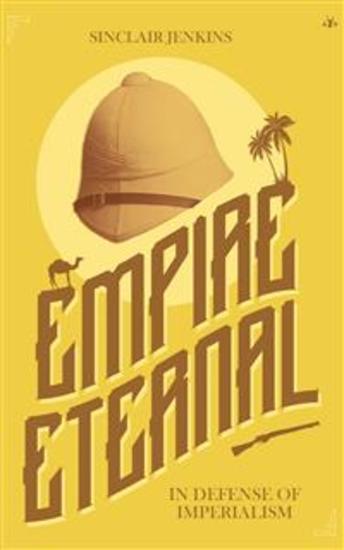
“The men who founded these great civilizations are long gone, but their blood still lives within us. We are called to conquer. Our age, like every other age, is a war of all against all for the domination of space.”
 
Throughout the 19th and through the early 20th centuries, the European Great Powers established direct control over the majority of the planet, and suzerainty over the rest. Despite the crumbling of those empires under the hammer blows of two world wars and the machinations of the United States and the Soviet Union, the feats by which they were established and the titanic efforts of the brave few that fought to preserve them still reverberate in history. Brave warriors conquered foreign lands, planted their flags, and tried to grow new cultures that mirrored their own.
 
Sinclair Jenkins –writer, thinker, and dissident – lays out a resolute defense of, and advocacy for, that force of will which made the age of European Imperialism possible. From the conquering of the American West, to the bloody Rif War, to the heroic defenses of Katanga and Rhodesia, Empire Eternal: In Defense of Imperialism is a tour de force of the various chapters of European Imperialism.
 
It is said that men did not love Rome because it is great – Rome was great because men loved her. These pages make it clear that likewise the European empires were not great because of some kind of overwhelming material superiority, but because of the eternal flame that pushed men to sacrifice for them – a flame that can never be extinguished.
Disponible desde: 15/07/2022.

Otros libros que te pueden interesar

  • Echolocation - cover

    Echolocation

    Sally Bliumis-Dunn

    • 0
    • 0
    • 0
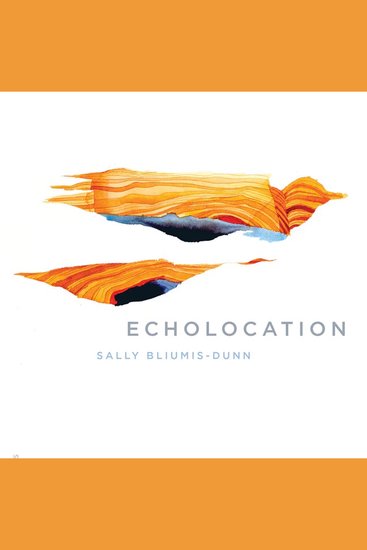
    As a series, the poems in Echolocation swing back and forth from the natural world keenly observed--rain, birds, sunflowers, even a clam-- to the contortions of the human heart, mostly caused by hurt and loss. And isn't that where the best poetry resides, between the thing and the emotion, the swan and the grief? 
    --BILLY COLLINS 
    Echolocation is a collection driven by image and figurative language-- often the simile--and Bliumis-Dunn has both power of observation and imagination which she uses to great, lovely, terrifying and always compelling effect in these vivid, near- and far-looking poems. 
    --MARTHA RHODES 
    Sally Bluimis-Dunn's spare and stunning lyrics of grief and loss restore us to the clarity, and the clear finality, of our deepest emotions. They are grave and formal while being at the same time almost unbearably human and intimate. 
    --VIJAY SESHADRI 
    Sally Bliumis-Dunn leaves the reader of Echolocation in deceptively complex verbal landscapes in which both literal and figurative language play off each other with spare yet lapidary results in poems that focus on such everyday subjects as family, animals, loss, the seasons, menopause, and disaster with a compassionate, distilling eye. The voice that emanates from these poems is quiet but deeply resonant with generous stirrings beneath. She writes with what John Keats has called "disinterestedness"--a clear-headed objectivity that combines lucid narrative with lyrical charge. 
    --CHARD DENIORD 
    *Cover design by Wendy Letven
    Ver libro
  • The Art of Dealing with Toxic People - How to deal with toxic people detoxify any environment and reclaim your life - cover

    The Art of Dealing with Toxic...

    Alexis Fenton

    • 0
    • 0
    • 0
    Do you wish you could navigate life without constantly feeling like you’re being held back, or pushed down, by the weight of toxicity? 
    Do you feel like something is wrong in life, but can’t figure out what it is or how to find it? 
    If you feel this way, you’re very likely to be suffering from the negative impact of toxicity. A toxic relationship can be hard to escape, hard to pinpoint and hard to prevent from occurring again in the future. Although you might not have the answers right now, you can sleep easy knowing you’re about to connect with a proven approach to detoxifying your life. 
    With the unique insights on offer in The Art of Dealing with Toxic People, you’ll learn how to discover your worth in a way that will stay with you for the rest of your life. 
    Not only will you discover the telltale warning signs of a toxic relationship, you’ll learn how to put in place boundaries that safeguard your health and wellbeing. 
    Here’s what you’ll find inside The Art of Dealing with Toxic People:How to spot the signs of toxicity and the triggers that bring it to the surfaceUnderstand why you may never have suspected you’re in a toxic relationshipSee the motivations of toxic partners and what they get out of it allDiscover how friendships and familial relationships can quickly turn toxicDiscuss the consequences of longterm toxicity when you try and push it to one sideLearn why trying to live with toxicity is never an option that will make you happyHow to build boundaries that protect your health and wellbeing the right wayThe art of being kind to yourself so you don’t end up blaming the victimFind out how to take action in the workplace to protect yourself from a toxic bossAnd dedicated chapters on partners, friends, family, work and boundary setting
    Ver libro
  • A Star On The Other Side - A Memoir of a Lost Hmong Refugee Child - cover

    A Star On The Other Side - A...

    Toua Lee

    • 0
    • 0
    • 0
    Amidst the turmoil of the Secret War in Laos, Toua, a young Hmong boy of just ten years finds himself torn from the embrace of his family, catapulted into a world far beyond the innocence of childhood. This memoir unfolds the harrowing and inspirational journey of resilience and survival against the backdrop of a conflict that most weren’t aware of, where the Hmong people stood alongside Americans in the shadows of the Vietnam War. 
    Hidden within the unforgiving jungle's embrace, the boy finds solace and an unexpected sense of belonging among the Hmong Freedom Fighters. Together, they navigate the perilous terrain of warfare, where each day brings with it the heavy burden of survival and the haunting question of morality in the face of relentless danger. Despite the camaraderie and purpose he finds, the boy is plagued by an unyielding yearning for his family and a sense of displacement, his soul marred by the trials of war and the difficult tasks demanded of him. 
    At his lowest, contemplating the escape of death over the pain of existence, a glimmer of unwavering hope and the dream of family reunion guides him through the darkness. The North Star, known as the Bright Star to the Hmong, a beacon amidst the chaos, becomes his guide, steering him through his treacherous journey towards refuge, and ultimately, to the shores of America. 
    This memoir is more than a tale of survival; it's a testament to the indomitable spirit of a young boy thrust into the maelstrom of war. It's a story of the unbreakable bonds of family, the transformative power of hope, and the relentless resilience of the human spirit. Through the eyes of a child, we witness the cost of freedom, the price of survival, and the enduring strength of the human heart.
    Ver libro
  • Paddleways of Mississippi - Rivers and People of the Magnolia State - cover

    Paddleways of Mississippi -...

    Ernest Herndon, Patrick Parker

    • 0
    • 0
    • 0
    Mississippi rivers and creeks have shaped every aspect of the state's geology, ecology, economy, settlement, and politics. Mississippi's paddleways—its rivers, rills, creeks, and streams—are its arteries, its lifeblood, and the connective tissues that tie its stories and histories together and flood them with a sense of place and impel them along the current of time. The rivers provide structure for the telling of stories. In Paddleways of Mississippi: Rivers and People of the Magnolia State, listeners will discover flowing details of virtually every waterway in the state—the features, wildlife, vegetation, geology, hydrology, and specific challenges to be expected—alongside many wonderful historical and social accounts specific to each system. 


    Interviews and oral histories enliven these waterways with evocative scenery, engaging anecdotes, interesting historical tales, and personal accounts of the people and communities that arose along the waterways of Mississippi. Part natural history, part narrative nonfiction, Paddleways of Mississippi will appeal to outdoor enthusiasts, anglers, naturalists, campers, and historians, and is suitable for novices as well as experts. Told together, the pieces included are a social and ecological history that exposes and deepens the connection coursing between the people and the rivers.
    Ver libro
  • Bradley - cover

    Bradley

    Charles Whiting

    • 0
    • 0
    • 0
    At the age of fifty Bradley was a career officer who had never seen a day of action on the battlefield. Yet, by the end of the war, he had led American soldiers through some of the bloodiest fighting of World War Two—the final defeat of the Germans' Afrika Korps, the invasion of Sicily, and the historic Normandy invasion, before leading the advance across the Rhine. 


    Despite being such an instrumental leader of World War Two he was a modest man, professing only to do the best he could for his calling and his country. 


    How did this quiet and unassuming teacher from West Point rise to become the commander of the Twelfth United States Army Group, which ultimately comprised forty-three divisions and over one million troops, the largest American force ever united under one man's command? And how did he come to be known as 'the G.I.'s General'? 


    Charles Whiting's enthralling overview of Bradley and his career uncovers what he was like as a person, providing insight into his actions and leadership during the course of World War Two, before discussing his post-war career as Chairman of the Joint Chiefs of Staff through the course of the Korean War.
    Ver libro
  • The Han Dynasty - Golden Age of Chinese Civilization - cover

    The Han Dynasty - Golden Age of...

    Jun Liu

    • 0
    • 0
    • 0
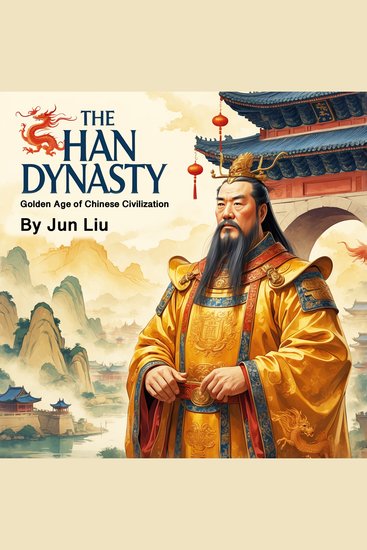
    The Han Dynasty, one of the most influential periods in Chinese history, emerged from the collapse of the Qin Dynasty in 206 BCE. After years of harsh rule under Qin Shi Huang, widespread unrest and rebellion led to the fall of the Qin. In the power vacuum that followed, Liu Bang, a commoner-turned-military leader, rose to prominence and ultimately established the Han Dynasty. His leadership and political acumen laid the foundation for a dynasty that would last over four centuries, shaping China’s governance, culture, and identity. 
    Liu Bang, later known as Emperor Gaozu, was originally a minor official under the Qin. Unlike his aristocratic rivals, he came from humble origins, making him a unique figure in Chinese history. As the Qin administration crumbled due to heavy taxation and forced labor policies, numerous factions vied for control. The most significant of these was the Chu-Han Contention, a prolonged struggle between Liu Bang and Xiang Yu, a powerful general of noble descent. Liu Bang, known for his ability to rally support from various social classes, ultimately defeated Xiang Yu at the Battle of Gaixia in 202 BCE. This victory marked the official beginning of the Han Dynasty, with Liu Bang declaring himself emperor. 
    Once in power, Liu Bang sought to distance his rule from the harsh legalist policies of the Qin. He adopted a more lenient and pragmatic approach, blending Confucian ideals with centralized governance. Although he retained elements of Qin’s bureaucratic structure, he reduced the severity of laws and punishments, earning the trust of the people. To ensure stability, he granted land and titles to his loyal followers, creating a semi-feudal system that allowed regional kings to govern under the central authority of the emperor. This balance between centralization and decentralization was a defining characteristic of early Han rule.
    Ver libro