Unisciti a noi in un viaggio nel mondo dei libri!
Aggiungi questo libro allo scaffale
Grey
Scrivi un nuovo commento Default profile 50px
Grey
Iscriviti per leggere l'intero libro o leggi le prime pagine gratuitamente!
All characters reduced
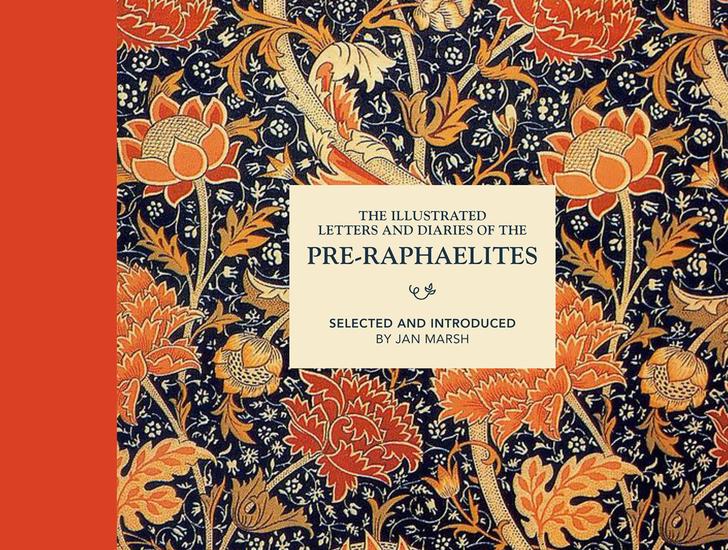
The Illustrated Letters and Diaries of the Pre-Raphaelites - cover

The Illustrated Letters and Diaries of the Pre-Raphaelites

Jean Marsh

Casa editrice: Batsford

  • 0
  • 0
  • 0

Sinossi

The story of how a group of precocious young artists shook up the British art establishment, told through their works, letters and diaries. 
An illustrated history of the linked lives and loves of a group of supremely talented artists of late Victorian Britain through their passionate writings. It features the painters, poets, critics and designers: Ford Madox Brown, Edward Burne-Jones, Fanny Cornforth, William Holman Hunt, John Everett Millais, William and Janey Morris, Christina, Dante Gabriel, and William Rossetti, John Ruskin, William Bell Scott and Lizzie Siddal.
The artistic aspirations and achievements of the Pre-Raphaelite Brotherhood are revealed alongside the interwoven dramas of their personal lives, in letters, diaries and reminiscences, while their genius is displayed in vivid paintings, drawings, designs and poems. 
The Pre-Raphaelites was a charmed circles of love, friendship and art. Within an ever-changing flow of affections, and intimacies as richly patterned as a tapestry, they worked together as companions, lovers and partners. They shared tragedy as well as happiness, critical hostility as well as success, even the griefs of infidelity and discord. 
These creative partnerships, which also created the firm William Morris and Co, revitalised Victorian art and design. 
The new edition publishes in time for the start of the Burne Jones Exhibition at Tate Britain, starting in October 18. It is a vital book in understanding the Pre-Raphaelite art, which remains as popular and moving as ever. 
Disponibile da: 03/08/2023.
Lunghezza di stampa: 160 pagine.

Altri libri che potrebbero interessarti

  • Niels Bohr and J Robert Oppenheimer: The Lives and Careers of the Physicists Who Pioneered Atomic Energy - cover

    Niels Bohr and J Robert...

    Editors Charles River

    • 0
    • 0
    • 0
    The Manhattan Project would ultimately yield the “Little Boy” and “Fat Man” bombs that released more than 100 Terajoules of energy at Hiroshima and Nagasaki, but as it turned out, the Axis were not far behind with their own nuclear weapons program. When the Nazis’ quest for a nuclear weapon began in earnest in 1939, no one really had a handle on how important nuclear weapons would prove to war and geopolitics. The pursuit of nuclear weapons moved the scientist nearer to the role of combatant, placing special responsibilities on the scientific community to make critical moral decisions. However, as they developed atomic weapons, they could at the same time only warn military powers of their use. Advocates for nuclear power as a civilian energy resource but expressing misgivings about nuclear war put them at odds with uninformed branches of the military.  
    Niels Bohr was a world-famous physicist and one of the patriarchs of quantum theory. Given the vibrant, peaceful haven that is Denmark today, it’s somewhat ironic that Bohr played an instrumental role in the development of the atomic bomb. Even so, the truth and depth of the matter, much like the self-professed pacifist himself, is far more complex. 
    The American war effort against the Japanese and Germans also included denying either one the use of a practical nuclear weapon. Physics was in its highest stage of advancement in Europe during this time, while J. Robert Oppenheimer emerged as an extraordinary scientific mind in the United States. Despite requiring the work of thousands of scientists and assistants in fashioning the weapon that eventually came to pass, Oppenheimer alone has been become renowned as the “father of the atomic bomb” due to his leadership of the Manhattan Project.
    Mostra libro
  • A Lie in the Tale - cover

    A Lie in the Tale

    John Alexander

    • 0
    • 0
    • 0
    Having grown up surrounded by women, A Lie in the Tale tells of John "Jack" Alexander's journey from boyhood to manhood during 1960s Western Queensland life.  
    This true, often humour-filled, adventure of a city boy striving to become a jackaroo will bring laughter, tears and everything in between. 
    Despite his inexperience in the country, Jack's determination sees him overcome the frustrations, ridicule and hardship of country life. The trials and tribulations reshape him.  
    Join Jack, as he strives to have a reflection that truly matches who he desires to be on the inside...
    Mostra libro
  • Ernst Cassirer - The Last Philosopher of Culture - cover

    Ernst Cassirer - The Last...

    Edward Skidelsky

    • 0
    • 0
    • 0
    This is the first English-language intellectual biography of the German-Jewish philosopher Ernst Cassirer (1874-1945), a leading figure on the Weimar intellectual scene and one of the last and finest representatives of the liberal-idealist tradition. Edward Skidelsky traces the development of Cassirer's thought in its historical and intellectual setting. He presents Cassirer, the author of The Philosophy of Symbolic Forms, as a defender of the liberal ideal of culture in an increasingly fragmented world, and as someone who grappled with the opposing forces of scientific positivism and romantic vitalism. Cassirer's work can be seen, Skidelsky argues, as offering a potential resolution to the ongoing conflict between the "two cultures" of science and the humanities--and between the analytic and continental traditions in philosophy. The first comprehensive study of Cassirer in English in two decades, this book will be of great interest to analytic and continental philosophers, intellectual historians, political and cultural theorists, and historians of twentieth-century Germany.
    Mostra libro
  • Lieutenant General James Longstreet - Innovative Military Strategist: The Most Misunderstood Civil War General - cover

    Lieutenant General James...

    F. Gregory Toretta

    • 0
    • 0
    • 0
    Lieutenant-General James Longstreet, commander of the First Corps of the Army of Northern Virginia, was a brilliant tactician and strategist. Prior to the Civil War there were many technological developments, of which the rifled musket and cannon, rail transport, and the telegraph were a few. Longstreet adapted to these technological changes and the disparity between the belligerents making recommendations on how the war should be fought. Unfortunately, his advice was not heeded and given the weight it deserved. In contrast to many other southern generals, Longstreet advocated for defensive warfare, using entrenchments and trying to maneuver the enemy to assault his position, conserving manpower, resources, and supplies. 


    Longstreet was a pragmatic and methodical general and had his suggestions been utilized there would have been a better outcome for the South. Many historians and biographers have misunderstood Longstreet and his motives, not focusing on the total picture. This work offers a fresh and unique perspective on Lieutenant-General James Longstreet and the Civil War. This narrative takes a new viewpoint of the Civil War and the generals who tailored their designs to pursue the war, analyzes Longstreet's views of the generals and the tactics and strategy they employed, and examines why Longstreet proposed and urged a new type of warfare.
    Mostra libro
  • My Amazing 35 Year Journey Abroad - Part 1 - Those Magical First 15 Years as an Expat - cover

    My Amazing 35 Year Journey...

    Brad Koerner

    • 0
    • 0
    • 0
    This is the audiobook of Part 1 of my memoir, My Amazing 35 Year Journey Abroad. I open the book at a time in my life when I was living in an unheated garage in the dead of winter in Chicago and that came about because of my alcoholism. The year was 1981 and I was 28 years old. By this time in my life I had been kicked out of college, fired from 2 jobs including being fired by my father for crashing my company car drunk, divorced once with another one on the way, and I was broke and jobless. I would then pick myself up and brush myself off and get hired as a stockbroker by Dean Witter Reynolds. I would then blow that great opportunity by, you guessed it, abusing alcohol, and after working for 3 different brokerage houses, I would then quit drinking, start my modeling career, take an inadvertent 1 week ski trip to Austria, and then decide not to get on that return flight to Chicago, but instead would take a train from innsbruck to Nice, France where I would work as a model and actor, and then after a few months in Nice, I would move to Paris where I would live for 6 or so months, and then because of a suggestion from a photographer during a job there, I would end up flying to Singapore where I would work as a model and actor there, then after about 6 months there, I would end up moving to NYC to study acting and work as an actor there, and during my day job, I worked as a skate guard at Rockefeller Center where I would work with LIberace during his show there celebrating the skating rinks 50th birthday and there are photos in the book to prove it. Then from NYC I would move to Hong Kong where I would work as a featured actor in 4 movies, including a role in Kickboxer. I would then move to Bangkok, Thailand where I would start my nudie photography career and become the most prolifice photographer of naked Asian girls in the world. It is now 2024 and I am still in Thailand, retired here at the age of 70.
    Mostra libro
  • Nikolai Gogol - A Short Story Collection - The absurdist Masters most compelling tale Ukranian born short story great that influenced the likes of Tolstoy and Dostoyevsky - cover

    Nikolai Gogol - A Short Story...

    Nikolai Gogol

    • 0
    • 0
    • 0
    Nikolai Vasilievich Gogol was born on 1st April 1809 to a father, descended from Ukrainian Cossacks and a mother with a military background in the Ukrainian town of Sorochyntsi, then part of the Russian Empire and rich in Cossack traditions and folklore.   
     
    His father wrote poetry and plays which the young Gogol helped stage at his uncle’s home theatre.  This helped ignite in him a love of literature and blossomed when he attended, what is now, the Nizhyn Gogol State University at the age of 12.  Here he participated in school theatre productions and refined his mastery of his native Ukrainian and also the Russian of his Imperial masters. 
     
    In 1828 he went to St Petersburg and unsuccessfully tried to begin a career as an actor after finding that with no money and no connections the civil service was barred to him. 
     
    Embezzling money from his mother he embarked on a trip to Germany. When the money ran out, he returned to St Petersburg but the experiences were used in a series of stories he contributed to periodicals.  These tales were steeped in his childhood memories of the Ukrainian landscape and peasantry enlivened with the supernatural of its folklore woven with realistic events of the day.  He wrote in Russian in a whimsical, colloquial style with a smattering of Ukrainian words and phrases that provided an authenticity.  Eight stories were published as ‘Evenings on a Farm near Dikanka’.  Seemingly all at once fame and fortune arrived. Gogol was hailed by his contemporaries, including Pushkin, as a pre-eminent writer of Russian literature.   
     
    His success continued with his brilliant plays ‘The Inspector General’ and the comedy ‘The Marriage for the Theatre’, both being highly acclaimed.   
     
    In 1834 he became Professor of Medieval History at the University of St. Petersburg but with little academic or teacher training, failed to adequately fulfil many of his duties and soon resigned this post.  With no obligations and using his earnings from his writing, which now included the impressionistic and immortal ‘Dead Souls’, Gogol travelled around Europe, spending the most time in Rome where he studied art, read Italian literature and developed a passion for opera.  
     
    In the 1840s Gogol became preoccupied with a need to purify his soul and embarked on a pilgrimage to Jerusalem. In tandem he fell under the influence of a strict and austere spiritual ascetic who persuaded him to observe strict fasts that, allied with his depression and deteriorating health, contributed to his death on 21st April 1852 at the age of only 43. 
     
    1 - Nikolai Gogol - A Short Story Collection - An Introduction 
    2 - The Nose by Nikolai Gogol 
    3 - The Cloak by Nikolai Gogol also known as 'The Overcoat' 
    4 - Old Fashioned Landowners by Nikolai Gogol 
    5 - St Johns Eve by Nikolai Gogol 
    6 - Diary of a Madman by Nikolai Gogol
    Mostra libro