Unisciti a noi in un viaggio nel mondo dei libri!
Aggiungi questo libro allo scaffale
Grey
Scrivi un nuovo commento Default profile 50px
Grey
Iscriviti per leggere l'intero libro o leggi le prime pagine gratuitamente!
All characters reduced
A History of Freedom of Thought - cover

A History of Freedom of Thought

J.B. Bury

Casa editrice: DigiCat

  • 0
  • 0
  • 0

Sinossi

In "A History of Freedom of Thought," J. B. Bury meticulously explores the evolution of intellectual liberty from ancient to contemporary times, detailing its philosophical underpinnings and societal implications. Bury's prose is both erudite and accessible, presenting a comprehensive narrative that deftly interweaves historical events with the progression of ideas. The book is situated within the broader discourse on the importance of freedom of thought as a cornerstone of modern democratic societies, unearthing how various epochs have shaped and been shaped by this fundamental concept. J. B. Bury, a distinguished historian and philosopher, was deeply influenced by the intellectual currents of the late 19th and early 20th centuries. His rigorous academic background, coupled with his advocacy for rationalism and secularism, informed his analysis of freedom's historical trajectory. Bury's commitment to understanding the interplay between thought and society is evident in his inquiry into the obstacles and triumphs faced by thinkers throughout history, offering invaluable insights into the struggles for intellectual independence. Readers are encouraged to engage with this profound work, as it not only illuminates the past but also provokes critical reflection on the present state of freedom of thought. Bury's synthesis of history and philosophy serves as an essential guide for scholars, students, and anyone interested in the ongoing quest for intellectual autonomy in a world often fraught with dogma.
Disponibile da: 04/09/2022.
Lunghezza di stampa: 141 pagine.


Altri libri che potrebbero interessarti

  • Chameleon Mindset - Creative Ways to Embrace Change And Build Mental Resilience To Transform Your Career and Life - cover

    Chameleon Mindset - Creative...

    Nikki Green

    • 0
    • 0
    • 0
    Change is challenging, whether it’s forced on us or we create it. But you’re not stuck in your situation. You can transform your mindset and adapt to change. 
      
    When Life and Business Resiliency Expert Nikki Green left a career of 20 years, her methodology for adjusting made her more flexible. She wrote Chameleon Mindset for others seeking clarity while acclimating to new situations. This entertaining, research-based guide to transitions will give you strategies for moving forward. 
      
    You will: 
     ·      C.R.E.A.T.E. the life you desire with five philosophies for change 
    ·      Become a Master of Change as you work through Karate Kid- style exercises 
    ·      Keep coming back to level up your life using an interactive journalMove from resistance to resilience by assessing and adjusting your risk toleranceImprove relationships when you learn to have difficult conversations 
      
    The practical lessons in Chameleon Mindset will shift your mindset, sharpen your skills, and help you overcome your obstacles to dealing with change. Read it and embrace change!
    Mostra libro
  • Stoicism - Finding Strength in Adversity Through Ancient Philosophy - cover

    Stoicism - Finding Strength in...

    Coral Nunez

    • 0
    • 0
    • 0
    Stoicism is an ancient Greek philosophy that teaches how to live a good life, one filled with virtue, wisdom, and tranquility. Founded by Zeno of Citium in the early 3rd century BCE, Stoicism is built on the idea that the key to happiness and fulfillment lies not in external circumstances, but in how we choose to respond to them. The philosophy emphasizes the development of self-control, rational thought, and resilience in the face of adversity. While it originated in ancient Greece, Stoicism has influenced many philosophers and continues to resonate with modern thinkers, offering practical tools for navigating life’s challenges. 
    At the core of Stoicism is the belief in distinguishing between what we can control and what we cannot. According to Stoic principles, we cannot control external events, but we can control our responses to them. This idea, known as the Dichotomy of Control, encourages individuals to focus on their actions, thoughts, and emotions rather than worrying about things beyond their influence. This shift in perspective can lead to greater peace of mind and less suffering, as it frees us from the emotional turmoil of trying to change the uncontrollable. 
    Stoicism is often associated with a few key figures, including Epictetus, Seneca, and Marcus Aurelius. Each of these philosophers contributed their own insights into the practice of Stoicism, emphasizing different aspects of the philosophy. Epictetus, for example, taught that true freedom comes from mastering our internal world, while Seneca focused on the importance of reflection and mindfulness in everyday life. Marcus Aurelius, a Roman emperor, applied Stoic principles to leadership and the challenges of ruling an empire, demonstrating how Stoicism can be practiced by anyone, no matter their role in society.
    Mostra libro
  • Unbreakable You - Create Revise Repair Your Life - cover

    Unbreakable You - Create Revise...

    M.D. Jon Deam

    • 0
    • 0
    • 0
    Everything is riding on this decision. It has to be perfect. 
    To people on the outside looking in, your life is ideal. You’re successful. You have supportive friends and family. No one knows how frustrated you are, filled with doubt and anxiety about making the right decision—doing life right. 
    Dr. Jon Deam has spent his career helping people navigate difficult transitions. In Unbreakable You, he uses stories and analogies to make complex behavioral theories and psychological concepts accessible so you can easily apply them to your unique circumstances, improving your outlook as you decide what you really want. 
    Drawing from thousands of conversations with people who struggle with the same issues you do, Unbreakable You provides a simple, entertaining roadmap for navigating some of life’s most difficult journeys. Packed with helpful ideas, tools, and wisdom, it will help you move forward with confidence, no matter what you decide.
    Mostra libro
  • After Redlining - The Urban Reinvestment Movement in the Era of Financial Deregulation - cover

    After Redlining - The Urban...

    Rebecca K. Marchiel

    • 0
    • 0
    • 0
    Focusing on Chicago’s West Side, After Redlining illuminates how urban activists were able to change banks’ behavior to support investment in communities that they had once abandoned. 
     
    American banks, to their eternal discredit, long played a key role in disenfranchising nonwhite urbanites and, through redlining, blighting the very city neighborhoods that needed the most investment. Banks long showed little compunction in aiding and abetting blockbusting, discrimination, and outright theft from nonwhites. They denied funds to entire neighborhoods or actively exploited them, to the benefit of suburban whites—an economic white flight to sharpen the pain caused by the demographic one. 
     
    And yet, the dynamic between banks and urban communities was not static, and positive urban development, supported by banks, became possible. In After Redlining, Rebecca K. Marchiel illuminates how, exactly, urban activists were able to change some banks’ behavior to support investment in communities that they had once abandoned. The leading activists arose in an area hit hard by banks’ discriminatory actions and politics: Chicago’s West Side. A multiracial coalition of low- and moderate-income city residents, this Saul Alinsky–inspired group championed urban reinvestment. And amazingly, it worked: their efforts inspired national action, culminating in the federal Home Mortgage Disclosure Act and the Community Reinvestment Act. 
    ​ 
    While the battle for urban equity goes on, After Redlining provides a blueprint of hope.
    Mostra libro
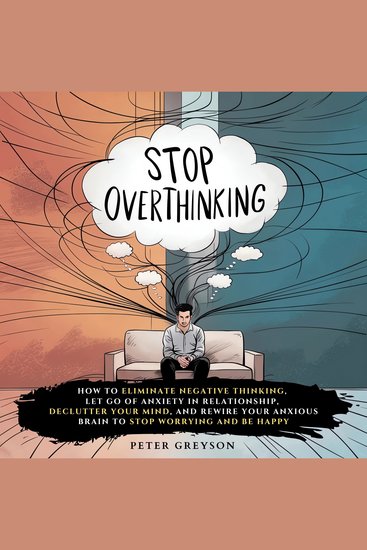
  • Stop Overthinking - How to Eliminate Negative Thinking Let Go of Anxiety in Relationship Declutter Your Mind and Rewire Your Anxious Brain to Stop Worrying and Be Happy - cover

    Stop Overthinking - How to...

    Peter Greyson

    • 0
    • 0
    • 0
    Are you ready to break free from the chains of overthinking and unleash your inner happiness? Dive into "Stop Overthinking” and picture a life where your mind is a serene sanctuary, far from a chaotic battleground of worries. Imagine waking up each day with a sense of calm, and clarity that propels you forward with unstoppable positivity! In this electrifying audiobook, you'll discover the keys to unlock your mind's potential and banish those pesky overthinking habits for good. Say goodbye to sleepless nights and get ready to experience a transformation like never before: eliminate negative thinking, let go of ankiety and declutter your mind. After listening, you'll emerge as a force to be reckoned with—empowered, inspired, and ready to embrace life's challenges with gusto! Say hello to a future filled with Joy and endless possibilities. Are you ready to embark on the journey to freedom from overthinking? Press play and let the transformation begin! Your future self will thank you.
    Mostra libro
  • Mahatma Gandhi - The Most Famous Political Activist of India - cover

    Mahatma Gandhi - The Most Famous...

    Kelly Mass

    • 0
    • 0
    • 0
    Mohandas Karamchand Gandhi was an Indian attorney, anti-colonial patriot, and political ethicist who used nonviolent resistance to lead the triumphant struggle for India's independence from British rule, motivating civil liberties and liberty movements around the globe. The epithet Mahtm (which means "great-souled" or "age-old" in Sanskrit) was at first appointed to him in South Africa in the year 1914 and is now used all across the world. 
    Gandhi was born into a Hindu family in seaside Gujarat and studied law at the Inner Temple in London. 
    In the year 1893, he came to South Africa to represent an Indian business owner in a case after 2 years in India, where he was not able to establish a rewarding law practice. 
    He spent the next 21 years of his life in South Africa. Gandhi raised his family here and was the first to use nonviolent resistance in a civil liberties struggle. 
    He went back to India in the year 1915, at the age of 45. He started setting in motion peasants, farmers, and city workers to fight oppression and high land taxes. Gandhi led statewide projects to reduce poverty, promote women's rights, build spiritual and ethnic amity, get rid of untouchability, and, above all, accomplish swaraj, or self-rule, after presuming management of the Indian National Congress in the year 1921. 
    Gandhi has meant much for the peace, the independence, and the culture of India, as well as his acts of non-violent resistance that have influenced the world. Let’s take a look at what else he did.
    Mostra libro