Join us on a literary world trip!
Add this book to bookshelf
Grey
Write a new comment Default profile 50px
Grey
Subscribe to read the full book or read the first pages for free!
All characters reduced
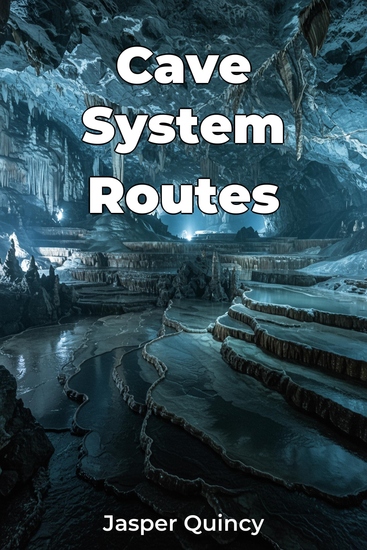
Cave System Routes - cover

Cave System Routes

Jasper Quincy

Translator A AI

Publisher: Publifye

  • 0
  • 1
  • 0

Summary

Cave System Routes transforms the understanding of multi-level cave systems, turning potential death traps into navigable routes for recreation, research, and especially cave rescue. It highlights how crucial it is to comprehend cave systems as interconnected networks, where airflow dynamics play a pivotal role, impacting temperature and pressure.  Delving into karst topography and speleogenesis, the book emphasizes that successful navigation is not just about pathfinding, but about understanding the geological forces at play. The book uniquely integrates geological principles with practical techniques, like compass-and-tape surveys and laser scanning, to map cave structures. It progresses from foundational concepts of cave morphology to airflow dynamics, demonstrating how tracer gases can map airflow pathways.  Finally, it covers practical applications such as exit route mapping and emergency retrieval protocols, culminating in case studies that highlight successful strategies and critical errors in past incidents. This resource is invaluable for anyone involved in cave environments, from geologists to recreational cavers and search and rescue teams. By combining detailed structural mapping with an understanding of airflow patterns and comprehensive emergency planning, Cave System Routes provides a holistic, data-driven approach to mitigate the risks associated with cave exploration.
Available since: 05/02/2025.
Print length: 95 pages.


Other books that might interest you

  • Titanic - A Voyage into Tragedy - cover

    Titanic - A Voyage into Tragedy

    Priyank Agrawal

    • 0
    • 0
    • 0
    This audiobook is narrated by an AI Voice.  
    The RMS Titanic was more than just a ship—it was a marvel of human ambition, luxury, and engineering. Yet, on the fateful night of April 14, 1912, this unsinkable giant met its tragic end, plunging into the depths of the North Atlantic and forever altering history. 
    In Titanic: A Voyage into Tragedy, journey through the vision, creation, and demise of the world’s most famous ocean liner. From the grand halls of first-class luxury to the struggles of third-class passengers, from the ignored iceberg warnings to the final desperate moments, this book brings to life the stories of those who built, sailed, and perished aboard the Titanic. 
    Explore the aftermath of the disaster, the investigations that reshaped maritime safety, and the modern-day fascination with Titanic’s wreckage. Delve into the myths, legends, and conspiracy theories that continue to surround the ship and uncover the true legacy left behind. 
    With meticulously researched historical details and powerful storytelling, Titanic: A Voyage into Tragedy is a compelling and immersive account of one of the most enduring and haunting events in history. 
    Perfect for history enthusiasts, maritime lovers, and anyone captivated by the triumphs and tragedies of the human spirit.
    Show book
  • Thirty - The World by Bicycle - cover

    Thirty - The World by Bicycle

    Daddy Blondlegs

    • 0
    • 0
    • 0
    Travelogues are boring, especially the ones about cycling. 
    My 30th birthday present to myself was to quit my job, set out from Seattle, and maybe cycle the world. BOOK RED begins this insane journey. When my bike started falling apart in the first two days, things weren’t looking so good. When pedaling 9 hours a day wasn’t supplying enough serotonin, things weren’t looking so good. An elated mind will smile at strangers; a diseased one will make games of passing bottles of urine, dead animals, and roadside crosses. 
    I die in the book, a few times. In fact, it's one of my favorite things to do while cycling. Though many have cycled to Mesa Verde, I detour into the Hopi’s Land of the Dead. Hallucinations of a former lover haunt at the most unsuspecting times: on a frisbee golf course, behind Germany’s Disneyland castle, and chasing rabbits at night. The songs and poems in the book hearken back to a time before the DSM, while ridiculous recipes don’t offer assurance I’m going to make it. 
    THIRTY has all the pieces of an adventure novel: how to fix things, unreal encounters, braving the unknown... yet seems to see everything the wrong way. The world it creates, the choices made, are at times absurd, but when you're in unfamiliar places and only talk to strangers, it all starts to makes sense.
    Show book
  • How to Travel - An Ancient Guide for the Modern Tourist - cover

    How to Travel - An Ancient Guide...

    Herodotus, M. D. Usher

    • 0
    • 0
    • 0
    A transporting anthology of ancient Greek and Roman travel writings that capture the thrill of exploration and discovery—from Europe to the Holy Land and Egypt to IndiaAt long last, a travel guide to the ancient world for the modern tourist—written by the ancients themselves. How to Travel gathers classic texts from Greek and Roman writers to explore what today’s readers can learn from ancient encounters with unfamiliar peoples, places, and customs.The Greek historian Herodotus (ca. 484–425 BCE) is one of the most famous travelers of antiquity. His Histories, which chronicle his and others’ encounters with foreign peoples and places, have fascinated readers for millennia, and have much to teach about the secrets of good travel. In How to Travel, Herodotus and Tacitus take us on tours of Central Asia, Egypt, and Germania, while pilgrims like Pausanias and the Christian nun Egeria guide us through Greece and the Holy Land. Readers are whisked away to India to experience the ways of forest-dwelling sages and to the far reaches of Africa. And as if Earth weren’t enough, the satirist Lucian takes us to the Moon. But this whirlwind tour of antiquity is more than a pleasure cruise. Seneca cautions travelers that, go as far as we may, we can never escape ourselves. Gratitude, Egeria says, is the traveler’s proper response for the privilege. And Homer reminds us that, ultimately, there’s no place like home.Featuring vivid new translations, an inviting introduction, and the original Greek and Latin texts on facing pages, How to Travel captures the thrill of exploration and discovery—and how new experiences, fresh vistas, and foreign cultures can change the traveler.
    Show book
  • By the Ionian Sea - Notes of a Ramble in Southern Italy - cover

    By the Ionian Sea - Notes of a...

    George Gissing

    • 0
    • 0
    • 0
    By the Ionian Sea: Notes of a Ramble in Southern Italy by George Gissing is a vivid travelogue that captures the author’s journey through the picturesque and historically rich regions of southern Italy. Gissing immerses himself in the landscapes, culture, and history of the Ionian coast, blending keen observations with reflections on art, antiquity, and rural life. His prose reveals a deep appreciation for the beauty of the Mediterranean, from its sun-drenched shores to its ancient ruins, while also addressing the hardships faced by local communities. Gissing’s intellectual curiosity shines as he explores the interplay between past and present, celebrating the enduring legacy of classical civilizations while lamenting their decline. Written with elegance and introspection, By the Ionian Sea is both a tribute to Italy’s timeless allure and a meditation on the transient nature of human achievement. It invites readers to share in Gissing’s wanderlust and his profound connection to the region’s history and charm.
    Show book
  • Cambodia - History of Angkor Wat and the Khmer Empire (3 in 1) - cover

    Cambodia - History of Angkor Wat...

    Kelly Mass

    • 0
    • 0
    • 0
    Learn more about the history of those countries. The topics addressed will be these: 
    Angkor Wat-- The temple was built as the state temple for the Khmer Empire at the demand of Suryavarman II in the early 12th century in Yaodharapura (, contemporary Angkor), the Khmer Empire's capital. It was constructed in the early 12th century to honor the Hindu god Vishnu, but by the end of the century, it had been changed to a Buddhist temple. 
    Angkor Wat is a fascinating structure, dating back hundreds of years, and it’s impressive how much of it has remained intact. 
    The Khmer Empire--Historians describe Cambodia as the Khmer State or the Angkorian Empire (Khmer:) from the 9th century to the 15th century, when it was a Hindu/Buddhist empire in Southeast Asia. The empire, which developed from the old societies of Funan and Chenla, governed and/or "vassalized" the majority of mainland Southeast Asia and parts of Southern China, covering from the suggestion of the Indochinese Peninsula northward to modern-day Yunnan province in China, and from Vietnam westward to Myanmar. The Khmer Empire was greater at its peak than the Byzantine Empire (Eastern Roman Empire) that existed at the exact same period. 
    The Siamese-- Siam was just a much different name for what's now referred to as Thailand. The Siamese are the people who live there, though they're never ever called as such any longer. 
    Thailand is a fascinating country, with its own culinary arts, culture, history, royalty, infrastructure, and influence on the world. To learn more about these “Thai” people before they were called Thai, when they were Siamese, is to learn about those people’s roots.
    Show book
  • HowExpert Guide to Montpelier Vermont - 101+ Tips to Learn the History Discover the Best Places to Visit Find Fun Things to Do and Enjoy the Smallest Capital in the USA - cover

    HowExpert Guide to Montpelier...

    HowExpert, Jody Andreoletti

    • 0
    • 0
    • 0
    Welcome to Montpelier, Vermont, officially the smallest state capital in the United States. Drawing in about 150,000 visitors a year, most people will know the obvious sites in town to visit: the State House, the Vermont History Museum, the excellent restaurants, and the small-town shops that line the streets. However, what if you wanted more out of your trip? What isn’t obvious? What do the locals know that you may not? If you want to see a Montpelier that most tourists miss, this book will give you an experience of the capital city that most unknowingly pass by. 
    HowExpert Guide to Montpelier, Vermont guides the reader through the author's hometown with the tone of an enthusiastic local giving a private tour. Conversational yet informative, the reader will find this book filled with insider tips about the most obvious draws to the town, as well as hidden gems that only a local would know. Weaving Montpelier’s rich history with interesting, small-town stories, the author offers many ideas for visitors to get the most out of a stay in this classic, small town. 
    ​​​​​​​From how to enjoy your drive into town, where to stay, and how to find the best parking to foodie-quality restaurant reviews, local events, and tips for living like a local, this is a guide written for families, solo travelers, and everyone in between. There are chapters written specifically for those with children, adults looking for a night on the town, and travelers who want to blend in with the community. If you are thinking of visiting the capital of Vermont, don’t miss out on what all the local residents know. Let this book guide your trip to get the most out of the smallest capital in the United States. 
    About the Author 
    Jody Andreoletti lives in a wooded neighborhood in Montpelier, Vermont, with her two daughters and her best friend from childhood. 
    HowExpert publishes quick how to guides on all topics from A to Z by everyday experts. 
    Show book