Unisciti a noi in un viaggio nel mondo dei libri!
Aggiungi questo libro allo scaffale
Grey
Scrivi un nuovo commento Default profile 50px
Grey
Iscriviti per leggere l'intero libro o leggi le prime pagine gratuitamente!
All characters reduced
Weirdest World Borders - cover

Weirdest World Borders

Jasper Holt

Traduttore A AI

Casa editrice: Publifye

  • 0
  • 0
  • 0

Sinossi

Weirdest World Borders explores the fascinating and often bizarre world of international boundaries, revealing how history, politics, and even geographical quirks have shaped the lines on our maps. It's more than just geography; it's a journey through the stories that explain how unusual frontiers came to be.

 
For instance, many borders were drawn without considering existing ethnic or tribal distributions, a direct consequence of colonialism. Also, treaties and wars have significantly impacted border creation, leading to many odd situations we see today.

 
The book examines key aspects of border creation and maintenance, such as the legacy of colonialism, the impact of treaties and wars, and the everyday lives of people living in these regions. Understanding these topics is crucial for grasping the complexities of international relations and the human consequences of boundary-making.

 
It progresses by first presenting peculiar examples, then delving into case studies grouped thematically, like colonial partitions in Africa and Asia, or European borders shaped by conflict. It offers a unique perspective by combining rigorous historical research with accessible storytelling, making it valuable to anyone interested in world history, travel, and the forces that shape our world.
Disponibile da: 31/03/2025.
Lunghezza di stampa: 68 pagine.

Altri libri che potrebbero interessarti

  • Brainwashed by Aliens - cover

    Brainwashed by Aliens

    Raphael Terra

    • 0
    • 0
    • 0
    This audiobook has been recorded using Text to speech (TTS). 
     
    From the moment we are born we are controlled and manipulated by an alien hybrid race. We are fed poison and sold a cure. We are numbered, brainwashed, taxed and lied to. We are food for the masters and nothing more. 
     
    The lies we are sold are so powerful that we ourselves become preachers of deceit. No matter the technology, no matter the age of man, no matter the flag we hold dear to - we are pawns of the alien overlords. 
     
    For thousands of years mankind has been controlled by a powerful reptilian elite that came down to earth as watchers and gods. Every religion, mythology and folklore on planet earth has some element of their history. Their offspring are the powerful and rich families that have been linked to so many secret societies. 
     
    These creatures are malevolent by nature and ugly to our sight. They change shape, confuse and conspire. They created and control the secret societies, shadow governments and religions. Their power is over the control of our thoughts and actions. 
     
    Knowledge is power. Arm yourself now and discover the truth about the Alien Conspiracy.
    Mostra libro
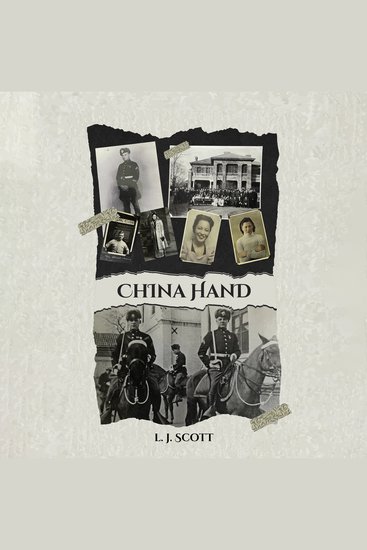
  • China Hand - cover

    China Hand

    L.J. Scott

    • 0
    • 0
    • 0
    This audiobook is narrated by an AI Voice.  
    Lawrence Joseph Scott was born in 1910 in Saskatchewan, Canada. His family made their way south and ended up in Alabama. In 1924, having finished 8th grade at the age of 14, L.J. lied about his age and enlisted in the United States Marine Corps. 
    Sometime in the 1930s, L.J. was stationed in Peking, China. As a member of the famous China Marines, he performed his duties on horseback. For a period of time, his commanding officer was Captain Lewis Burwell "Chesty" Puller, one of the most famous and decorated U.S. Marines. Years later, L.J. was transferred to Pearl Harbor, along with his wife, Cliz. They were there on December 7th, 1941. 
    After WWII ended, he retired to El Cajon, California. Later in life, L.J. took advantage of the G.I. Bill and attended Grossmont College, where he graduated Valedictorian with a G.P.A. of 4.0. He died in 1985 and was buried at Fort Rosecrans National Cemetery in San Diego. He is survived by his son Robert, and his daughters Bonnie and Sandra
    Mostra libro
  • The Southern Surfcaster - Saltwater Strategies for the Carolina Beaches & Beyond - cover

    The Southern Surfcaster -...

    S. Cameron Wright

    • 0
    • 0
    • 0
    The Southern Surfcaster will change the way you think and what you thought you knew about saltwater fishing. 


    Increase your knowledge of fishing and develop into a more confident saltwater fisherman with The Southern Surfcaster. Many of the old-school methods of fishing are updated for modern practicality. Explore creative techniques and the latest strategies that have transformed the sport over the last decade.
    Mostra libro
  • The Picts - A History - cover

    The Picts - A History

    Tim Clarkson

    • 0
    • 0
    • 0
    A British historian explores the mysterious Scottish culture of the Iron Age and Early Middle Ages whose enigmatic symbols adorn standing stones. 


    The Picts were an ancient nation who ruled most of northern and eastern Scotland during the Dark Ages. Despite their historical importance, they remain shrouded in myth and misconception. Absorbed by the kingdom of the Scots in the ninth century, they lost their unique identity, their language, and their vibrant artistic culture. Among their few surviving traces are standing stones decorated with incredible skill and covered with enigmatic symbols. 


    The Pictish Stones offer some of the few remaining clues to the powerful and gifted people who bequeathed no chronicles to tell the sagas of their kings and heroes. In this book, Medieval historian Tim Clarkson pieces together the evidence to tell the story of this mysterious people from their emergence in Roman times to their eventual disappearance.
    Mostra libro
  • War: A History in 100 Battles - cover

    War: A History in 100 Battles

    Richard Overy

    • 0
    • 0
    • 0
    The object of this book is to introduce readers to a whole range of military history which has all the drama, dangers, horrors and excitement that we associate with Stalingrad or the Somme. Battles are acute moments of history whenever and wherever they have been fought. Through them we can understand how warfare and world history have evolved. 
    Choosing just one hundred battles from recorded human history is a challenge. Not just because it is necessary to cover almost 6,000 years of history, but because men have fought each other almost continuously for millennia. Anyone who knows anything about the history of war may be disappointed at what has had to be left out. However, each of the 100 memorable battles described shows both how the nature of armed combat has changed over human history, and also how, despite changes in technology, organisation or ideas, many things have remained the same. 
    It is an old adage that you can win a battle but lose a war. The battles featured here almost always resulted in victory for one side or another, but the victor did not necessarily win the war. Some battles are decisive in that broader historical sense, others are not. The further back in time, the more likely it is that an enemy could be finished off in one blow. The wars of the modern age, between major states, have involved repeated battles until one side was battered into submission. Some of the great generals of the recent past – Napoleon, Robert E Lee, Erich von Manstein – have been on the losing side but are remembered nonetheless for their generalship. 
    Some on the winning side have all but disappeared from the history books or from public memory. Equally, in many battles, the issue is not victory or defeat, but what the battle can tell us about the history of warfare itself. New weapons, new tactics, new ways of organising armed forces can have a sudden impact on the outcome of a battle. But so too can leadership, or the effects of a clever deception, or raw courage. That is why the book has been divided up into clear themes which apply equally to the battles of the ancient world as they do to the battles of today. 
    As Professor Richard Overy laments: “Battle is not a game to plug into a computer but a piece of living history, messy, bloody and real. That, at least, has not changed in 6,000 years.” 
    The book WAR by Richard Overy is indeed a top pick for those interested in military history. It provides a comprehensive picture of the evolution of warfare, making it one of the best in its genre. 
    For fans of Christopher Clark (Prisoners of Time), Ian Kershaw (The End), Antony Beevor (Arnhem), Robert Service (The Last of the Tsars), and Frank Mcdonough (The Weimar Years).
    Mostra libro
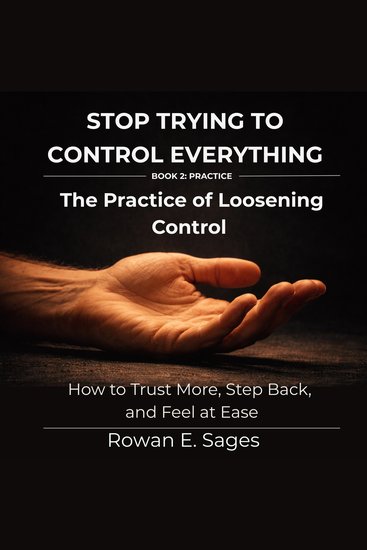
  • Stop Trying to Control Everything: The Practice of Loosening Control - How to Trust More Step Back and Feel at Ease - cover

    Stop Trying to Control...

    Rowan E. Sages

    • 0
    • 0
    • 0
    Letting go of control doesn’t mean losing control. It means learning how to feel safe without holding everything together.
     
    In Stop Trying to Control Everything: The Practice of Loosening Control, you’ll learn how to work with uncertainty, regulate your responses, and step back without feeling overwhelmed.
     
    This is where understanding becomes practice.
     
    Inside, you’ll learn how to:
    
     
    Pause when the urge to control takes over
    
     
    Regulate your nervous system in moments of uncertainty
    
     
    Trust yourself without needing constant certainty
    
     
    Communicate without over-managing people or situations
    
     
    Stay grounded—even when things feel unclear


    This isn’t about becoming passive. It’s about becoming steady.
     
    If you want to:
    
     
    Stop overthinking every outcome
    
     
    Feel more relaxed and less tense
    
     
    Trust others without needing to manage everything
    
     
    Move through uncertainty with calm and clarity


    This audiobook gives you the tools to do exactly that.
     
    Because peace doesn’t come from controlling everything. It comes from learning when to let go.
    Mostra libro