Unisciti a noi in un viaggio nel mondo dei libri!
Aggiungi questo libro allo scaffale
Grey
Scrivi un nuovo commento Default profile 50px
Grey
Iscriviti per leggere l'intero libro o leggi le prime pagine gratuitamente!
All characters reduced
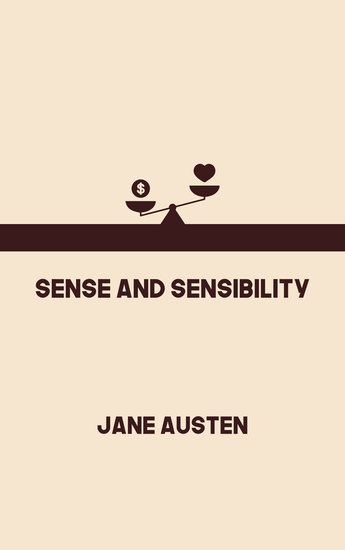
Sense and Sensibility - cover

Sense and Sensibility

Jane Austen

Casa editrice: CLXBX

  • 0
  • 0
  • 0

Sinossi

Sense and Sensibility is a graceful and emotionally rich novel that explores the balance between reason and passion, restraint and romance. Set in early 19th-century England, the story follows the Dashwood sisters—Elinor and Marianne—whose contrasting temperaments shape their experiences of love, heartbreak, and personal growth.

Elinor, guided by sense, values self-control, duty, and thoughtful judgment, while Marianne, driven by sensibility, embraces emotion, spontaneity, and romantic idealism. As both sisters face disappointment, social expectations, and the complexities of courtship, they must learn from each other's strengths and weaknesses. Their journeys reveal that neither reason nor emotion alone is enough to ensure happiness.

With elegant prose, gentle humor, and keen social insight, Jane Austen crafts a timeless story about family, love, and maturity. Sense and Sensibility remains a beloved classic that celebrates emotional growth, moral integrity, and the enduring power of compassion and understanding.
Disponibile da: 10/02/2026.
Lunghezza di stampa: 421 pagine.
Altri libri che potrebbero interessarti

  • The Portrait of Mr W H - cover

    The Portrait of Mr W H

    Anonimo

    • 0
    • 0
    • 0
    "The Portrait of Mr. W. H." is a story written by Oscar Wilde, first published in Blackwood's Magazine in 1889. It was later added to the collection Lord Arthur Savile's Crime and Other Stories, though it does not appear in early editions. An enlarged edition planned by Wilde, almost twice as long as the Blackwood's version, with cover illustration by Charles Ricketts, did not proceed and only came to light after Wilde's death. This was published in limited edition by Mitchell Kennerley in New York in 1921, and in a first regular English edition by Methuen in 1958, edited by Vyvyan Holland.
    Wilde's story is narrated by a friend of a man called Erskine, who is preoccupied by the Hughes theory. Erskine had learned the idea from one Cyril Graham, who had tried to persuade Erskine of it based on the text of the sonnets, but Erskine was frustrated by the lack of external historical evidence for Willie Hughes's existence. Graham tried to find such evidence but failed; instead, he fakes a portrait of Hughes in which Hughes is depicted with his hand on a book on which can be seen the dedication from the sonnets. Erskine is convinced by this evidence, but then discovers the portrait to be a fake, a discovery that leads him to yet again doubt the existence of Willie Hughes. Graham still believes in the theory, and to prove it, shoots himself.
    Mostra libro
  • War and Peace - Book 5: 1806-07 (Unabridged) - cover

    War and Peace - Book 5: 1806-07...

    Leo Tolstoy

    • 0
    • 0
    • 0
    War and Peace is a literary work mixed with chapters on history and philosophy by the Russian author Leo Tolstoy. It was first published serially, then published in its entirety in 1869. It is regarded as one of Tolstoy's finest literary achievements and remains an internationally praised classic of world literature.
    Book 5: 1806-07: After his interview with his wife Pierre left for Petersburg. At the Torzhók post station, either there were no horses or the postmaster would not supply them. Pierre was obliged to wait. Without undressing, he lay down on the leather sofa in front of a round table, put his big feet in their overboots on the table, and began to reflect.
    Mostra libro
  • The Temple - cover

    The Temple

    H. P. Lovecraft

    • 0
    • 0
    • 0
    A German U-boat embarks on a horrifying journey after one of its crew claims a strange souvenir in this tale by the author of “The Call of Cthulhu”.During World War I, a German U-boat sinks a British freighter. Karl Heinrich, Graf von Altberg-Ehrenstein, a lieutenant-commander in the Imperial German Navy, orders the ship to fire on the British survivors and their lifeboats before submerging. After the U-boat surfaces again, a dead sailor is found clinging to the deck with a mysterious ivory talisman in his pocket. Heinrich’s second-in-command pockets the charm just before the body is thrown overboard. And thus begins the ship’s journey into madness . . .
    Mostra libro
  • Brown Wolf (Unabridged) - cover

    Brown Wolf (Unabridged)

    Jack London

    • 0
    • 0
    • 0
    Jack London (born John Griffith Chaney, January 12, 1876 - November 22, 1916) was an American author, journalist, and social activist. He was a pioneer in the then-burgeoning world of commercial magazine fiction and was one of the first fiction writers to obtain worldwide celebrity and a large fortune from his fiction alone.
    BROWN WOLF: She had delayed, because of the dew-wet grass, in order to put on her overshoes, and when she emerged from the house found her waiting husband absorbed in the wonder of a bursting almond-bud. She sent a questing glance across the tall grass and in and out among the orchard trees.
    Mostra libro
  • Women In Love - cover

    Women In Love

    D. H. Lawrence

    • 0
    • 0
    • 0
    Women in Love (1920) is a novel by English author D. H. Lawrence. It is a sequel to his earlier novel The Rainbow (1915), and follows the continuing loves and lives of the Brangwen sisters, Gudrun and Ursula. Gudrun Brangwen, an artist, pursues a destructive relationship with Gerald Crich, an industrialist. Lawrence contrasts this pair with the love that develops between Ursula Brangwen and Rupert Birkin, an alienated intellectual who articulates many opinions associated with the author. The emotional relationships thus established are given further depth and tension by an intense psychological and physical attraction between Gerald and Rupert. 
     
    The novel ranges over the whole of British society before the time of the First World War and eventually concludes in the snows of the Tyrolean Alps. Ursula's character draws on Lawrence's wife Frieda and Gudrun's on Katherine Mansfield, while Rupert Birkin's has elements of Lawrence himself, and Gerald Crich is partly based on Mansfield's husband, John Middleton Murry. David Herbert. 
     
    Lawrence was an English writer, novelist, poet and essayist. His works reflect on modernity, industrialization, sexuality, emotional health, vitality, spontaneity and instinct..
    Mostra libro
  • Bizeban - From their pens to your ears genius in every story - cover

    Bizeban - From their pens to...

    Moritz Jokai

    • 0
    • 0
    • 0
    Móric Jókay de Ásva was born on the 18th February 1825 in Komárom, then in the Kingdom of Hungary but now part of Slovakia.  
    Due to his timid and delicate constitution he was educated at home until the age of 10 and then sent away to complete his studies at the Calvinist college at Pápa. 
    At 12 his father died, and he was pushed to honour him by replicating his career as a lawyer.  He studied hard and completed the curriculum at Kecskemét and Pest.  He won his first case as a newly graduated lawyer. 
    But he found a career in law to be dull and, encouraged by the positive reaction to his first play, he moved to Pest in 1845.  There he published, first in a newspaper, and then as a novel ‘Hétköznapok’ (‘Working Days’).  It was acclaimed as a masterpiece.  To add to his promise he was appointed as the editor of Életképek, the leading Hungarian journal. 
    In 1848 he married the actress, Róza Laborfalvi.  That same year Europe was awash with revolutions and Jókai, a moderate Liberal, enthusiastically supported the nationalist cause and its decision to depose the Habsburg dynasty.  The attempt failed. 
    He was now classed as a political suspect and threw himself into his literary career, writing dozens of novels, many of them masterpieces, stories, essays and the like.  In total he wrote several hundred volumes, many of them in the local Magyar language which helped arrest its declining relevance in society.  
    By 1867 the political temperature had cooled, and he entered parliament as well as becoming the editor a government journal he had founded.   His skills were much admired and helped the government navigate through several difficult matters.   
    His wife died in 1886 but although grief-stricken he continued to work and to write.  
    In 1897 the king appointed him a member of the upper house.  Two years later he caused a minor scandal by marrying the young 20-year-old actress, Bella Nagy.  At the time he was 74.
    Mostra libro