Unisciti a noi in un viaggio nel mondo dei libri!
Aggiungi questo libro allo scaffale
Grey
Scrivi un nuovo commento Default profile 50px
Grey
Iscriviti per leggere l'intero libro o leggi le prime pagine gratuitamente!
All characters reduced
Rising Wolf the White Blackfoot - cover

Rising Wolf the White Blackfoot

James Willard Schultz

Casa editrice: e-artnow

  • 0
  • 0
  • 0

Sinossi

"One of the greatest pleasures of my long life on the plains was my intimate friendship with Hugh Monroe, or Rising Wolf, whose tale of his first experiences upon the Saskatchewan-Missouri River plains is set forth in Rising Wolf just as I had it from him before the lodge fires of the long ago. At first an engagé of the Hudson's Bay Company, then of the American Fur Company, and finally free trapper, Hugh Monroe saw more "new country" and had more adventures than most of the early men of the West. During the last years of his long life he lived much with his grandson, William Jackson, ex-Custer scout, who was my partner, and we loved to have him with us. Slender of figure, and not tall, blue-eyed and once brown-haired, he must have been in his time a man of fine appearance. Honest he was and truthful. Kind of heart and brave. A good Christian, too, and yet with no small faith in the gods of his Blackfoot people. And he was a man of tremendous vitality. Up to the very last he went about with his loved flintlock gun, trapping beavers and shooting an occasional deer. He died in his ninety-eighth year, and we buried him in the Two Medicine Valley, under the shadow of the cliffs over which he had so many times helped the Pi-kun-i stampede herds of buffalo to their death, and in sight of that great, sky-piercing height of red rock on the north side of the Two Medicine Lake, which we named Rising Wolf Mountain. It is a fitting monument to the man who was the first of his race to see it, and the great expanse it overlooks." Contents:  With the Hudson's Bay Company      The Sun-Glass      Hunting with Red Crow      A Fight with the River People      Buffalo Hunting      Camping on Arrow River      The Crows attack the Blackfeet      In the Yellow River Country      The Coming of Cold Maker      Making Peace with the Crows
Disponibile da: 13/12/2023.
Lunghezza di stampa: 108 pagine.

Altri libri che potrebbero interessarti

  • Atlas Linguae: The Layers Of Language Behind Everyday Life - cover

    Atlas Linguae: The Layers Of...

    Studio Ochenta

    • 0
    • 0
    • 0
    Why does a McDonald's slogan, no matter the language, make you want to buy their product? Is that subtitled movie you just watched truly better than the dubbed one? How do we communicate gender-neutral pronouns? And, most importantly... Are you sure you sent the right emoji just now? From the hit language podcast produced by Studio Ochenta comes Atlas Linguae: The Layers Of Language Behind Everyday Life, the audiobook version. Come and listen to dozens of experts who shed light into the wonderful complexity of everyday communication, as well as additional exclusive commentaries on each episode with brand new insights and examples on the subject that we can't stop thinking about - how humans translate everything that comes their way.
    Mostra libro
  • A Rare Recording of Poet Seamus Heaney’s 1995 Nobel Prize Acceptance Speech - cover

    A Rare Recording of Poet Seamus...

    Seamus Heaney

    • 0
    • 0
    • 0
    Seamus Justin Heaney (April 13, 1939 to August 30, 2013) was an Irish poet, playwright and translator. Among his best-known works is Death of a Naturalist (1966), his first major published volume. American poet Robert Lowell described Heaney as "the most important Irish poet since Yeats." Heaney delivered his Nobel Prize in Literature acceptance speech in Stockholm on December 7, 1995--a powerful defense of poetry as "the ship and the anchor" of our spirit within an ocean of violent, divisive politics and world-sorrow.
    Mostra libro
  • Take Back What the Devil Stole - An African American Prophet's Encounters in the Spirit World - cover

    Take Back What the Devil Stole -...

    Onaje X. O. Woodbine

    • 0
    • 0
    • 0
    Ms. Donna Haskins is an African American woman who wrestles with structural inequity in the streets of Boston by inhabiting an alternate dimension she refers to as the “spirit realm.” In this other place, she is prepared by the Holy Spirit to challenge the restrictions placed upon Black female bodies in the United States. Growing into her spiritual gifts of astral flight and time travel, Donna meets the spirits of enslaved Africans, conducts spiritual warfare against sexual predators, and tends to the souls of murdered Black children whose ghosts haunt the inner city.  
     
    Take Back What the Devil Stole centers Donna’s encounters with the supernatural to offer a powerful narrative of how one woman seeks to reclaim her power from a lifetime of social violence. Both ethnographic and personal, Onaje X. O. Woodbine’s portrait of her spiritual life sheds new light on the complexities of Black women’s religious participation and the lived religion of the dispossessed. Woodbine explores Donna’s religious creativity and her sense of multireligious belonging as she blends together Catholic, Afro-Caribbean, and Black Baptist traditions. Through the gripping story of one local prophet, this audiobook offers a deeply original account of the religious experiences of Black women in contemporary America: their bodies, their haunted landscapes, and their spiritual worlds.
    Mostra libro
  • The Biggest Little Book About Hope - cover

    The Biggest Little Book About Hope

    Kathryn Goetzke

    • 0
    • 0
    • 0
    With hopelessness at unprecedented levels around the world, and a key predictor of suicide, violence, self-harm, and addiction, it is essential to teach the ‘how’ of hope. The Biggest Little Book About Hope teaches the hope skills necessary for anyone looking to integrate hope into their everyday lives. 
    Mostra libro
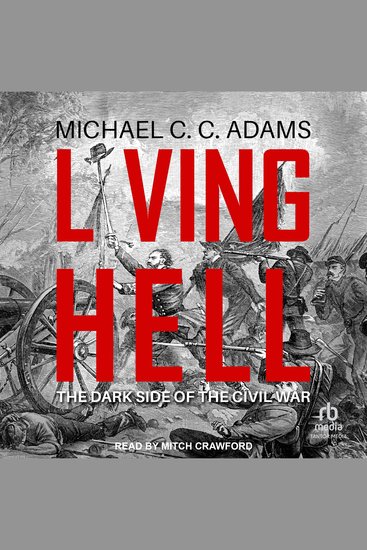
  • Living Hell - The Dark Side of the Civil War - cover

    Living Hell - The Dark Side of...

    Michael C.C. Adams

    • 0
    • 0
    • 0
    Many Americans, argues Michael C. C. Adams, tend to think of the Civil War as more glorious, less awful, than the reality. In Living Hell, Adams tries a different tack, clustering the voices of myriad actual participants on the firing line or in the hospital ward to create a virtual historical reenactment. 


    Neither film nor reenactment can fully capture the hard truth of the four-year conflict. Living Hell presents a stark portrait of the human costs of the Civil War and gives listeners a more accurate appreciation of its lasting consequences. 


    Adams examines the sharp contrast between the expectations of recruits versus the realities of communal living, the enormous problems of dirt and exposure, poor diet, malnutrition, and disease. He describes the slaughter produced by close-order combat, the difficulties of cleaning up the battlefields, and the resulting psychological damage survivors experienced. 


    Drawing extensively on letters and memoirs of individual soldiers, Adams assembles vivid accounts of the distress Confederate and Union soldiers faced daily: sickness, exhaustion, hunger, devastating injuries, and makeshift hospitals where saws were often the medical instrument of choice.
    Mostra libro
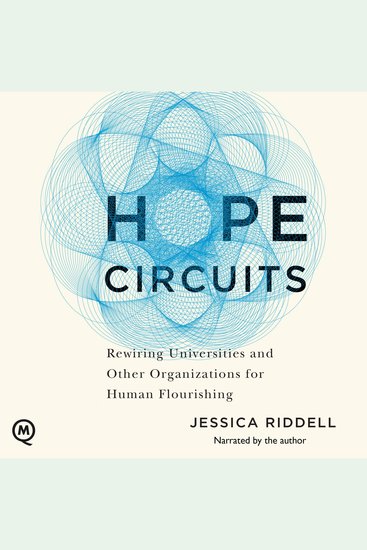
  • Hope Circuits - Rewiring Universities and Other Organizations for Human Flourishing - cover

    Hope Circuits - Rewiring...

    Jessica Riddell

    • 0
    • 0
    • 0
    How do we model abundance and generosity — in teaching, in learning, in leading organizations, particularly non-profits — when dealing with fiscal austerity and other forms of scarcity thinking? Hope Circuits explores this question, presenting sophisticated ideas that support democratizing higher education for everybody.
    		 
    Written in a conversational style that draws upon Jessica Riddell’s experience in governance, senior administration, and scholarship, the book is a how-to guide and thought leadership manifesto for developing the conceptual tools to seek solutions to higher education’s most pressing issues. Hope Circuits aims to rewire mindsets, perspectives, and behaviours to in turn rewire and renew the systems within which university stakeholders learn, live, and work. It tackles this challenging feat by suggesting ten tools to build hope circuits, a concept borrowed from neuroscience. 
    		 
    Riddell acknowledges that changing systems and deep cultures is not for the faint of heart; indeed, the more than 250 interviews conducted with thought partners for Hope Circuits expose how individuals who navigate complex systems regularly experience discomfort and even despair. In response, she shows us how to anchor a practice of hope in higher education with focus and intention, inviting others to adopt and adapt her approach.
    Mostra libro