Unisciti a noi in un viaggio nel mondo dei libri!
Aggiungi questo libro allo scaffale
Grey
Scrivi un nuovo commento Default profile 50px
Grey
Iscriviti per leggere l'intero libro o leggi le prime pagine gratuitamente!
All characters reduced
Varney the Vampire (Vol1-3) - cover

Varney the Vampire (Vol1-3)

James Malcolm Rymer, Thomas Peckett Prest

Casa editrice: DigiCat

  • 0
  • 0
  • 0

Sinossi

Varney the Vampire (Vol.1-3) is a compelling collection that delves into the rich tapestry of Victorian Gothic literature, presenting a comprehensive exploration of themes such as horror, immortality, and societal anxieties. This anthology captures the varied literary styles of the era, from melodramatic prose to the nuanced depiction of the titular vampire's moral complexity. The collection's significance lies in its ability to juxtapose the eerie with the everyday, inviting readers to traverse a landscape where supernatural elements disrupt the mundane. Notable stories evoke the chilling allure and tragic existence of their vampire protagonist, offering a narrative that remains historically and literarily influential. The authors, Thomas Peckett Prest and James Malcolm Rymer, were pivotal figures in popularizing the Victorian 'penny dreadfuls'. Their collective contribution heightens the anthology's thematic focus on the duality of fascination and fear. Tapping into the historical context of 19th-century industrialization and its attendant social upheavals, the authors' voices resonate with the period's cultural anxieties, enriching the narrative fabric. This collective work is interwoven with references to Gothic traditions alongside emergent literary movements, making it a cornerstone in the study of serialized fiction and popular culture. For readers seeking a profound understanding of Victorian horror literature, Varney the Vampire (Vol.1-3) offers an unparalleled journey through complex narratives and diverse stylistic approaches. This anthology is recommended for its educational significance and the unique opportunity it offers to experience a multiplicity of perspectives within a single volume. Engaging with this collection not only provides a deeper appreciation of Gothic traditions but also invites an ongoing dialogue concerning the themes of fear, morality, and humanity's darker nature.
Disponibile da: 15/11/2023.
Lunghezza di stampa: 1690 pagine.
Altri libri che potrebbero interessarti

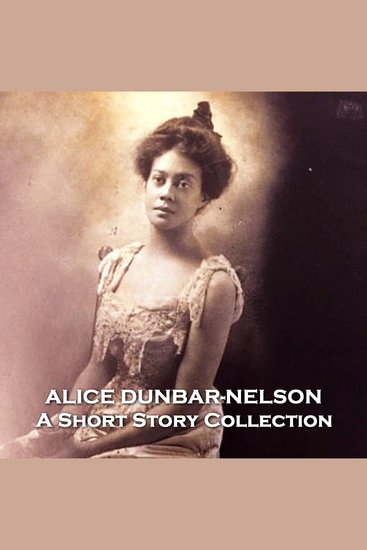
  • Alice Dunbar Nelson - A Short Story Collection - Pioneering African American woman who helped usher in the Harlem Renaissance - cover

    Alice Dunbar Nelson - A Short...

    Alice Dunbar Nelson

    • 0
    • 0
    • 0
    Alice Ruth Moore was born on 19th July 1875 in New Orleans where she was part of the multi-racial Creole community.  She was the first generation seemingly born free after the Civil War and unusually for the times, obtained a university education which led to her becoming a teacher at a public school in New Orleans.   
    In 1895, when she was 20, she published her first collection of short stories and poems, ‘Violets and Other Tales’, and moved to New York City where she co-founded and taught at the White Rose Mission, a Home for Girls.   
    Alice was always politically active and sought to advance the position of black women.  She began work as a journalist at the Woman’s Era newspaper where her work was seen by the established poet and journalist Paul Laurence Dunbar.  After corresponding for two years she joined him in Washington DC and they married in 1898.   
    It was a difficult relationship, due mainly to Dunbar’s fragile health, alcoholism and depression.  After a severe beating she left him and moved to Delaware to teach for a decade though took time out to enroll at Cornell University. 
    A short-lived marriage to Henry A. Callis, a physician and professor at Howard University ended in divorce and she became co-editor and writer for an influential publication of the African Methodist Episcopal Church.  A third marriage to civil rights activist Robert J. Nelson came about, as did affairs with several women, notably the activist Fay Jackie Robinson.   
    In Wilmington Delaware she and her husband devoted their time and writings to working for equality for African Americans and women’s suffrage.   
    Alice Dunbar Nelson was a natural and gifted writer across many genres, from novels, essays, plays to diaries, criticism, poetry and of course short stories, of which ‘Stones in the Village’ is a fine example.  The protagonist, like herself, is light skinned from New Orleans, which allows for a social mobility and a unique position in American society that Dunbar Nelson captures with an imagination and insight to explores another divisive perspective on race.  It is unsurprising that Alice was a prominent part of the early Harlem Renaissance and influenced many others including Langston Hughes and Countee Cullen. 
    Alice and her husband moved to Philadelphia in 1932 and it was here that she died on 18th September 1935, at the age of 60, from a heart ailment.
    Mostra libro
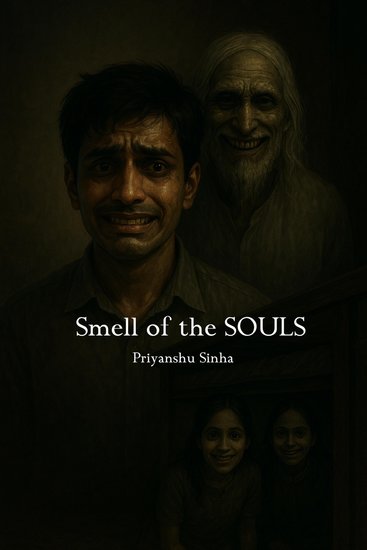
  • Smell of the SOULS - cover

    Smell of the SOULS

    Priyanshu Sinha

    • 0
    • 0
    • 0
    Some scents linger far beyond the body… straight into the soul. 
    In the narrow bylanes of an old town, the air carries an unusual fragrance—sweet, musky, ancient. It comes from a small, forgotten shop, where an old man sells attar that no one remembers buying... but everyone who smells it, changes. 
    When Prashant, a mild-mannered government employee, follows the strange scent one evening, he disappears without a trace—only to return five days later, strangely quiet, eyes hollow, and mind blank. What begins as a curious case of memory loss turns into a slow spiral into terror as his family notices the subtle shifts: the way mirrors fog around him, how dogs growl in his presence, and how the scent of attar never leaves his skin. 
    As dreams bleed into waking life and whispers echo in locked rooms, one question hangs in the air like perfume: 
    What did Prashant inhale that night… and what part of him never came back? 
    A haunting blend of psychological dread and supernatural mystery, Smell of Souls will make you question what's real, what's remembered, and what's left behind.
    Mostra libro
  • 3 Stories - War at Home - A trio of classic tales perfect for a commute walk or quiet night in - cover

    3 Stories - War at Home - A trio...

    Luigi Pirandello, Winifred...

    • 0
    • 0
    • 0
    There is something about the number 3.    
     
    The Ancient Greeks believed 3 was the perfect number, and in China 3 has always been a lucky number, and they know a thing or two.   
     
    Most religions also have 3 this and 3 that and, of course, in these more modern times, three’s a crowd may be too many, except when it’s a ménage à trois.  It seems good things usually come in threes. 
     
    Whatever history and culture says WE think 3, a hat-trick of stories, is a great number to explore themes and literary avenues that classic authors were so adept at creating. 
     
    From their pens to your your ears.   
     
    01 - 3 Stories - War At Home 
    02 - War by Luigi Pirandello 
    03 - Them Others by Stacy Aumonier 
    04 - The Casualty List by Winifred Holtby
    Mostra libro
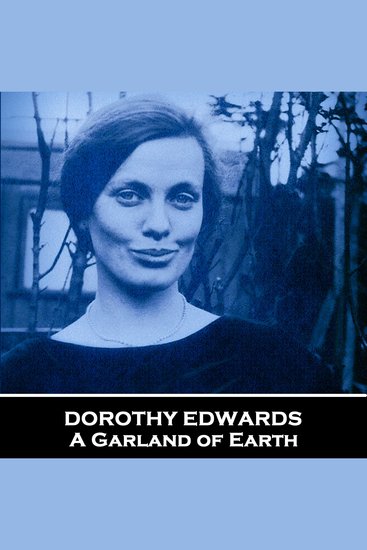
  • A Garland of Earth - From their pens to your ears genius in every story - cover

    A Garland of Earth - From their...

    Dorothy Edwards

    • 0
    • 0
    • 0
    Amelia Ann Blanford Edwards was born on 7th June 1831 in Islington, London.  She was educated at home by her mother and showed early promise as a writer, publishing her first poem at the age of 7 and her first story at 12.  Thereafter several popular periodicals published her poetry, stories and articles. 
    In addition she also illustrated some of her own writings and painted scenes from books she had read.  This talent was not supported by her parents, who saw an artist’s life as scandalous.  Undeterred Amelia took up composing and performing music until a bout of typhus caused throat damage.  Other interests soon followed until, early in the 1850s, Amelia focused exclusively on writing.  Her early novels were well received, and with ‘Barbara's History’ in 1864, a work revolving around bigamy, her reputation was established.  
    Amelia’s pen was also the purveyor of ghost stories for magazines and are still anthologized as classic tales to this day. 
    In January 1851, Amelia became engaged, apparently to please her parents, but she quickly broke it off.  In reality her emotional attachments were almost exclusively with women.  From the early 1860s she lived with Ellen Drew Braysher, a widow 27 years her senior, until both women died in early 1892.  During this relationship other women also entered and left her life.  Her frequent travelling companion, Lucy Renshaw, accompanied her to Egypt in the winter of 1873 and there she found a life-changing interest in Egyptology.  Aware of increasing threats from tourism and modern development she became an advocate for their research and preservation.  
    To advance the work Amelia largely abandoned much of her writing in favour of Egyptology and even took on strenuous lecture tours to raise funds. 
    After catching influenza, Amelia Edwards, ‘the Godmother of Egyptology’ died on 15th April 1892 at Weston-super-Mare.  She was 60.
    Mostra libro
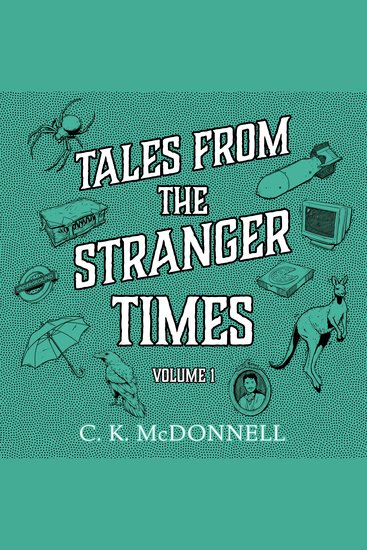
  • Tales from The Stranger Times - Volume 1 - cover

    Tales from The Stranger Times -...

    C.K. McDonnell

    • 0
    • 0
    • 0
    Dive into the wondrous world of The Stranger Times with this carefully curated selection of short stories from C.K. McDonnell. 
    Experience the magical underworld of Manchester with stories featuring lovelorn trolls, blood-thirsty books and a constipated dog who may’ve accidentally consumed a portal to another dimension. Drawn from the award-winning Stranger Times podcast and re-recorded by Brendan McDonald – the superb narrator of The Stranger Times novels – this collection features the new novella The Raven. 
    Featuring McDonnell’s trademark blend of black humour, outlandish ideas and expertly realised characters, this collection is perfect for first-time listeners or existing fans keen to learn more about the world he has created. 
    Praise for The Stranger Times 
    'I loved the dry and embedded humour of this book, it's the stuff of life . . . the whole thing is great fun.' SFCROSWNEST 
    'Wonderfully dark, extremely funny' ADAM KAY, Bestselling Author of This is Going to Hurt 
    'I loved this . . . great premise - great story - great characters . . . hugely enjoyable.' 
    JODI TAYLOR, Queen of Time and author of The Chronicles of St Mary's series 
    'A gag-filled romp . . . in the spirit of Terry Pratchett.' THE TIMES 
    'Great characters, a jet-propelled plot, and a winning premise.' GUARDIAN 
    'Fresh and genuinely funny.' SFX
    Mostra libro
  • A Lickpenny Lover - From their pens to your ears genius in every story - cover

    A Lickpenny Lover - From their...

    O Henry

    • 0
    • 0
    • 0
    William Sydney Porter was born on 11th September 1862 in Greensboro, North Carolina. At age 3 his mother died from tuberculosis. From an early age it was clear Porter had a large appetite for reading as he absorbed the world around him. 
    He first attended at a school run by his aunt before enrolling at the Lindsey Street High School and then worked at his uncle’s drugstore and gained a pharmacists’ license in 1881.  
    A persistent cough took him to Texas in the hope that a change of climate would help his symptoms. He took on various types of work, initially from ranch hand and cook and then as varied as pharmacist, draftsman, bank teller and journalist. He also began to write, though for now, purely as a hobby. 
    He was a member of several singing and dramatic groups when he met 17 year old Athol Estes, daughter of a wealthy Austin family. Despite her mother’s objection owing to Athol’s tuberculosis, they began courting and in July 1887, they eloped and soon married. 
    Athol, impressed by his writing, encouraged him to get them published. A job as a draftsman at the Texas General Land Office paid a healthy $100 dollars per month and life was good. 
    But then life turned cruel. His son died a few hours after birth although a daughter, Margaret, came the following year.  His job had to be vacated but another was found at the First National Bank of Austin. The bank operated informally and Porter was careless in keeping the books. He lost that job but began writing for the humourous weekly The Rolling Stone and the Houston Post. Some time later the federal Bank auditors went through his former accounts and he was arrested on charges of embezzlement. 
    Porter fled the day before his trial to Honduras. Holed up for several months he began to write.  Athol had become too ill to travel to meet him and learning that her health was deteriorating he surrendered to the court in February 1897.  Bail was obtained so that he could stay with Athol during her final days.  
    Porter was sentenced to five years at the Ohio Penitentiary in Columbus. His pharmacy qualifications got him the job of night druggist.  His sentence also gave him time to write and publish fourteen short stories. In December 1899 in McClure’s Magazine he published a short story as O Henry.  
    He was released two years early in July 1901, and reunited with Margaret, now 11, in Pittsburgh.  He now began his most prolific period of writing; a short story per week for the New York World, while also publishing works in other magazines.  Eventually over 600 of his short stories were published. 
    Porter was a heavy drinker and in 1908 his health, which had deteriorated for several years, took a dramatic turn for the worse, as did his writing.  
    O Henry died of cirrhosis of the liver complicated by diabetes and an enlarged heart on 5th June 1910.
    Mostra libro